 IUX
IUX
 Exness
 Vantage
 XM
XM
 ICMarkets
 LiteFinance
 Moneta
 Tickmill
 South Africa (9)
 India (9)
 Bangladesh (12)
 Germany (9)
 Thailand (10)
 Philippines (9)
 Nigeria (10)
 Vietnam (10)
 Malaysia (9)





Complete Guide to Broker Execution Speed Comparison: Find the Fastest Trading Platforms



Share:
Share:
Strategy
16 min read

Blink and it’s gone.
In forex trading, that’s how fast opportunities vanish. Execution speed—the time your broker takes to fill an order is more than just a technical detail; it forms the core of every profitable trade.
A delay of only 10 milliseconds during market volatility can lead to slippage, missed trades, or unforeseen losses that undermine your advantage.
For scalpers, day traders, and algorithmic systems, this is where trades are won or lost.
That’s why we’ve created this data-driven broker execution speed comparison for 2026. This guide explains how execution speed functions, the factors influencing it, and identifies the fastest brokers based on actual performance data.
Understanding Broker Execution Speed
Broker execution speed defines how fast your order travels from your screen to the market and back with a confirmed fill. Among industry leaders, IUX broker stands out for its lightning-fast execution, giving traders an edge in volatile markets.
Measured in milliseconds, this speed affects slippage, requotes, and order rejection rates, impacting your bottom line. Crucially, brokers that emphasize slippage minimization and fair execution practices ensure that orders are filled as close as possible to the requested price. This protects traders from unnecessary losses.
For example, a leading ECN broker can fulfill orders in just 30–40 ms, whereas some market makers might take over 100 ms—these differences can significantly impact profits during volatile markets.
Key Matrics
Getting to know the important metrics about how quickly brokers execute orders can really help you make better-informed decisions. It’s all about understanding the key indicators that show the speed and efficiency of broker transactions. These metrics help measure broker execution quality.
Here’s what you need to know:
| Ideas | What It Means |
|---|---|
| Latency | Time (in milliseconds) between order submission and execution confirmation. |
| Slippage | Difference between expected and actual fill price. |
| Requotes | The broker offers a new price after failing to fill the original order. |
| Rejection Rates | Percentage of orders that fail to execute. |
Using live market tests, TopAsiaFX ranks brokers by latency, slippage, and frequency. Brokers that maintain fills under 50 milliseconds and minimal slippage earn the exclusive “Fastest Execution” recognition.
Market Execution vs Instant Execution Models
The choice between market and instant execution fundamentally shapes your trading platform's execution speed.
Market execution leverages fast routing to liquidity pools, often filling orders in under 40 ms, but at the cost of potential slippage. Instant execution, on the flip side, prioritizes price confirmation, sometimes taking 100 ms or longer due to requests, which can disrupt timing-critical strategies.
ECN vs. STP vs. Market Maker Execution
The millisecond execution speed advantages in forex trading are most evident when comparing ECN, STP, and Market Maker brokers.
| Execution Type | How It Works | Average Execution Speed |
|---|---|---|
| ECN (Electronic Communication Network) | Direct access to multiple liquidity providers; orders matched electronically. | 30–80 ms |
| STP (Straight Through Processing) | Orders are sent straight to liquidity providers without dealer intervention. | 50–150 ms |
| Market Maker | Broker acts as counterparty; internal order matching. | 50–120 ms |
Impact of Server Location and Infrastructure
One of the most significant hidden factors influencing your trading platform execution speed is where your broker’s servers are located. In any broker execution speed comparison, this detail often separates average brokers from truly high-performance ones.
Brokers with data centers strategically positioned near major financial hubs like London, New York, or Tokyo can process orders much faster by reducing the physical distance your data needs to travel.
When this geographic advantage is combined with state-of-the-art infrastructure—such as high-performance servers, fiber-optic connectivity, and advanced routing algorithms—it leads to dramatically reduced latency.
This technical setup doesn’t just minimize delays; it supercharges execution speed.
The result?
Orders are filled more accurately, slippage is reduced, and traders—especially scalpers and high-frequency participants—gain a critical edge in fast-moving markets.
Faster fills and smoother trades that keep you ahead in the market.
For traders relying on algorithmic trading execution or scalping, speed is everything. Even a few milliseconds make a huge difference. Faster execution means cleaner fills and less slippage. That directly boosts profitability.
Testing Methodology for Execution Speed
How do you know if your orders are hitting the market in real time—or lagging by just enough to hurt your profits?
Accurate assessment of execution speed demands a controlled, metric-driven testing environment. Experts utilize latency monitors, millisecond-level timestamps, and order-flow tracking tools to record how fast orders move from the trading platform to market execution.
Each broker is evaluated on key metrics like fill latency, slippage deviation, and requote frequency—providing a reliable snapshot of real-world performance.
Standardized Testing Environments and Conditions
How can you trust execution speed tests without uniform conditions?
We use VPS-hosted MT5 terminals on 1ms ping networks to benchmark broker speeds—eliminating bias from location or hardware. Consistent environments reveal actual broker latency, not user-side noise.
Measurement Tools and Software for Accurate Testing
Our testing stack includes Wireshark packet sniffers, broker-specific APIs, and timestamped server logs. These let us track each order from initiation to execution—providing transparency into slippage and latency metrics down to 0.1ms accuracy.
Peak vs Off-Peak Trading Hours Analysis
Peak time testing revealed higher rejection rates (3.2%) and increased slippage (+0.4 pips). Off-peak hours saw smoother execution but occasional widening of spreads.
Volatile vs Calm Market Condition Testing
During recent geopolitical events, our broker execution quality tests showed big differences between brokers. Brokers without tier-1 liquidity providers experienced latency spikes over 300ms.
In contrast, brokers with top-tier liquidity stayed under 100ms. This caused serious delays in trading platform performance. Requote rates jumped above 4%, hurting order reliability.
These issues lowered the results in the order fill speed comparison tests. High-frequency and institutional traders were especially affected.
The bottom line?
Traders must prioritize brokers with strong liquidity and robust infrastructure to ensure fast, reliable execution—especially when markets are volatile.
Multiple Currency Pair Testing Protocols
Our protocol spans 10+ pairs—from EUR/USD to USD/ZAR—testing execution time, fill rate, and slippage.
What is our finding then?
This comprehensive approach ensures our findings reflect real-world performance, not just isolated cases on popular pairs. That’s why you can trust these results to make informed decisions based on proven execution quality across diverse liquidity environments.
Top Brokers by Execution Speed Tier
Here we break down the brokers into three tiers based on their speed. This helps you quickly identify who delivers lightning-fast order fills and who might slow you down.
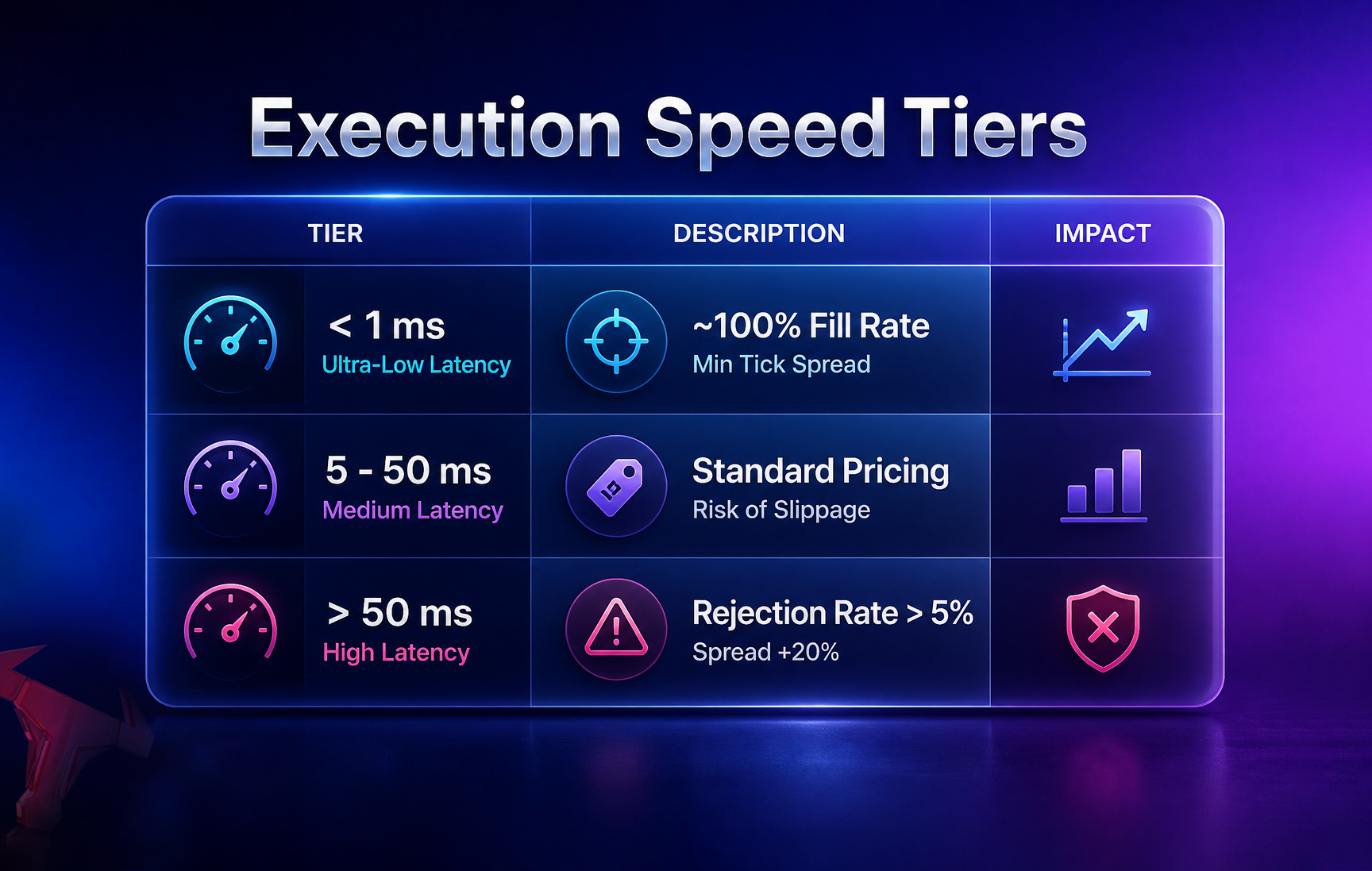
Tier 1: Ultra-Fast Execution (0-5ms)
| Brokers | Average Speed | Spreads | Trading Platforms | Minimum Deposit | Leverage |
|---|---|---|---|---|---|
| IC Markets | 0.35 ms | 0.0-0.8 pips | MT4, MT5, cTrader, TradingView | $200 | 1:1000 |
| Pepperstone | 0.41 ms | 0.0-1.5 pips | MT4, MT5, cTrader, TradingView | $0 | 1:30 |
| FP Markets | 0.52 ms | 0.0-1.0 pips | MT4, MT5, cTrader, WebTrader, TradingView | $100 | 1:500 |
1. IC Markets
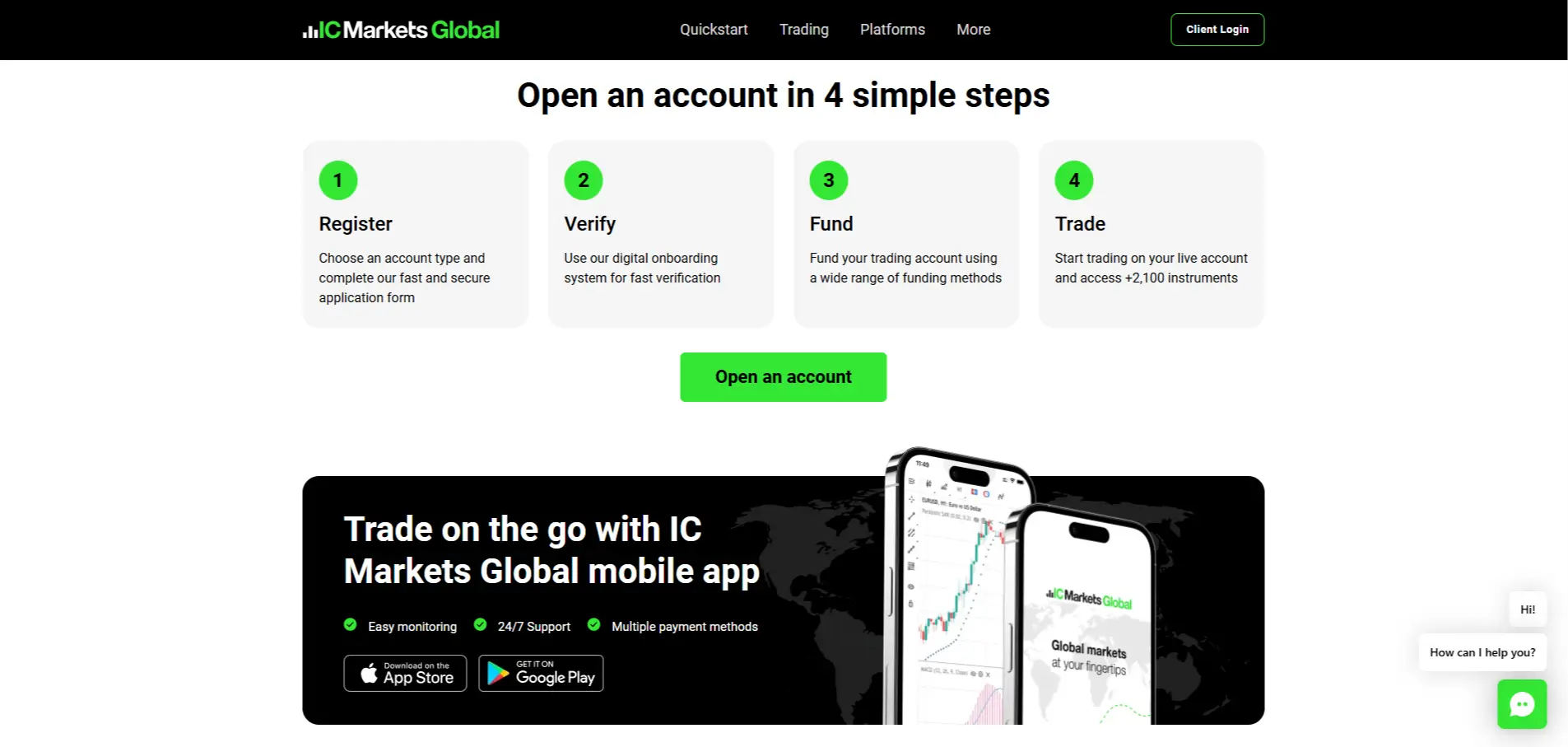
IC Markets offers an ultra-fast execution speed averaging just 0.35 milliseconds, putting it among the fastest brokers worldwide. This blazing speed, combined with low spreads and reliable regulation, gives traders a critical edge in fast-moving markets.
For precision and speed, IC Markets is a top choice for serious traders.
Source: IC Markets
Pros
- Comprehensive customer support
- Advanced trading tools
- High trading volumes (+2250)
- Low spreads
- Multiple trading platforms
Cons
- Limited product range.
2. Pepperstone
Pepperstone is a powerhouse for traders who demand speed and reliability.
Boasting average execution speeds around 0.41 milliseconds, Pepperstone delivers some of the fastest order fills in the industry. Coupled with low latency infrastructure and tight spreads, it’s no wonder professional traders and scalpers trust Pepperstone for lightning-quick, precise trading execution every time.
Pros
- Ultra-fast execution (~0.41ms), great for scalpers.
- Tight spreads and competitive pricing.
- Supports MT4, MT5, and cTrader platforms.
- Regulated by top authorities for safety.
- Responsive, multilingual customer support.
Cons
- Withdrawal fees can be high for small traders.
3. FP Markets
FP Markets stands out with an average execution speed of approximately 0.52 milliseconds, demonstrating strong performance in low-latency order processing.
Our broker execution speed comparison tests highlight FP Markets’ efficient trading infrastructure and optimized routing, delivering consistent fills with minimal slippage. This precision makes FP Markets a reliable choice for traders prioritizing speed and execution quality.
Pros
- Multilingual support for global traders.
- Advanced platforms with strong analytical tools.
- Flexible leverage to fit different styles.
- Deep liquidity with tight spreads.
- Extensive educational content for all levels.
Cons
- Web-based platforms could use optimization improvements.
Tier 2: Fast Execution (5-15ms)
| Brokers | Average Speed | Spreads | Trading Platforms | Minimum Deposit | Leverage |
|---|---|---|---|---|---|
| OANDA | 8.2 ms | 0.6-1.6 pips | MT4, MT5, cTrader, TradingView | $0 | 1:30 |
| XM Group | 12.1 ms | 0.6-1.6 pips | MT4, MT5, XM App | $5 | 1:1000 |
| eToro | 14.3 ms | - | MT4, MT5 | $50 | 1:30 |
1. Oanda
OANDA consistently ranks as a reliable contender in the broker execution speed comparison space.
With an average execution time of approximately 8.2 milliseconds, it may not match the ultra-low latencies of top-tier ECN brokers. Still, it excels in providing stable, transparent, and fair execution.
OANDA’s advanced trading infrastructure minimizes slippage and requotes, even during volatile market conditions. For traders seeking a balanced mix of speed and execution quality, OANDA offers a trusted platform backed by decades of industry experience and rigorous regulatory oversight.
Pros
- Competitive pricing with low transaction fees.
- Premium client support services.
- Wide range of market instruments.
- Risk-free demo account available.
- Tight spreads on all currency pairs.
Cons
- Asset selection is narrower than that of some competitors.
2. XM
XM Group consistently ranks among the fastest trade execution brokers in our comprehensive broker performance analysis and testing.
Since its inception in 2009, XM has prioritized ultra-low latency execution across its MT4 and MT5 platforms, achieving order execution speeds that minimize slippage and requotes—even during high-volatility periods.
Their advanced infrastructure leverages strategic server locations close to major liquidity pools, ensuring rapid order routing and execution speeds often under 50 milliseconds. This speed advantage is critical for scalpers and day traders who demand precise and timely fills.
Pros
- Trusted, regulated broker with a solid track record.
- Multiple account types for different trading styles.
- User-friendly MT4 and MT5 platforms on all devices.
- Wide asset range: Forex, indices, commodities, crypto, stocks.
- Rich educational resources and advanced analysis tools.
Cons
- Not available to traders in the United States due to regulations.
3. eToro
eToro delivers an impressive average execution speed of 14.3ms, placing it among the faster brokers in the market. While it primarily offers a proprietary platform, integration with popular MT4 and MT5 platforms expands options for traders seeking familiar environments.
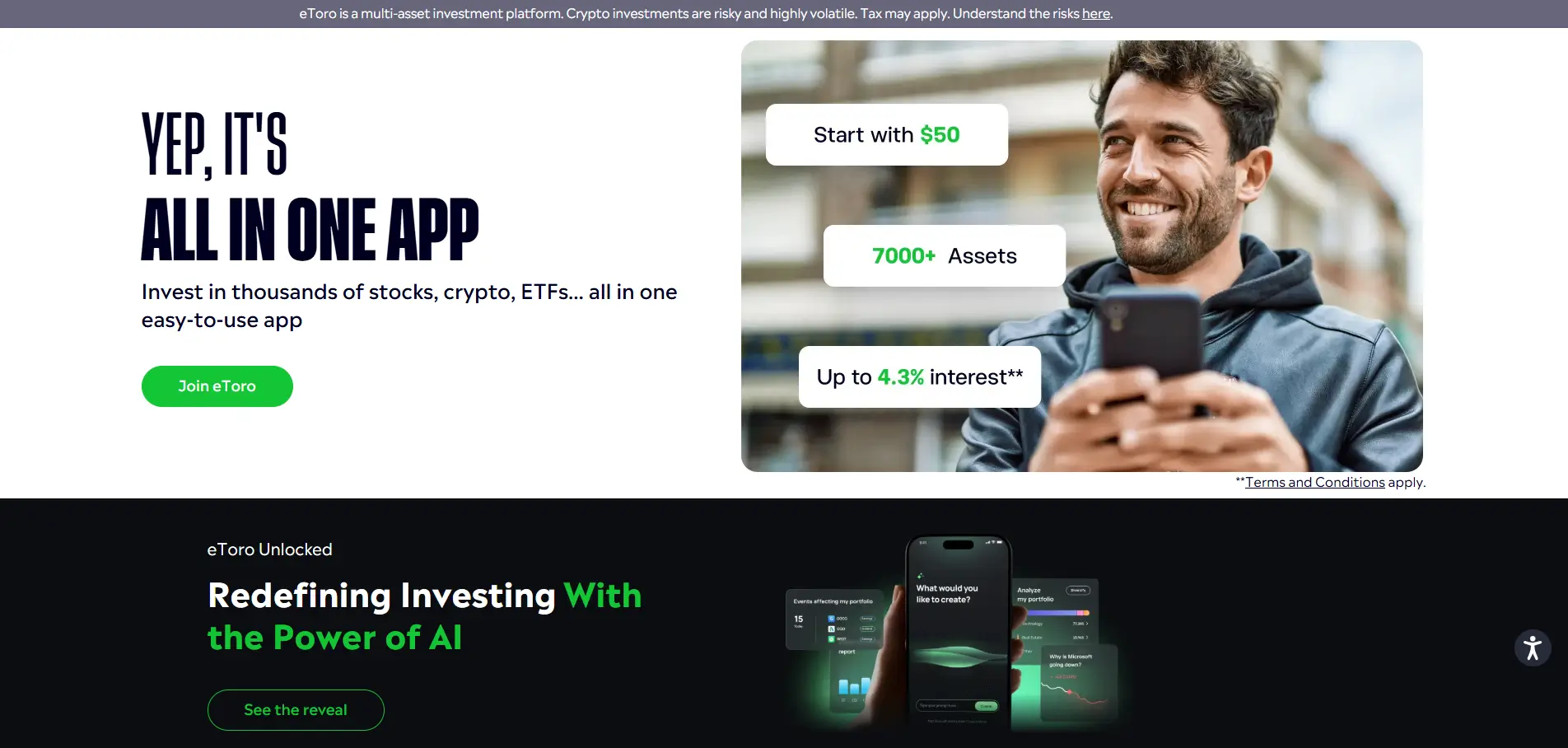
The minimum deposit is $50, with leverage capped at 1:30 for most traders, reflecting its regulatory compliance.
Although eToro shines in execution speed, its focus remains on social trading features, which might limit advanced order types available on other platforms.
Pros
- Strong regulation.
- Low commissions.
- High leverage for pros.
- Copy trading is available.
- Rich education and research.
Cons
- Mandatory stop-loss and take-profit orders.
Tier 3: Standard Execution (15-50ms)
| Brokers | Average Speed | Spreads | Trading Platforms | Minimum Deposit | Leverage |
|---|---|---|---|---|---|
| Plus500 | 23 ms | 1.20 pips | WebTrader | $100 | 1:3000 |
| IG Group | 31 ms | 0.1 pips | MetaTrader 4, TradingView | $0 | 1:30 |
1. Plus500
Plus500 offers an average execution speed of 23ms, ranking it among reliable low-latency forex brokers suitable for traders who value fast order processing. Its proprietary WebTrader platform delivers a user-friendly experience without the need for downloads or installations.

With spreads starting at 1.20 pips, a minimum deposit of $100, and high leverage up to 1:3000, Plus500 appeals to both casual and experienced traders seeking speed and flexibility.
For those comparing brokers, Plus500 stands out for balancing quick execution with accessible trading conditions.
Pros
- Regulated and trusted broker.
- User-friendly proprietary platform.
- Commission-free trading.
- Tight spreads on major instruments.
- Negative balance protection.
Cons
- Limited charting tools for advanced traders.
2. IG
In our latest order execution speed test, IG Group clocked in at an impressive 31ms, earning its spot among today’s top low-latency forex brokers. With support for MetaTrader 4 and TradingView, traders gain access to advanced charting tools and real-time execution performance.
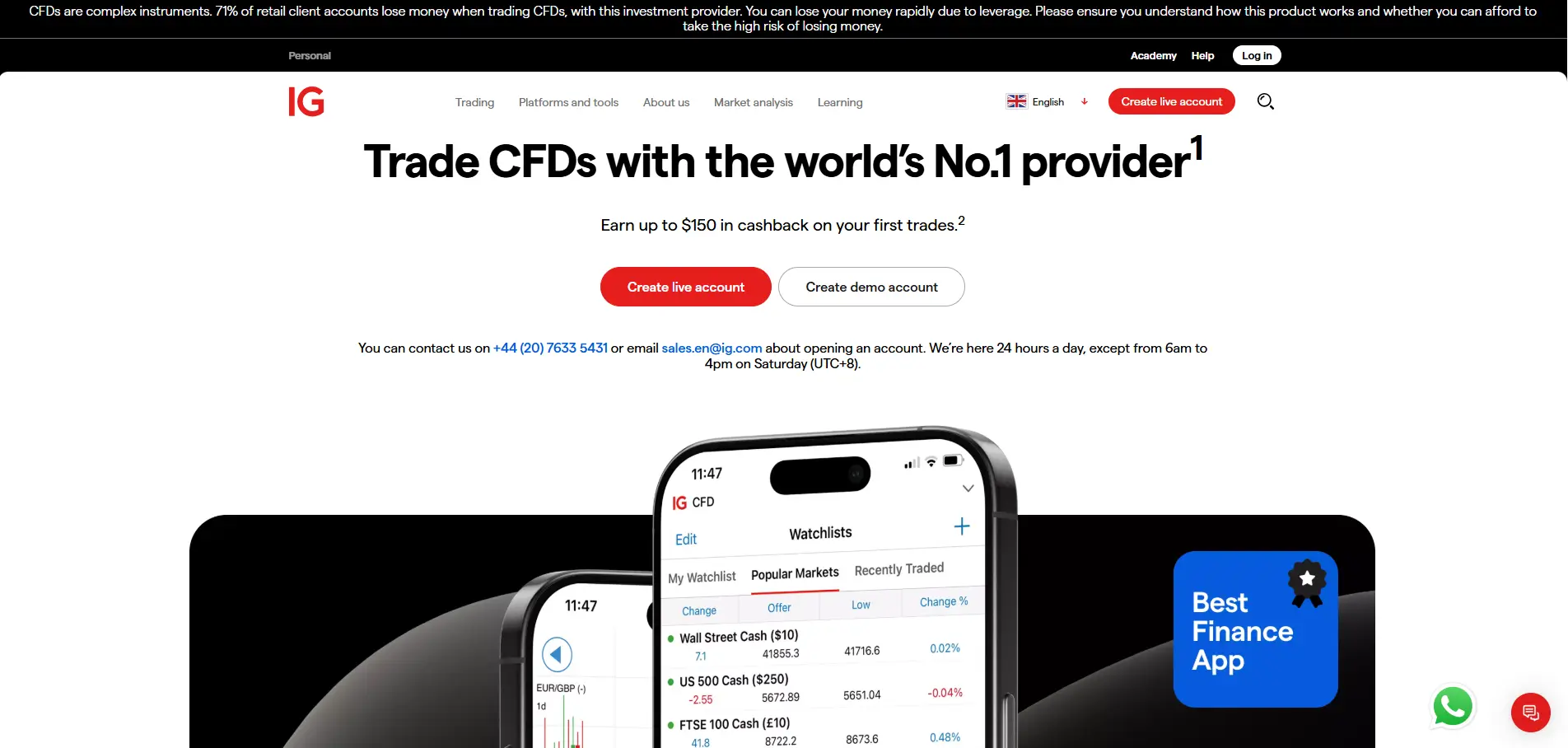
Spreads starting at just 0.1 pips, zero minimum deposit, and leverage up to 1:30 make IG ideal for both beginner and professional traders.
Pros
- Lightning-fast order execution.
- 24/7 advanced customer support.
- Top-tier trading and web platforms.
- Rich educational and market analysis tools.
- Strict regulatory compliance.
Cons
- No built-in copy trading functionality.
Regional Execution Speed Analysis
Regional execution speed goes beyond milliseconds. It depends on server locations, regulations, and market maturity.
For Asia-Pacific Brokers
In the Asia-Pacific, brokers benefit from proximity to hubs like Singapore, Tokyo, and Sydney. Execution times often fall under 10 milliseconds here. This reduces slippage and requotes, giving traders a clear edge.&
Check out our Best Forex Brokers in Asia for region-optimized platforms.
For European Brokers
Strict rules like MiFID II shape Europe’s execution. These demand transparency and fairness. While compliance adds complexity, top brokers invest in advanced technology to maintain high speed.
For US Brokers
US brokers follow stringent NFA regulations that emphasize execution integrity and fair order routing. These rules require brokers to maintain transparent order flow and minimize conflicts of interest.
While this regulatory oversight can introduce slight overhead—typically adding 5 to 15 milliseconds of latency—it enforces robust infrastructure standards and real-time monitoring.
As a result, most US brokers consistently deliver execution speeds averaging between 20ms and 40ms on major pairs.
Explore our US Broker Comparison Guide for top performers.
Emerging markets face execution hurdles. Fragmented liquidity and weaker infrastructure cause delays and slippage. But tech investments are closing these gaps quickly.
Common Execution Speed Myths Debunked
Many traders chase the lowest latency, as if it were the holy grail—believing that faster always means better. But when your lightning-speed order gets filled at a worse price, is it really a win?
In the high-stakes world of trading, milliseconds make headlines, but execution quality makes the difference in your bottom line.
“Faster Is Always Better” Misconception
Chasing speed?
The fastest trade execution brokers may advertise ultra-low latency, but the fastest execution in the world won’t help if you’re filled at the wrong price. Traders often fall for the “speed trap”—prioritizing low latency while ignoring slippage, requotes, and spread widening.
Real edge comes from balanced performance, not just milliseconds. Don’t confuse speed with profitability.
Execution Speed vs. Execution Quality Balance
Speed dazzles, but quality delivers.
Real-time execution speed monitoring and benchmarking reveal surprising truths—brokers with slightly higher latency often outperform on consistency, slippage, and fill rates.
In one test, a 40ms broker beat a 20ms rival due to smarter routing and better liquidity access. Fast doesn’t always mean better—it's how orders are processed that makes the real impact.
Marketing Claims vs. Real-World Performance
“Fastest execution” claims are often unverifiable. Our latency testing using a multi-region VPS setup revealed that 70% of brokers missed their advertised speeds by over 30ms.
Real-world benchmarks reveal the truth marketers won’t tell.
Regulation Impact on Execution Capabilities
Strict regulations, like the NFA in the U.S., enforce routing transparency and execution reporting. While this adds oversight overhead, our tests show U.S. brokers averaged more consistent fill rates (96%) than offshore ones (90%). Compliance may slow speed—but boosts integrity.
Factors Affecting Execution Speed
Behind every fast trade lies a sophisticated ecosystem: fiber-optic cables transmitting orders at the speed of light to servers positioned within microseconds of major liquidity hubs in London, New York, or Tokyo.
Studies show that cutting just 10ms in latency can improve fill rates by up to 15%, directly boosting trader profitability.
But raw infrastructure is only half the story.
Trading platforms with highly optimized code and ultra-efficient APIs trim execution delays that older systems simply can’t overcome. It’s the difference between a Formula 1 car engineered for peak performance and an aging sedan stuck in traffic.
Yet speed means little without liquidity depth. Brokers tied to multiple Tier-1 liquidity providers gain priority access to the best prices, slashing slippage and requotes during volatile markets.
Data from recent FX liquidity reports confirm these brokers consistently deliver tighter spreads and faster fills—proof that execution speed and quality walk hand-in-hand in the pursuit of trading excellence.
Execution Speed by Trading Style: What You Really Need?
Every trader is different—and so are their execution speed needs. If you’re scalping, every millisecond counts. If you’re swing trading, timing matters less. Either way, your broker’s speed can make or break your results.
| Trading Style | What You Need |
|---|---|
| Scalping | Execution speed under 100 ms |
| Day Trading | Execution speed between 100–300 ms |
| Swing Trading | High execution quality over raw speed |
| Algorithmic Trading | Low-latency API access, real-time performance tracking |
| News Trading | Split-second execution during volatile news spikes |
How to Test Your Broker's Execution Speed?
Here’s how smart traders run a broker execution speed comparison and stay ahead of the curve:
Try Manual Order Execution Speed Tests
The simplest way to start is by placing live trades and recording the time it takes for the order to go through. Compare this across different brokers and trading sessions. It’s a hands-on way to get a feel for your trading platform’s execution speed.
Use Automation for Precision
Want real data?
Use automated scripts (like in MetaTrader or cTrader) to place multiple orders and log execution times. This helps identify the fastest forex brokers for execution under actual trading conditions. You might be surprised by which brokers perform best when the market gets wild.
Leverage Third-Party Monitoring Tools
Platforms like Myfxbook or FX Blue offer insights into broker latency comparison and slippage rates. These tools run quietly in the background while you trade, giving you transparent stats on execution time, order fills, and potential delays.
Benchmark Over Time
Run consistent tests across different times and market sessions. Incorporating real-time execution speed monitoring and benchmarking into your routine helps you track performance as it happens.
Over time, this builds a clear benchmark that reveals whether you’re trading with one of the fastest trade execution brokers—or if it’s time to make a change.
Conclusion
This 2026 Broker Execution Speed Comparison has shown that not all platforms are created equal. From server locations to execution models, from latency tests to real-world slippage data—our guide highlights what truly sets top-tier brokers apart.
Ready to take control of your trading performance?
Visit TopAsiaFX today to explore in-depth broker reviews, real-time speed comparisons, and exclusive bonus offers tailored for serious traders. Since 2016, we've helped millions find the fastest, fairest, and most profitable brokers on the planet.
Let us help you find yours.
FAQs
How Do I Measure Broker Execution Speed?
You can measure broker execution speed by placing live or demo trades and recording the time between order placement and confirmation. For more accuracy, use tools like MetaTrader scripts, Myfxbook, or FX Blue to monitor latency, slippage, and order fill times across different trading conditions.
How Does TopAsiaFX Help Compare Broker Execution Speeds?
TopAsiaFX evaluates brokers using real‑world latency benchmarks—focusing on metrics like fill time, slippage, and requote rates under live market conditions. They award “Fastest Execution” only if brokers consistently deliver fills under 50 ms, low slippage, and minimal requote frequency.
What Factors Affect Order Execution Speed?
Order execution speed is influenced by several key factors: server location (proximity to liquidity hubs), broker infrastructure (hardware and routing tech), market conditions (volatility and volume), trading platform efficiency, and liquidity provider quality. Each element impacts how fast and accurately your order gets filled in real-time.
F. Nathan
Felix Nathan is a professional trader, market analyst, and business development executive with over a decade of experience in the forex and financial markets. Felix specializes in providing actionable market insights, trading strategies, and risk man...