 IUX
IUX
 Exness
 Vantage
 XM
XM
 ICMarkets
 LiteFinance
 Moneta
 Tickmill
 South Africa (9)
 India (9)
 Bangladesh (12)
 Germany (9)
 Thailand (10)
 Philippines (9)
 Nigeria (10)
 Vietnam (10)
 Malaysia (9)





Can I Trust XM With My Money?



Share:
Share:
Broker
12 min read
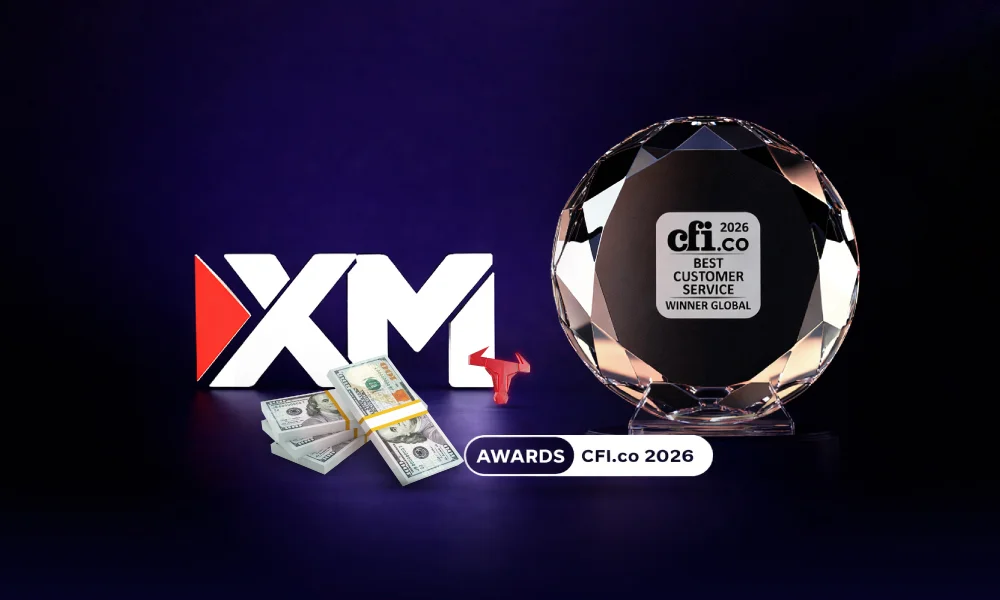
Trusting an online broker with your money is not a small decision. Your capital, your withdrawal access, and your data are all on the line from the moment you fund an account. So when the question is whether XM is safe, it deserves a straight answer backed by real facts, not vague reassurances.
This guide gives you exactly that. We go through XM's regulatory standing, how your funds are genuinely protected, what real traders say about deposits and withdrawals, and where the red flags and strengths actually sit. No fluff, no generic broker checklist. Just what matters.
Who Exactly is XM?
XM is owned by Trading Point Holdings Ltd, incorporated in Cyprus in 2009. Over the past 16 years it has grown into one of the larger retail brokers in the world, serving traders across 190 countries. The broker processes close to 14 million trades per day and delivers support in 30-plus languages.
XM runs several legal divisions depending on your country of residence. Your assigned division matters because it sets which regulator oversees your account and what protections apply.
| Legal Entity | Regulator |
|---|---|
| Trading Point of Financial Instruments Ltd | CySEC (Cyprus) No. 120/10 |
| XM Global Limited | FSC (Belize) No. 000261/397 |
| XM (SC) Limited | FSA (Seychelles) No. SD190 |
| XM International MU Limited | FSC (Mauritius) |
| XM ZA (Pty) Ltd | FSCA (South Africa) FSP No. 49976 |
| Which Division Are You Under? Most Asian traders who register via XM's main website are assigned to the Belize FSC division, which carries lighter standards than CySEC or ASIC. Check your registration confirmation email to see exactly which division your account falls under. |
Is XM Actually Regulated? What the Licences?
A credible licence is the first thing to verify with any broker. For a full breakdown of every licence XM holds and what each one means for traders, see the dedicated guide on is XM regulated.
Authorisation from a recognised regulator means the authority has reviewed the broker's capital adequacy, business conduct, and client money practices. It also gives you a formal complaints channel if things go wrong.
CySEC (Cyprus) - The Primary European Licence
The primary European arm, Trading Point of Financial Instruments Ltd, has held CySEC licence No. 120/10 since 2010. CySEC falls under the EU's MiFID II framework, requiring segregated client accounts, negative balance protection, and participation in the Investor Compensation Fund (ICF).
The ICF covers up to 20,000 euros per person if XM becomes insolvent. Verify the licence status directly at cysec.gov.cy.
DFSA (UAE) and FSCA (South Africa)
XM holds a DFSA licence (F003484) through Trading Point MENA Limited for the Dubai International Financial Centre region. South African traders are covered by XM ZA (Pty) Ltd under FSCA licence FSP 49976.
FSA Seychelles and FSC Belize
Traders outside the EU, Australia, UAE, and South Africa are typically placed with XM (SC) Limited (FSA Seychelles, SD190) or XM Global Limited (FSC Belize). Each is a legitimate authority, though oversight is lighter than CySEC or ASIC.
These divisions allow leverage up to 1:1000 but carry fewer mandatory protections. Check your registration email to confirm which division applies to you.
How to Verify XM's Licences Yourself
Always go directly to the regulator's official site, not third-party portals. |
How Does XM Protect Your Money?
Beyond the legal framework, here are the practical safeguards XM applies to client funds day to day.
Segregated Client Accounts
XM holds client deposits in segregated accounts at tier-1 banks, including Barclays Bank Plc. Segregation keeps your money legally separate from XM's operating funds. If XM faced insolvency, creditors could not touch client deposits. This is confirmed on XM's regulation page at xm.com/regulation.
Negative Balance Protection
XM applies negative balance protection across every account type, not just where the law demands it. Your losses cannot exceed what you deposited. If a trade moves heavily against you and your balance hits zero, XM absorbs the remaining deficit.
Investor Compensation Fund (ICF)
For traders under the CySEC arm, the ICF adds a safety net of up to 20,000 euros per person should XM become insolvent. This sits separate from fund segregation and acts as a last-resort backstop for European retail traders.
Payment Partner Oversight
XM works with regulated payment processors including Skrill and Neteller (supervised by the Central Bank of Ireland), Przelewy24 (Poland's Financial Supervision Authority), and several Cyprus Central Bank-approved processors: Nuvei, Sepaga E.M.I., EcommBX, and Unlimint EU. Each processor operates within its own regulatory framework, extending accountability across the full payment chain.
Trust Scores from Independent Research Firms
Third-party research firms score brokers on licence quality, trading history, complaint volume, and operational track record. Here is where XM currently stands across the most credible sources:
| Platform | Score / Rating |
|---|---|
| ForexBrokers.com Trust Score | 93 out of 99 — rated Trusted (2026 review) |
| FX Trust Score (fxtrustscore.com) | 78.9% across five key criteria |
| FxLeaders.com Trust Score | 97 out of 99 |
| Trustpilot (xm.com) | 3.7 to 3.8 out of 5 from 2,500-plus reviews |
| WikiFX Broker Score | 9.10 out of 10 |
| Myfxbook Community Rating | Active community, generally positive feedback |
Deposits and Withdrawals
Regulation and fund segregation matter, but the core question every trader asks is straightforward: when you request a withdrawal, does XM pay?
XM accepts Visa and MasterCard, bank wire transfers, Skrill, Neteller, AstroPay, and various local payment options. The minimum deposit is $5 for Micro, Standard, and Ultra Low accounts, and $10,000 for the Shares account. E-wallet deposits arrive instantly; bank wires take longer.
One Firm Rule: Deposits must come from an account matching your registered name and country of residence. This is a standard AML compliance requirement. Before depositing, make sure you have the correct XM account verification documents ready. Some traders find this inconvenient, but it is consistent with how regulated brokers operate worldwide.
Withdrawal Process
For anti-money laundering purposes, XM returns funds first to the original deposit method, up to the amount deposited that way. For a complete overview of timelines and fees, the XM withdrawal process and fees guide covers everything in detail.
E-wallet withdrawals move quickly. Card withdrawals take 3 to 5 business days, depending on the card issuer. XM charges no withdrawal fee, though your bank or payment provider may.
Processing speed varies noticeably by region. European traders typically receive funds within 1 to 2 days. In Asia, the range is wider: some traders report same-day settlement; others wait a week or more, particularly on first withdrawals or larger amounts that require identity checks.
For India-specific payment issues, see the guide on& is XM available in India.
| The Bonus Account Warning XM offers deposit bonuses on Standard and Micro accounts, not available to CySEC or DFSA account holders. Bonus funds cannot be withdrawn. Pulling out any real money before hitting the required trading volume causes XM to remove all bonus credits and profits from bonus-funded trades. A significant share of withdrawal complaints trace back to this single policy. Read the bonus terms before accepting any offer. |
| Inactivity Fees A $15 monthly inactivity fee applies after 90 days without a trade. An annual maintenance fee may follow after 180 days. This timeline is shorter than the 12-month industry norm. If you trade infrequently, build this cost into your planning from day one. |
Trading Costs: What Are You Actually Paying?
Fee transparency is part of trusting a broker. Below is a breakdown of what XM actually charges, based on verified data from ForexBrokers.com (October 2025) and XM's official documentation. For a detailed comparison of which account suits your trading style, see the guide to XM best account type.
Account Types and Spreads
| Account Type | Min. Deposit | Spreads | Commission | Max. leverage |
|---|---|---|---|---|
| Micro Account | $5 | 1.6 pips on EUR/USD | No Commission | 1:1000 (global) or 1:30 (CySEC/DFSA) |
| Standard Account | $5 | 2.0 pips (Oct 2025) | No Commission | 1:1000 (global) |
| Ultra Low Account | $5 | 0.8 pips on EUR/USD | No Commission | Available globally |
| Zero Account (EU only) | $5 | 0 pips on EUR/USD | Commission $3.50 per $100,000 traded | EU clients only |
| Shares Account | $10,000 | Zero spreads on share CFDs | No Commission | MT5 only |
Not sure whether to use MT4 or MT5 for your account? The comparison guide for MT4 vs MT5 on XM breaks down the differences in tools, speed, and strategy suitability.
Full Fee Breakdown
| Fee Type | Detail |
|---|---|
| Deposit Fees | None charged by XM |
| Withdrawal Fees | None charged by XM (third-party provider fees may apply) |
| Inactivity Fee | $15 per month after 90 days without trading activity |
| Currency Conversion | Markup applies when account and funding currencies differ |
| Maximum Leverage (Global Divisions) | Up to 1:1000 on major forex pairs |
| Maximum Leverage (CySEC and DFSA divisions) | Up to 1:30 for retail traders under MiFID II |
| Market Maker Model On Standard and Micro accounts, XM acts as a market maker, meaning orders are handled internally rather than routed directly to the interbank market. Spreads are built into the price rather than charged separately as a commission. Traders running high-frequency or scalping strategies will typically find ECN-style brokers cheaper overall. For most everyday retail traders, the Ultra Low account's spread structure sits within a competitive range for this class of broker. |
XM vs. Alternative Regulated Brokers
Asian traders have several well-regulated options beyond XM. Here is a side-by-side look at how the main alternatives compare. If you trade gold or commodities, the guide to is XM good for gold trading is worth reviewing alongside this comparison.
| Broker | Regulation | Platforms | Min. Deposit |
|---|---|---|---|
| XM | CySEC, ASIC, DFSA, FSCA, FSA, FSC | MT4, MT5, TradingView | From $5 |
| IC Markets | ASIC, CySEC, FSA Seychelles | True ECN | From $200 |
| Pepperstone | ASIC, FCA, CySEC, DFSA | MT4, MT5, cTrader | From $0 |
| AvaTrade | CBI, ASIC, FSA, FSCA | MT4, MT5, AvaTradeGO | From $100 |
| FP Markets | ASIC, CySEC | True ECN | From $100 |
So: Can You Trust XM with Your Money?
Yes, with conditions that are worth understanding before you deposit.
XM is a real, long-standing broker with active oversight from credible authorities. Your funds are legally segregated, covered by negative balance policies, and backed by investor compensation if you are under the CySEC division. No credible evidence shows XM systematically blocking legitimate withdrawals at scale.
The real concerns are more specific: deposit credit failures through regional banking channels (particularly UPI in India and local bank methods across South Asia), extra verification delays on larger withdrawals, and bonus terms that catch traders who have not read the conditions.
For traders using e-wallets, keeping position sizes sensible, and steering clear of bonus accounts, XM performs reliably. For traders in South Asia depending on local bank payment methods, the risk of payment friction is real and worth weighing against alternatives.
Traders in West Africa should also check whether XM is good for Nigerian traders before committing to the platform.
Genuine Strengths
- CySEC, ASIC, DFSA, FSCA, FSA, and FSC authorised
- Client deposits held at tier-1 banks, fully segregated
- Negative balance protection on every account type
- 16 years in operation since 2009
- Fast e-wallet processing
- Broad education library and live daily webinars
- $5 minimum deposit across main account types
- TradingView charts available from 2025
Real Concerns
- Local bank delays common in South Asia
- Belize and Seychelles divisions carry lighter oversight
- Bonus withdrawal restrictions frequently misunderstood
- 90-day inactivity fee at $15 per month
- Market maker model on Standard accounts
- Extra identity checks for larger withdrawals
- Standard account EUR/USD spread averages 2.0 pips
- No ECN or STP routing on Standard or Micro accounts
FAQs
Is XM a scam?
No. XM is a licensed, operating broker supervised by CySEC, ASIC, DFSA, FSCA, FSA, and FSC. It has run continuously since 2009 and has over 15 million account holders. Complaints about stolen funds almost always trace back to bonus policy violations, failed third-party payment routing, or AML verification holds on larger withdrawals.
What happens if XM goes out of business?
CySEC account holders are covered by the ICF for up to 20,000 euros per person. Across all XM divisions, client deposits are held separately from the company's own capital at licensed banking institutions, so a business failure would not put those funds at direct risk.
How fast does XM process withdrawals?
E-wallet withdrawals typically clear within hours. Card withdrawals take 3 to 5 business days on XM's end, plus whatever time the card issuer adds. Bank wire transfers run 3 to 7 business days. South Asian traders using local bank channels report the widest variation, with some waits extending beyond a week. Full details are in the XM withdrawal process and fees guide.
Does XM block profitable traders?
No credible evidence exists of XM systematically closing profitable accounts. Complaints from profitable traders typically involve restricted strategies or bonus volume requirements that were not met. Review XM's terms of service on permitted trading methods before opening a position-heavy strategy.
Which XM division offers the most protection?
The CySEC arm (Trading Point of Financial Instruments Ltd) offers the highest level of oversight, including ICF coverage up to 20,000 euros and full MiFID II compliance. ASIC sits close behind. The Belize FSC and Seychelles FSA divisions, covering most traders outside Europe and Australia, carry lighter oversight but still enforce fund segregation.
Is XM available in my country?
XM accepts clients from over 190 countries. Certain markets are restricted, including the United States. Registering with a VPN from a restricted country violates XM's terms and can result in account closure with no refund. Always use your real location and identity.
Does XM offer Islamic accounts?
Yes. XM offers swap-free Islamic accounts for traders who require Sharia-compliant trading. See the guide to open an Islamic account at XM for the full setup process and eligibility requirements.
Does XM charge for deposits and withdrawals?
XM does not charge its own deposit or withdrawal fees. Your bank or payment provider may charge on their end. A currency conversion markup applies when your account currency does not match your funding currency.
Is XM suitable for beginners?
XM's low $5 minimum deposit, demo account access, and education library make it accessible for new traders. The dedicated guide to XM for beginner investors covers what to expect from your first account setup through to placing your first trade.
F. Nathan
Felix Nathan is a professional trader, market analyst, and business development executive with over a decade of experience in the forex and financial markets. Felix specializes in providing actionable market insights, trading strategies, and risk man...