 IUX
IUX
 Exness
 Vantage
 XM
XM
 ICMarkets
 LiteFinance
 Moneta
 Tickmill
 South Africa (9)
 India (9)
 Bangladesh (12)
 Germany (9)
 Thailand (10)
 Philippines (9)
 Nigeria (10)
 Vietnam (10)
 Malaysia (9)





Why the Strait of Hormuz is the Most Important Place on a Forex Trader's Map This Week?



Share:
Share:
Markets
7 min read
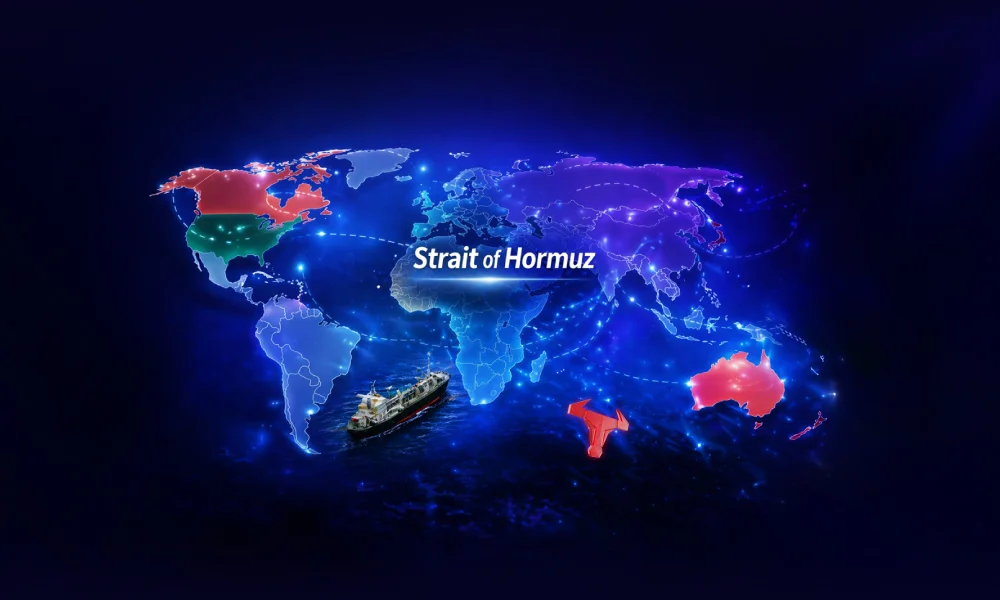
Energy flow influences currency movement, making the Strait of Hormuz the most important point on the forex trader map this week. When the threat of oil supply disruption transfers world capital in a matter of minutes, the effects are immediate and visible on trading charts.
A small shipping channel now has an effect on CAD strength, JPY weakness, and abrupt USD demand. It is not merely political tension. It is live market movement that feeds directly into the trading charts.
For a broader look at how geopolitical conflict in the region shapes forex conditions, see our analysis on GBP/USD seasonal vs. Iran-war weakness.
Why is the Strait of Hormuz Most Important on Forex ?
Imagine a congested wholesale market, and there is only a single gate to exit. When that gate slows, goods are stacked up. This is the same case as the Strait of Hormuz to global oil flow. It carries approximately 20% of the daily oil flow, according to the International Energy Agency (IEA, 2023).
Oil prices are sensitive when there is reduced flow. The pressure lies on the import-intensive economies, and exporters get stronger. Such changes show up relatively swiftly on charts as volatility spikes and directional movements.
| Did You Know? Any hint of tension around Iran could also cause oil prices to shoot up before the traders can be officially informed. |
The forex market is enormous. In 2022, the Bank for International Settlement reported a turnover of $7.5 trillion per day. Price can respond rapidly when that scale is triggered by a single choke point.
For context on how these macro forces connect to currency pair movements, see our guide on key indicators for daily forex analysis.
When a single tight passage can cause such a violent shake in the world's flows, what happens when volatility increases further?
How Hormuz-Driven Volatility Moves Currency Pairs in Real Time?
World oil prices do not move alone. They drive many things and raise many issues, especially in energy-related currencies.
When oil climbs:
- CAD frequently becomes stronger.
- JPY is likely to lose strength.
- USD is a safe-haven currency.
Live prices respond immediately and algorithms accelerate movement. According to market data, reactions appear within minutes of major oil-related headlines.
Market Reaction Table
| Market Trigger | Currency Impact | Typical Price Behavior |
|---|---|---|
| Oil rises 3–5% | CAD strengthens | USD/CAD drops 50–120 pips |
| Supply risk headlines | JPY weakens | USD/JPY climbs quickly |
| Geopolitical tension | USD demand rises | Dollar index spikes |
| Shipping delays | Emerging FX weakens | INR and TRY face pressure |
| Oil retraces | CAD softens | USD/CAD rebounds |
| Pro Tip: Monitor oil charts alongside forex pairs. Currencies tend to follow soon after crude breaches important levels. Waiting for confirmation improves trade quality. |
If oil dominates and forex reacts with a lag, does that difference define your entry point?
Trading Strategies During Hormuz-Driven Market Conditions
Volatility creates opportunity at the cost of increased risk. Structure is more important than speed. Breakout setups are popular among short-term traders. Increasing tension is like pressure building on the other side of a wall; price moves rapidly once it breaks.
The strategies that hold up best in these conditions are covered in our guide on forex scalping strategy guide and the broader principles of swing trading in forex.
Popular approaches:
- Trade USD/CAD when oil trends strongly
- Watch USD/JPY during risk-off sentiment
- Use gold as confirmation
| Risk Factor: A spike driven by news can reverse within minutes. Spreads may continue to widen unexpectedly due to liquidity gaps, particularly during off-hours sessions. |
| Note: Reactions are sharper during the London-New York overlap when liquidity is at its peak. This is the window where the cleanest setups tend to form. |
Patience is an advantage in your trading strategy. Allow the initial spike to settle. The second move is usually more directional. When the first move is emotion, might the second move have intent?
The Biggest Mistake Traders Make During Geopolitical Forex Moves
Most of the traders follow headlines instead of reading price action. That causes weak entrances and rapid losses.
| Risk Rule: Buying and selling at the time of a breaking news headline usually involves buying the top and selling the bottom. The emotional crowd moves first; the institutional traders clean it up afterward. |
An improved course of action would consist of:
- Waiting for pullbacks
- Confirming with momentum signals
- Reducing position size
When large events are ongoing, spreads widen and slippage is high. Applying structured forex risk management steps is the difference between surviving these events and blowing a well-planned trade.
| Suggestion: Minimize position size by 30 to 50% during high-impact events to protect capital and stay active in the market safely. When seasoned traders hesitate in disorder, there is no shame in taking your time. |
A Case Study
A good example of a trade was pointed out by Kathy Lien of BK Asset Management during the March 2022 oil surge.
- Pair: USD/CAD
- Entry: 1.2850 after oil breakout
- Stop Loss: 1.2950
- Target: 1.2600
- Risk–Reward Ratio: 1:2.5
Oil surged above $120. CAD strengthened. USD/CAD fell continuously in the sessions.
| Expert Opinion: Lien focused on confirmation rather than prediction. She waited until oil broke higher, then entered. That patience produced a clean trade with no noise. The lesson: what confirms your next setup is more important than how fast you act. |
Were you confirmed to make that trade, or were you reacting to a headline?
Finally
Three ideas stand out consistently:
- The Strait of Hormuz controls oil flow, and oil moves currencies.
- Price is responsive, but timing is more important than speed.
- Rational, risk-regulated entries are more effective than emotional decisions when tension arises.
This is a week for reading flow, not following headlines. Oil movement leads, and currencies follow. For traders wanting to sharpen their edge going into volatile conditions, our guide on best forex expert advisors and the fastest broker execution guide are worth reviewing before your next session.
Will you respond immediately when you see the next spike on your chart, or will you wait to be certain?
FAQs
What is the importance of the Strait of Hormuz to the forex markets?
The Strait of Hormuz carries a major portion of the world's oil movement. The price of oil affects inflation, balance of trade, and economic perspective, all of which directly influence currency values. Oil prices tend to rise when there is a supply risk, and energy-related currencies respond rapidly. This is a key area monitored by traders during geopolitical tension because price fluctuations can begin there and trickle down across global markets.
What are the most responsive currency pairs to Hormuz-related events?
Pairs linked to oil flows react the fastest. When oil is rising, USD/CAD tends to fall since Canada is an energy exporter. USD/JPY is more likely to increase during risk-off moods because investors move away from the yen. Emerging currencies such as INR may be weakened by increased import costs. Monitoring oil alongside these pairs assists traders in anticipating movements related to Strait of Hormuz events.
What is the safest way to trade Hormuz-inspired volatility?
Do not jump into the initial market response. Delaying decision-making improves trade quality. Smaller position sizes and broader stops help deal with abrupt swings. Watching oil and currency charts simultaneously builds confidence and context. For a structured approach to protecting capital during volatile periods, our guide on risk management tools covers the key practices directly applicable to these conditions.
Do all Strait of Hormuz tensions drive forex markets?
Not all events result in strong moves. Markets respond more when a supply disruption appears real and sustained. Small headlines can lead to brief spikes that are quickly reversed. Lasting trends require stronger confirmation from oil prices themselves. Traders who focus on price action rather than news headlines are more likely to make sound decisions during such events.
Why is it important for forex traders to monitor Hormuz this week?
Increased geopolitical focus on what is occurring around the Strait of Hormuz heightens volatility in oil and currencies. During such times, short-term traders tend to identify more setups, and long-term traders seek trend changes. Combining oil and forex readings provides a better edge. See our guide on how AI is transforming forex for how modern tools can help traders filter signal from noise during fast-moving events like these.
F. Nathan
Felix Nathan is a professional trader, market analyst, and business development executive with over a decade of experience in the forex and financial markets. Felix specializes in providing actionable market insights, trading strategies, and risk man...