 IUX
IUX
 Exness
 Vantage
 XM
XM
 ICMarkets
 LiteFinance
 Moneta
 Tickmill
 South Africa (9)
 India (9)
 Bangladesh (12)
 Germany (9)
 Thailand (10)
 Philippines (9)
 Nigeria (10)
 Vietnam (10)
 Malaysia (9)




Voted for the best high-leverage brokers 2026. Chosen for offering the highest leverage with trusted risk controls.



High leverage is one of the most searched terms in forex trading and one of the most misunderstood. The appeal is obvious: a $500 deposit controlling a $500,000 position sounds like an efficient use of capital.
The reality is that the same math working in your favor accelerates losses just as fast. Most retail traders who blow accounts do so not because their market analysis was wrong, but because leverage made the losses unrecoverable before they had a chance to adapt.
That context matters before choosing a broker on leverage ratio alone. The brokers reviewed here by TopAsiaFX were selected for high leverage availability alongside the protective features that responsible brokers pair with it: negative balance protection, transparent stop-out levels, clear margin rules, and regulatory standing.
A broker offering 1:3000 leverage with no client fund protection is not a feature. It is a liability.
If you want to compare by specific criteria first, check our best ECN brokers, best low spread brokers, or browse the full broker awards before reading the individual reviews below.
| Broker | Max Leverage | Min. Deposit | Neg. Balance Protection | Spreads | Regulation |
|---|---|---|---|---|---|
| OctaFX | 1:1000 | $25 | Yes | 0.6 pips | FCA, CySEC |
| RoboForex | 1:2000 | $10 | Yes | 0.0–1.3 pips | FSC |
| JustMarkets | 1:3000 | $10 | Yes | 0.0–0.3 pips | FSA, CySEC, FSCA, FSC |
| Trader's Way | 1:1000 | $10 | Yes | 0.0–1.5 pips | None |
| FP Markets | 1:500 | $100 | Yes | 0.0–1.0 pips | ASIC, CySEC, FSCA |
| XM | 1000:1 | $5 | Yes | 0.8–1.6 pips | ASIC, CySEC, DFSA |
Leverage is a ratio that describes how much larger a position you can open relative to your own capital. At 1:100, a $1,000 deposit lets you control a $100,000 position. At 1:1000, the same deposit controls $1,000,000 worth of currency. The broker provides the difference as a temporary loan against your margin.
The mechanics cut both ways. A 1% price move on a $100,000 position is $1,000. On a $1,000 deposit at 1:100 leverage, that is your entire account. A 0.1% move in the wrong direction at 1:1000 leverage has the same outcome. This is why leverage ratio alone tells you nothing useful about risk. Position size relative to account equity is what determines actual exposure.
Regulators in the EU, UK, and Australia have imposed leverage caps specifically because high leverage is the primary cause of retail trader losses. In regions without those caps, offshore brokers can legally offer 1:2000 or higher. That availability is not a sign of trader-friendly conditions. It simply reflects a regulatory environment with fewer protections.
Expert Tip: Most professional traders use between 1:5 and 1:20 effective leverage regardless of what their broker allows. The maximum leverage on offer is a marketing figure. The leverage you actually use should be determined by your risk per trade calculation, not the broker's ceiling.
OctaFX offers leverage up to 1:1000 across its four account types, with negative balance protection applied consistently regardless of account type. The broker is regulated by FCA and CySEC, which puts it in the top tier among high-leverage brokers for regulatory credibility. Most brokers offering leverage at this level operate under offshore or lighter regulatory frameworks.
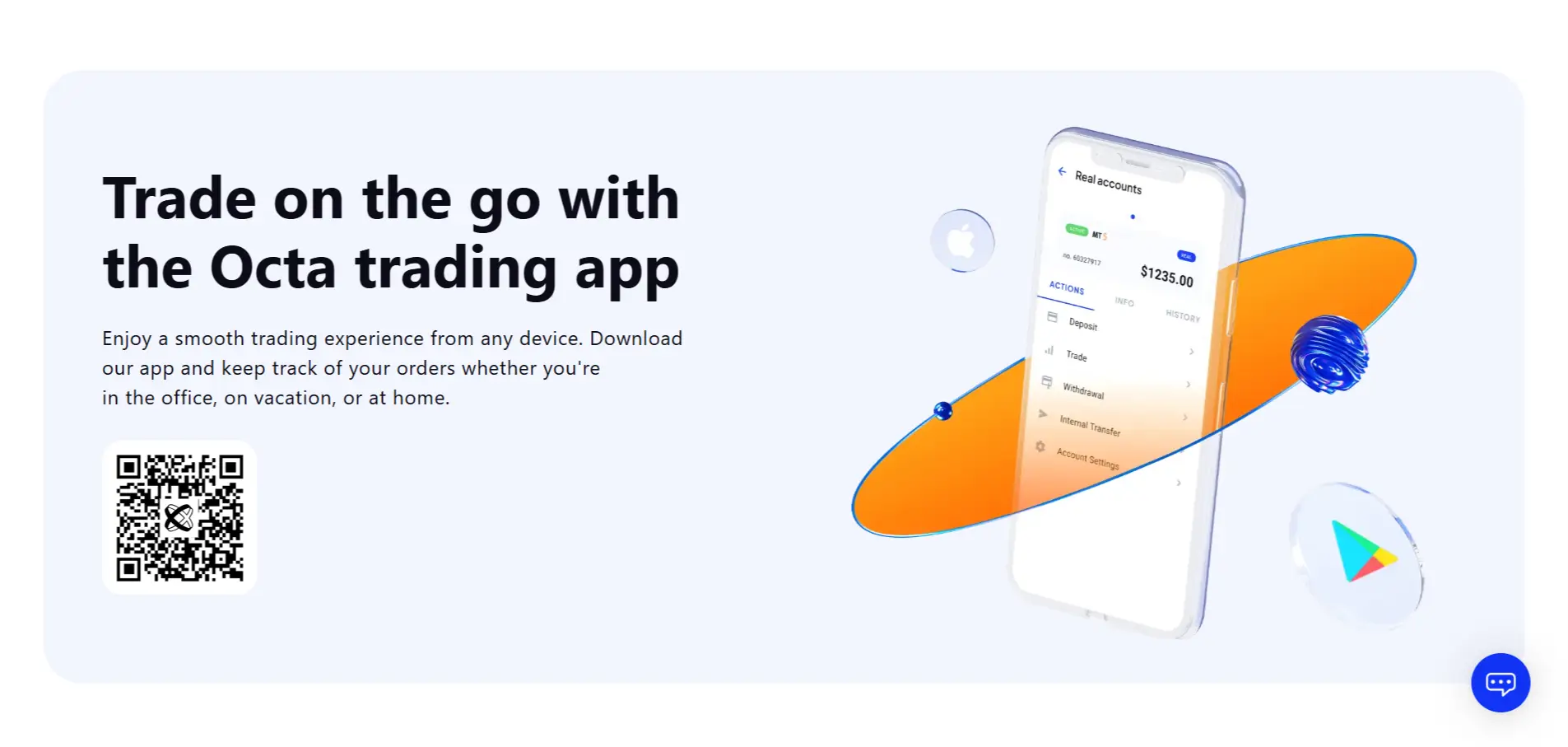
Spreads average 0.6 pips on major pairs, which is competitive for a no-commission account structure. Platforms include MT4, MT5, and the proprietary OctaTrader app. Minimum deposit is $25. Withdrawals are processed quickly with no broker-side fees. Demo accounts are available with no time limit.
The leverage of 1:1000 applies uniformly across account types. Four account types are available, and the broker has built a strong presence in Asia and the Middle East, with local payment method support in multiple regions.
Strengths: FCA regulated with high leverage, negative balance protection, zero commission, fast withdrawals, OctaTrader app.
Worth Noting: Average spreads are slightly wider than raw ECN alternatives. No access for US-based traders.
OctaFX is well established in Asian markets and the Middle East. Check our Islamic accounts comparison as OctaFX offers swap-free conditions.
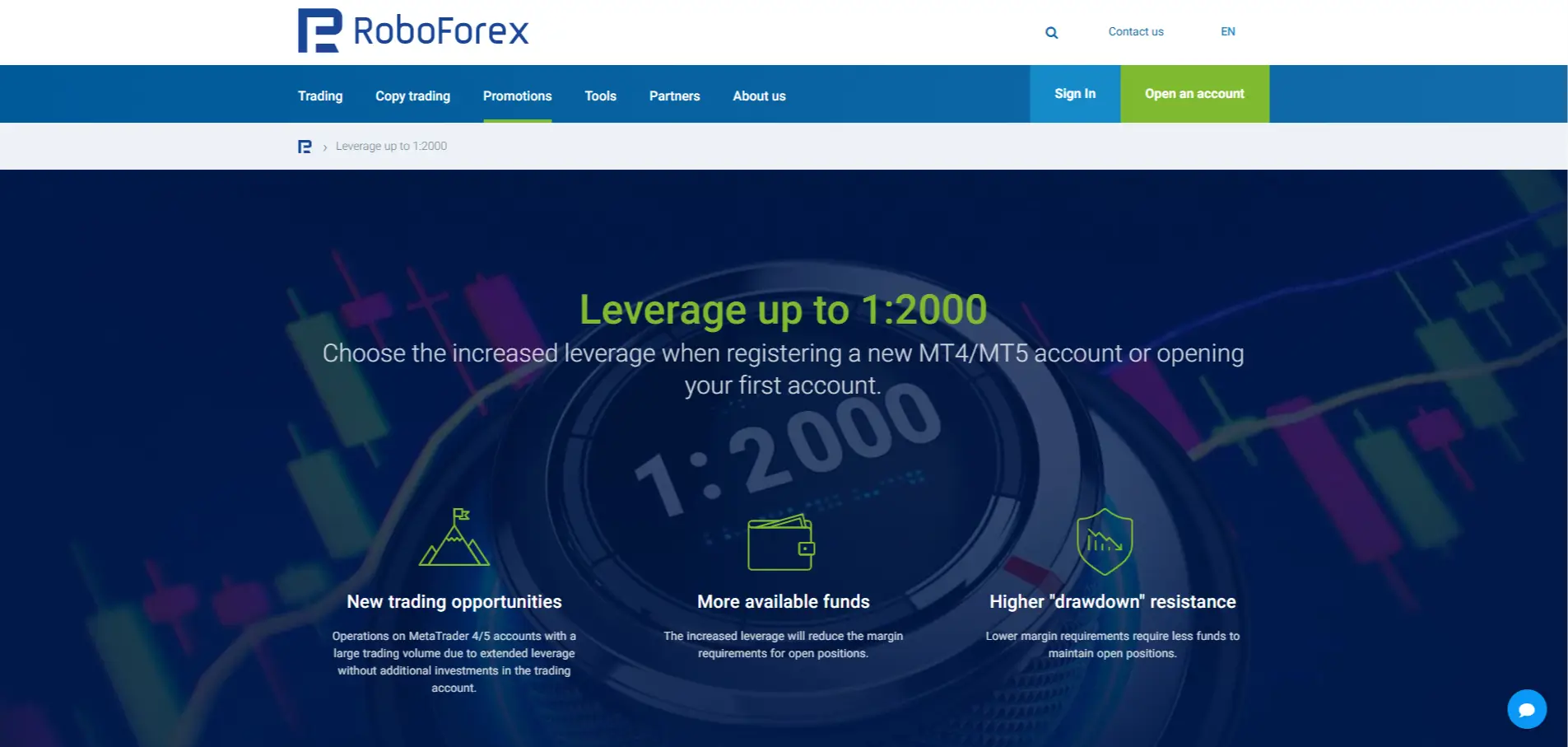
RoboForex offers leverage up to 1:2000, the second highest on this list, across its ECN and Pro account types. The broker has been operating since 2009 and serves traders across multiple asset classes: forex, commodities, indices, stocks, ETFs, and futures, all accessible from MT4, MT5, WebTrader, MobileTrader, and R StocksTrader.
The ProCent account allows live strategy testing at real market conditions with minimal capital exposure, which is particularly useful when validating a leveraged approach before applying it at full size.
A cashback program returns a portion of trading costs to active accounts monthly. Spreads start from 0.0 pips on ECN accounts. Minimum deposit is $10.
Regulated by FSC. Non-trading fees including inactivity charges run above the average for this group. Negative balance protection is applied. Civil liability insurance of up to 2.5 million euros adds an additional layer of fund protection beyond standard segregation.
Strengths: 1:2000 leverage, civil liability insurance, ProCent for live testing, cashback rewards, five platform options.
Worth Noting: FSC provides lighter oversight than FCA or ASIC. Non-trading fees above average.
RoboForex supports both MT4 and MT5 trading.
JustMarkets offers the highest leverage ceiling on this list at 1:3000, available on its Standard and Standard Cent accounts. The broker serves traders from over 160 countries and holds licenses from FSA, CySEC, FSCA, and FSC, covering a meaningful range of jurisdictions. Negative balance protection is applied across all account types.
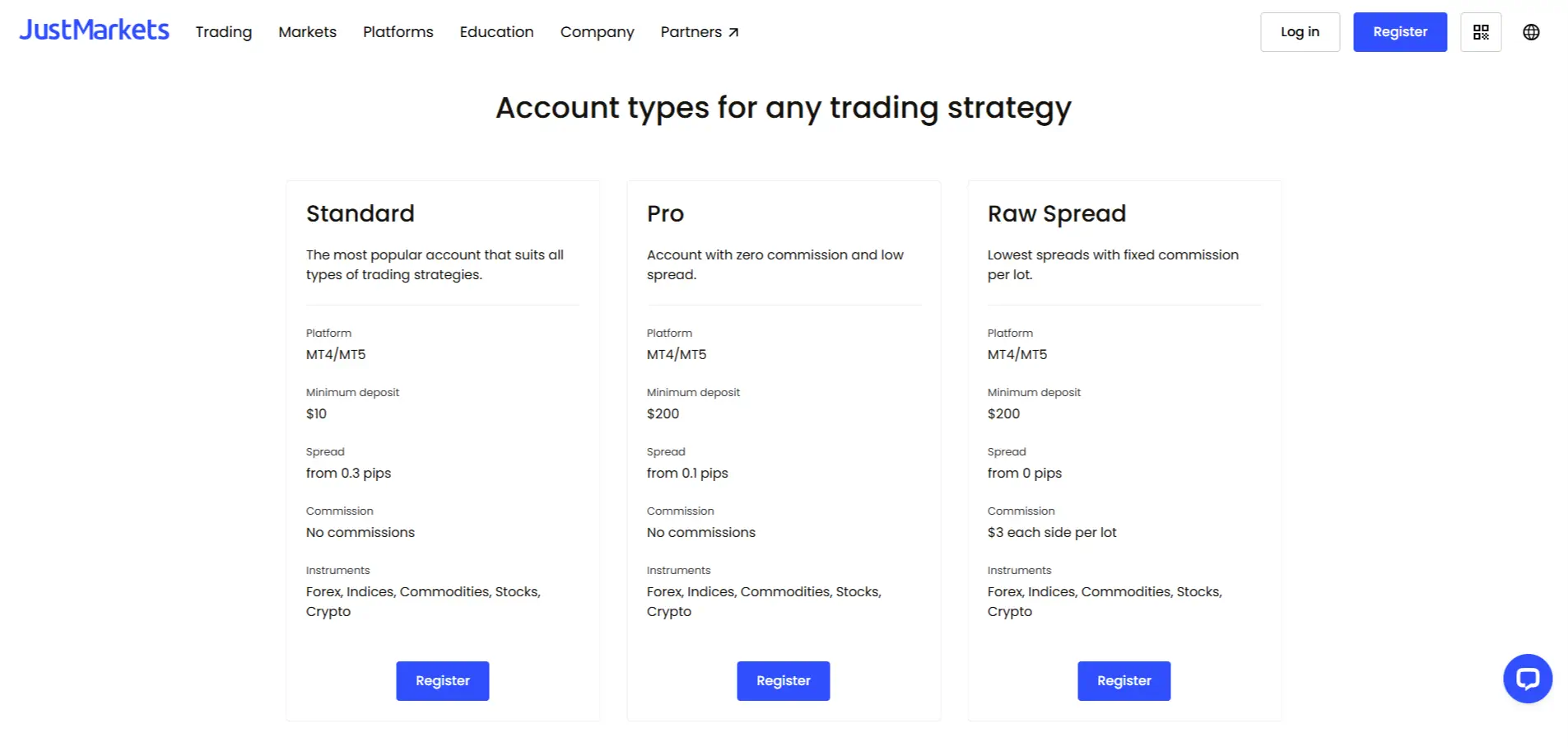
Six account types provide genuine flexibility: Standard, Standard Cent, Raw Spread, Pro, Islamic, and a demo account. Spreads on the Raw Spread and Pro accounts start from 0.0 pips with commissions of $3 per side per lot. The Standard and Standard Cent accounts carry no commission. MT4 and MT5 are both available with mobile apps for Android and iOS.
Execution averages 50ms. Copy trading is supported natively. The broker imposes inactivity fees on dormant accounts, so the full fee schedule should be checked before funding if trading frequency may be inconsistent.
Strengths: Highest leverage on the list, six account types, copy trading, tight spreads on Raw account, multi-jurisdiction regulation.
Worth Noting: 1:3000 leverage is extremely high. Use minimal effective leverage regardless of what is available. Inactivity fees apply.
Expert Tip: JustMarkets limits 1:3000 leverage to Standard and Standard Cent accounts. Raw Spread and Pro accounts carry lower maximum leverage but tighter spreads. For scalpers and active traders, the Raw account at lower leverage is usually the better cost structure.
JustMarkets is active across African markets, the Middle East, and Asia.
Trader's Way offers leverage up to 1:1000 across its four account types, with zero commissions and spreads starting from 0.0 pips on the CT.ECN account. The $10 minimum deposit and fast account opening process make it one of the most accessible options on this list.
MT4, MT5, and cTrader are all available, with the CT.ECN account on cTrader being the standout offering for direct market access and tight pricing.
Automated trading is supported without restrictions on EA frequency or trade duration. The broker has been operating since 2011 and has built a consistent reputation for platform stability and reliable fills.
Note: Trader's Way holds no license from any recognized financial authority as of 2026. There is no independent oversight of fund management, no formal complaints process, and no compensation scheme. Negative balance protection is listed but cannot be independently verified without regulatory oversight. The trading conditions are competitive, but this risk should be weighted seriously before depositing significant capital.
Strengths: Zero commission, tight spreads on CT.ECN, cTrader support, no trade restrictions, low entry deposit.
Worth Noting: Unregulated. No verified client fund protection. Approach with limited capital only.
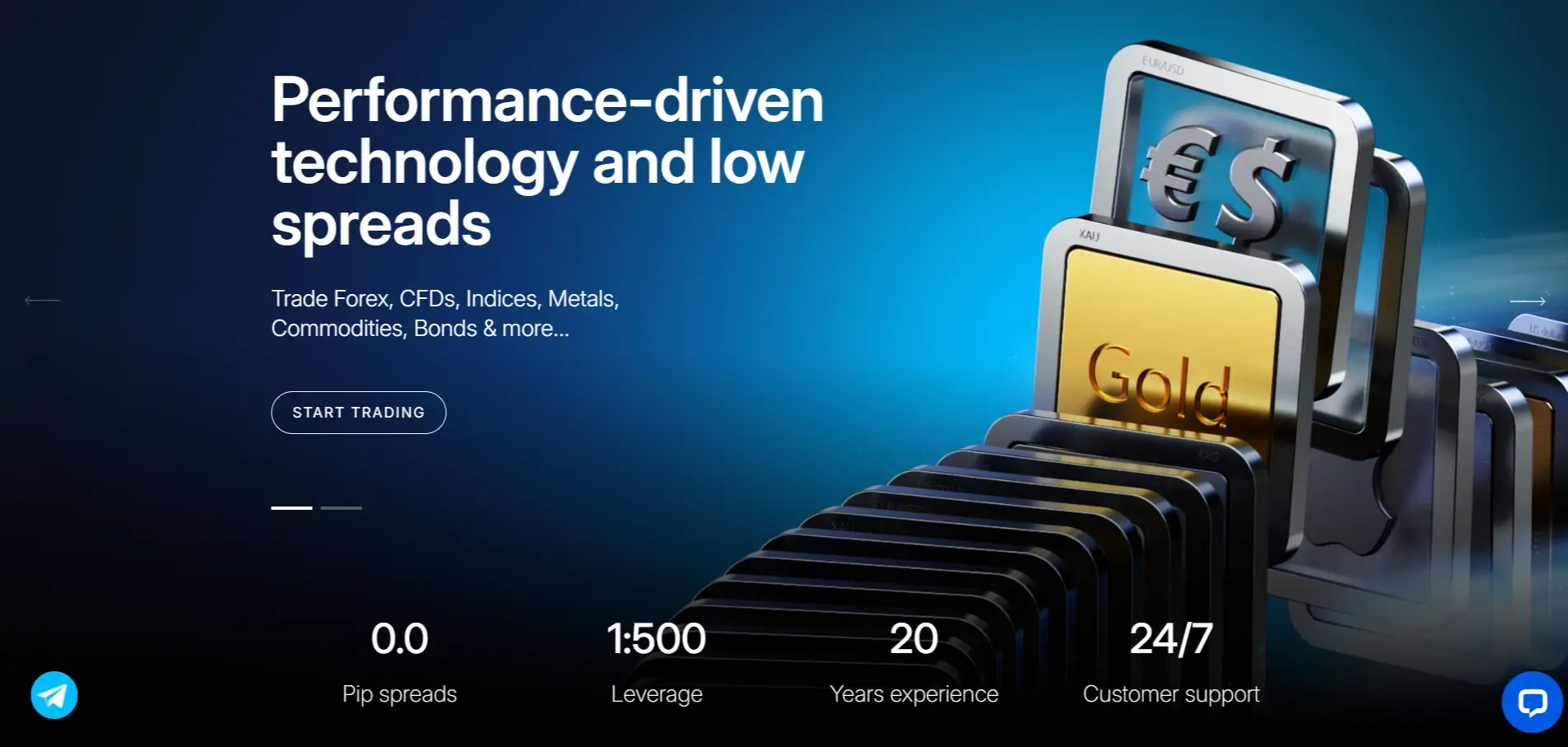
FP Markets offers leverage up to 1:500, the lowest ceiling on this list but paired with the strongest regulatory credentials: ASIC, CySEC, and FSCA.
For traders who want meaningful leverage with the protection of top-tier oversight, this combination is more practical than 1:2000 leverage from an offshore-regulated broker where fund protection is unclear.
The Raw account delivers spreads from 0.0 pips with commissions up to $3 per lot. Execution averages 40ms, matching IC Markets for the fastest on this list. MT4, MT5, cTrader, WebTrader, and TradingView are all available.
The Iress platform provides direct market access to ASX-listed equities for Australian traders alongside the standard forex offering.
Minimum deposit is $100. Multilingual support runs 24/5. The educational library is comprehensive, covering both platform basics and advanced strategy development. Negative balance protection is applied.
Strengths: ASIC and CySEC regulated, 40ms execution, TradingView integration, Iress for equity DMA, deep liquidity pool.
Worth Noting: 1:500 is the lowest ceiling here. Higher minimum deposit than most competitors at $100.
FP Markets is listed among our best ECN brokers and best fast execution brokers. Popular in Australia and the UK.
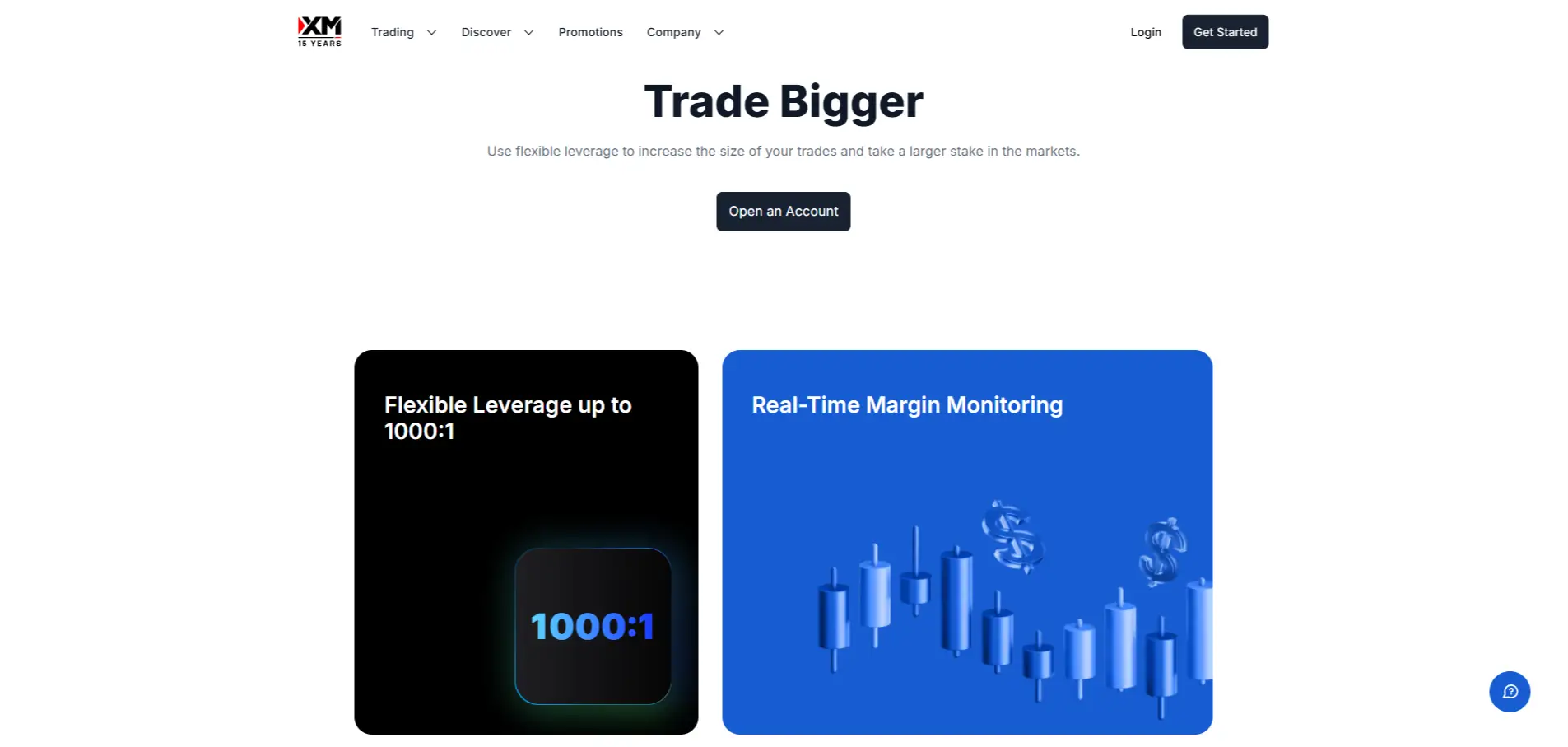
XM offers leverage up to 1:1000 across its four account types, with the strongest regulatory standing of any broker on this list: ASIC, CySEC, and DFSA simultaneously. That combination means traders benefit from meaningful leverage while operating under oversight that actually enforces negative balance protection, segregated accounts, and fair execution standards.
The $5 minimum deposit is the lowest here. Zero accounts deliver spreads from 0.0 pips with commissions up to $3 per lot. Standard accounts carry no commission with slightly wider spreads.
MT4, MT5, and the XM mobile app are all available. The MQL5 marketplace integration within MT5 gives access to thousands of verified EAs for traders who want to automate strategies alongside their high-leverage positions.
Risk management tools are well implemented: stop-loss and take-profit on all order types, clear margin level displays, and margin call notifications before positions are auto-closed. Educational resources are the most developed of any broker on this list.
Strengths: Strongest regulatory profile, lowest minimum deposit, MQL5 integration, Islamic accounts, strong risk management tools, thorough education.
Worth Noting: Not available to US traders. Spread range is wider than pure ECN alternatives on standard accounts.
XM is featured in our best brokers for beginners and best STP brokers rankings. Popular in Bangladesh, Nigeria, Vietnam, and the Philippines.
The leverage available from a broker is heavily shaped by where it is regulated. This distinction matters beyond just the numbers.
| Factor | Regulated Brokers | Offshore Brokers |
|---|---|---|
| Regulator examples | FCA, ASIC, CySEC | FSC, IFSC, SVG, or none |
| Leverage limits | Capped: 1:30 for majors under ESMA, 1:500 under ASIC | Very high leverage allowed, often 1:500 to 1:3000+ |
| Client fund protection | Segregated accounts required by law | Protection varies or unclear |
| Negative balance protection | Mandatory under FCA and ESMA | Offered voluntarily, cannot be independently verified |
| Dispute resolution | Formal complaints process with regulator | Limited, often no independent path |
| Practical summary | Lower leverage ceiling, stronger protection | Higher leverage ceiling, fewer guarantees |
Many offshore brokers are operationally reliable. The issue is that offshore regulation does not independently verify that claim. If something goes wrong, your options are limited. For significant capital, the regulatory trade-off matters more than the leverage ceiling.
Small price moves cause large losses. At 1:500 leverage, a 0.2% adverse price move wipes the margin on a position. On EUR/USD, which moves 0.2% or more on most trading days, this is not a rare event. It is a routine occurrence. High leverage does not change market behavior. It changes how much each tick costs you.
Margin calls happen faster than expected. When account equity drops below the required maintenance margin, positions are closed automatically. At high leverage, this threshold is reached quickly during normal volatility, not just during extreme events. Many traders experience margin calls during brief price spikes that reverse within minutes, leaving them closed out at a loss before the trade had time to recover.
Overtrading becomes easier. Low margin requirements make it simple to open many positions simultaneously. The psychological effect is that available margin feels like usable capital. It is not. Total exposure across all open positions determines real risk, not the margin balance.
Recovery from losses is harder than the math suggests. A 50% account loss requires a 100% gain to recover. At high leverage, a 50% loss can happen in a single session. The asymmetry between losing and recovering makes high leverage particularly dangerous for accounts that cannot absorb repeated drawdowns.
Expert Tip: Before using any leverage above 1:10, calculate what price move would trigger a margin call on your planned position size. If that number is smaller than a typical daily range for the pair you trade, the leverage is too high for that position.
Verify the regulation on official databases. Do not rely on the broker's own website. Go to the FCA, ASIC, or CySEC official website and search for the broker's legal company name. Confirm the license is active. This takes two minutes and tells you more than any marketing page.
Check whether negative balance protection is legally enforceable. Under FCA and ESMA rules, negative balance protection is mandatory and enforceable. Under most offshore regulators, it is a voluntary policy that the broker can change. Understand which category applies to your account before funding it.
Read the margin call and stop-out levels carefully. These determine at what equity level positions are closed. Brokers with transparent, predictable stop-out rules give you time to act. Brokers with vague or variable stop-out policies leave you exposed to sudden position closures without notice.
Test a withdrawal before funding fully. Deposit the minimum amount, make a small trade, and withdraw. This confirms the withdrawal process works as described before significant capital is involved.
Set your own leverage limit below the broker's maximum. Most trading platforms let you reduce your effective leverage in the account settings. Setting a self-imposed cap of 1:20 or lower while having access to 1:1000 gives you flexibility without the default risk of maximum exposure on every trade.
| Broker | Max Leverage | Commission | Regulation |
|---|---|---|---|
| Exness | 1:Unlimited | $0-$3.50 | CySEC, FCA |
| LiteFinance | 1:1000 | $0.25 | SVG, CySEC |
| AvaTrade | 1:1000 | $0 | ASIC, FSCA, CySEC |
| IC Markets | 1:1000 | $0-$3.50 | FSA |
| RoboForex | 1:2000 | Varies | FSC |
| OctaFX | 1:1000 | $0 | FCA, CySEC |
See full low spread broker comparison!
| Broker | Min. Deposit | Max Leverage | Platforms |
|---|---|---|---|
| XM | $5 | 1:1000 | MT4, MT5, XM App |
| OctaFX | $25 | 1:1000 | MT4, MT5, OctaTrader |
| RoboForex | $10 | 1:2000 | MT4, MT5, WebTrader, R Stocks |
| JustMarkets | $10 | 1:3000 | MT4, MT5, Mobile |
| Trader's Way | $10 | 1:1000 | MT4, MT5, cTrader |
| FP Markets | $100 | 1:500 | MT4, MT5, cTrader, TradingView |
JustMarkets offers 1:3000 on Standard accounts, the highest on this list. RoboForex offers 1:2000. Exness offers effectively unlimited leverage on select accounts. The more important question is which broker pairs that leverage with verifiable fund protection and clear margin rules.
The leverage ratio itself is not safe or unsafe. The position size you open relative to your account equity determines your actual risk. At 1:1000, a $500 account can technically control $500,000 worth of currency. A 0.1% adverse move would wipe that account. Most experienced traders using high-leverage accounts apply far less than the maximum, keeping effective leverage at 1:10 to 1:20 regardless of what the broker allows.
For a $100 account, effective leverage of 1:10 to 1:50 keeps position sizes at a level where normal market volatility does not trigger a margin call. At 1:50, a $100 account can open a $5,000 position. On EUR/USD, a 100-pip adverse move would cost $50, which is half the account. Risk per trade of 1 to 2% of account equity is a more useful framework than the leverage ratio alone.
Most professional traders who manage their own capital use effective leverage of 1:5 to 1:20 regardless of account size. Regulators in the EU and UK cap retail forex leverage at 1:30 on major pairs for this reason. The higher the leverage, the less room there is for the market to move against you before a margin call. Safe leverage is the level at which a typical daily price move on your trading pair cannot wipe a meaningful portion of your account.
Not necessarily. OctaFX and RoboForex offer high leverage with no commissions on standard accounts. JustMarkets, XM, and FP Markets offer low commissions on Raw and ECN accounts. High leverage availability is unrelated to fee structure. Always calculate the full cost per trade including spread and commission before choosing an account type.
Negative balance protection means your account cannot go below zero, regardless of how far the market moves against your positions. Without it, a sudden price gap during a news event or weekend open could result in you owing money to the broker beyond your deposit. Under FCA and ESMA rules, negative balance protection is mandatory. Under offshore regulation, it is a voluntary policy. Verify which applies to your specific account before funding.