
 IUX
IUX
 Exness
 Vantage
 XM
XM
 ICMarkets
 LiteFinance
 Moneta
 Tickmill
 South Africa (9)
 India (9)
 Bangladesh (12)
 Germany (9)
 Thailand (10)
 Philippines (9)
 Nigeria (10)
 Vietnam (10)
 Malaysia (9)




MT4 brokers provide tools, security, and support—start small, trade smart, and grow fast.




MT4 turned 20 in 2025 and still runs on more retail trading accounts than any other platform. That says something. Newer platforms offer more timeframes, more asset classes, and faster backtesting, yet traders keep coming back to MT4 because it does the core job reliably and without friction.
The platform itself is free. The broker is where the real difference shows up. Two traders using the same MT4 setup can have completely different experiences depending on who sits behind their connection: one with 50ms fills and 0.0-pip spreads, the other fighting requotes and slippage on every trade.
We tested MT4 specifically through each broker's infrastructure, not just the platform in isolation. The brokers below were selected based on execution quality, spread consistency, EA compatibility, and regulatory standing.
You can also compare these against MT5 brokers, check best trading platforms, or browse our full broker awards if you want a broader view before deciding.
| Broker | Spreads | Min. Deposit | Commission | Leverage | Regulation | Account Types |
|---|---|---|---|---|---|---|
| Exness | 0.0–0.1 pips | $50 | $0–$3.50 | 1:Unlimited | CySEC, FCA | Standard, Cent, Raw, Zero, Pro |
| XM | 0.8–1.6 pips | $5 | $0–$3 | 1000:1 | ASIC, CySEC, DFSA | Micro, Standard, Zero, Ultra Low |
| LiteFinance | 0.0–3.0 pips | $10 | $0.25 | 1:1000 | SVG, CySEC | ECN, Classic, Cent |
| IC Markets | 0.0 pips | $0 | $0–$3.50 | 1:1000 | FSA | Raw Spread, Standard, cTrader |
| RoboForex | 0.0–1.3 pips | $10 | Varies | 1:2000 | FSC | Prime, ECN, ProCent, Pro, R Stocks |
| Trader's Way | 0.0–1.5 pips | $10 | $0 | 1:1000 | None | MT4.ECN, MT4.VAR, MT5.ECN, CT.ECN |
MetaTrader 4 was released by MetaQuotes in 2005, originally built for forex trading. It became the dominant retail trading platform within a few years and has held that position ever since.
The platform connects traders to their broker's server, delivers live price data, and handles order execution across forex pairs, metals, indices, and CFDs depending on what the broker offers.
MT4 runs on Windows natively and through a web browser on other systems. Mobile apps are available for Android and iOS. The interface is structured around four main panels: Market Watch for live prices, Navigator for accounts and indicators, Chart Windows for analysis, and the Terminal for trade history and account details.
Two features define MT4's longevity. First, Expert Advisors (EAs), which are automated trading programs that run directly on the platform and execute trades based on preset rules, no manual input required.
Second, the MQL4 community, a vast library of custom indicators, scripts, and EAs built by developers over 20 years, most of them free.
Expert Tip: MT4's built-in Strategy Tester lets you backtest an EA against historical data before running it live. Always backtest across at least 12 months of data on multiple currency pairs before trusting any automated strategy with real capital.
MT4 connects to the broker's server via a dedicated protocol. When you place a trade, the order travels from your platform to the broker's execution system, which routes it to the market or fills it from the broker's own liquidity pool depending on the account type.
The round-trip time for this process, commonly called latency, directly affects whether you get the price you clicked or something different.
ECN accounts on MT4 route orders directly to liquidity providers with minimal delay and tight spreads plus a commission. Standard accounts typically involve the broker acting as market maker with wider spreads and no commission.
For scalpers and algorithmic traders, ECN through MT4 is generally the better setup. For longer-timeframe traders, the spread difference matters less.
MT4 supports four order types: Market, Limit, Stop, and Trailing Stop. Pending orders are placed directly on the chart and remain active until the price reaches the trigger level or you cancel them manually.
The Terminal panel shows all open positions, pending orders, account balance, equity, margin, and trade history in one view.
Exness is the strongest MT4 option for traders who prioritize raw execution quality. The Zero account delivers spreads from 0.0 pips on major pairs with commissions of $3.50 per lot, and order fills consistently land under 50ms during normal market conditions. EA trading is fully supported with no restrictions on trade frequency or holding duration.
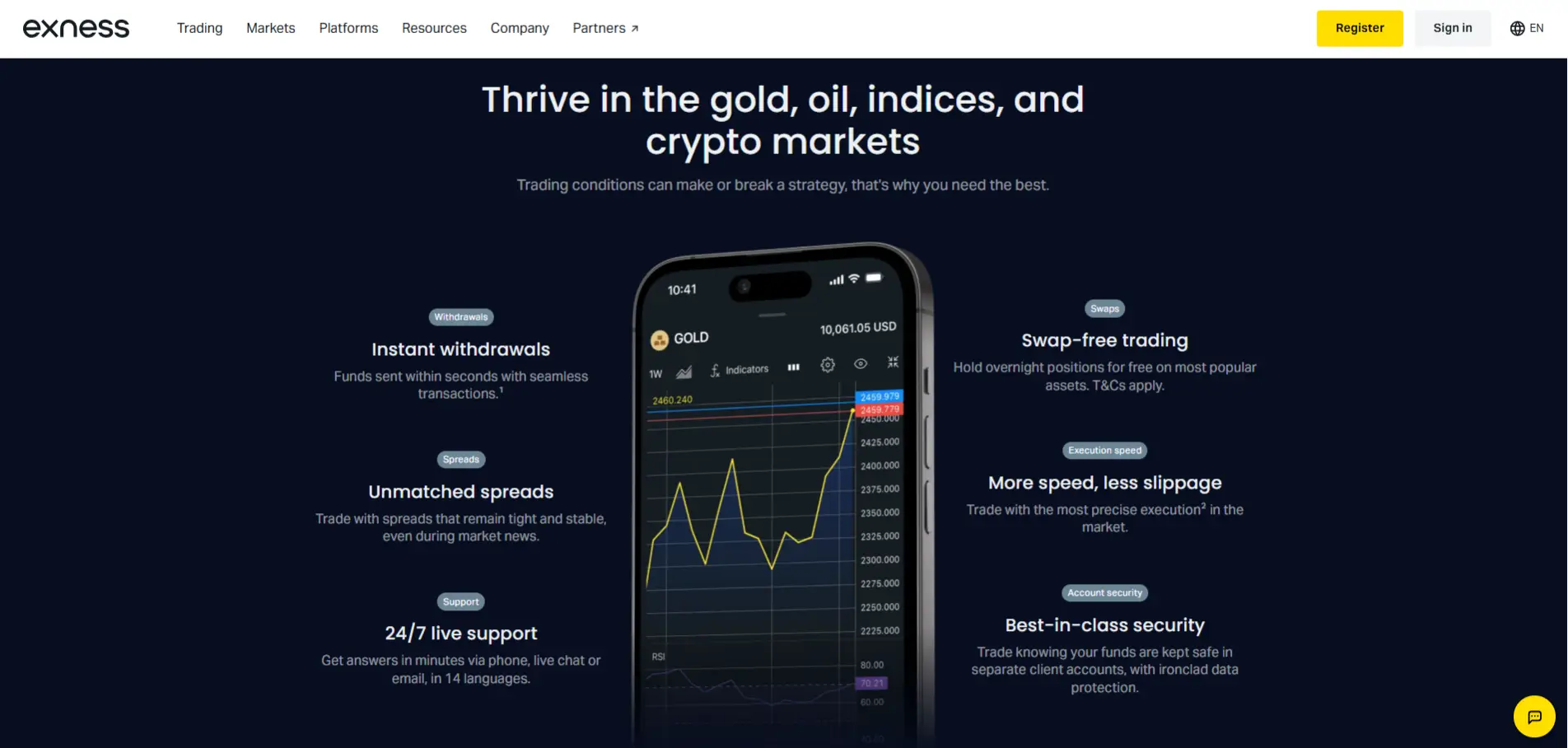
Five account types cover the full range from cent accounts for low-capital practice to professional ECN setups. The Standard account carries no commission and works well for traders targeting 5 pips or more per trade. The Raw Spread and Zero accounts suit scalpers and algorithmic traders where the cost-per-trade math is tighter.
Regulation sits with CySEC and FCA. Client funds are segregated and the broker undergoes independent audits. The minimum deposit is $10, and the Exness mobile app mirrors the desktop platform's execution quality without lag.
Strengths: Zero requotes, fast fills, 0% stop-out level, full EA support, broad local payment options, 24/7 support.
Worth Noting: Unlimited leverage is available on some accounts. Use it with strict position sizing rules.
Exness ranks among our best fast execution brokers and best low spread brokers. Popular with traders in Bangladesh, India, and across Asia.
XM's MT4 implementation is built around the MQL5 Signals marketplace integration, which gives traders access to thousands of verified signal providers and EAs alongside standard manual trading.
This makes XM the strongest MT4 choice for traders who want to combine their own strategy with automated or copied approaches on the same account.

The $5 minimum deposit is the lowest on this list. Zero accounts deliver spreads from 0.0 pips with commissions up to $3 per lot. Standard and Micro accounts carry no commission with slightly wider spreads, which suits traders targeting 3 to 5 pips without the complexity of ECN cost calculations.
XM holds licenses from ASIC, CySEC, and DFSA, the strongest regulatory combination among the brokers reviewed here. Educational content is thorough and practically useful for traders still building their MT4 skills alongside their broader market knowledge.
Strengths: MQL5 Signals access, top-tier regulation, lowest minimum deposit, strong education, Islamic accounts available.
Worth Noting: Spreads on Zero accounts widen more during volatile periods than Exness. Not available to US traders.
XM features in our best brokers for beginners and best STP brokers lists. It also offers Islamic accounts and deposit bonuses for eligible accounts.
LiteFinance has offered MT4 since its founding in 2005 and has accumulated a user base that spans both manual and algorithmic traders. The ECN account is the standout option for MT4 use: spreads from 0.0 pips, commissions at $0.25 per lot (the lowest on this list), and automated withdrawal processing.
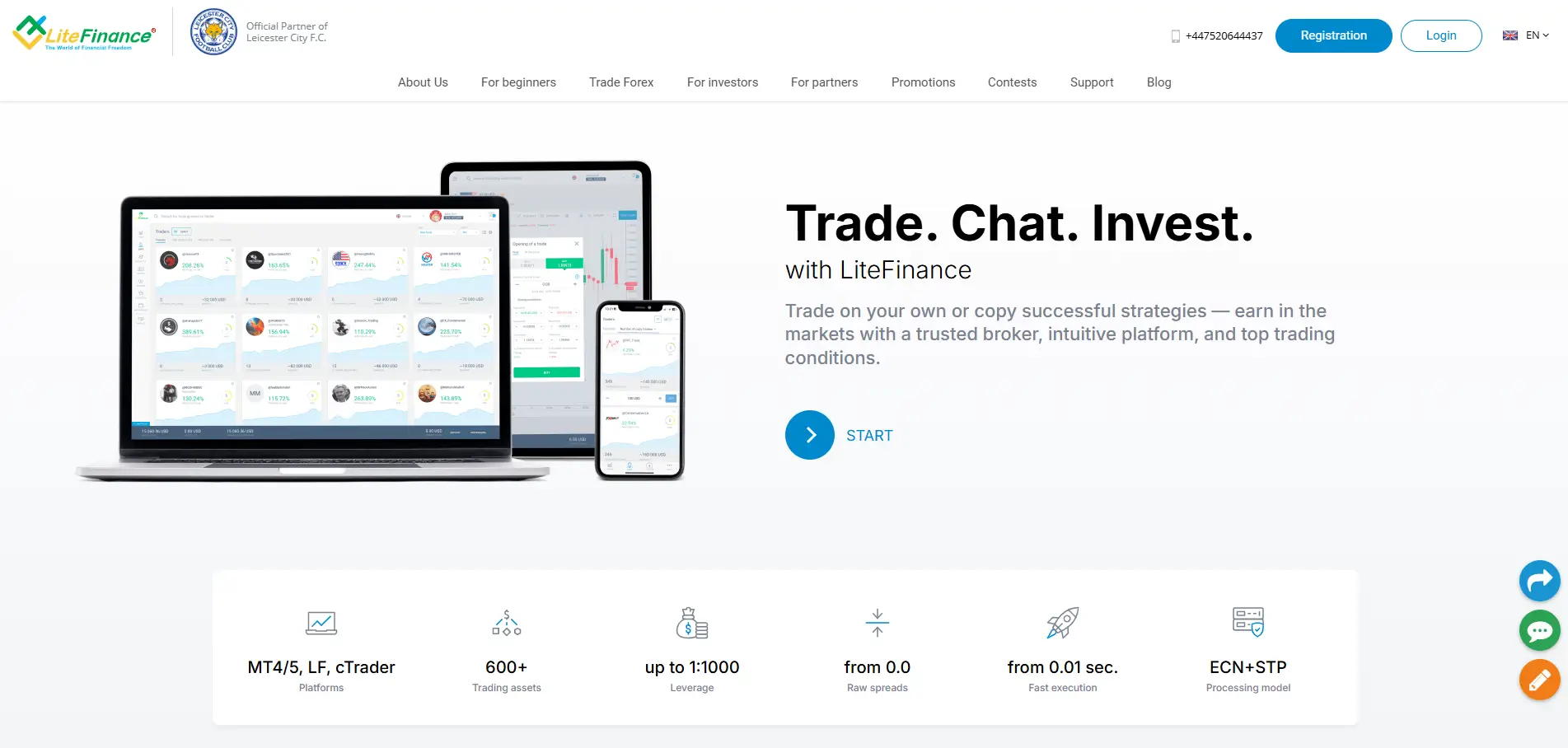
The copy trading layer sits alongside MT4 access, meaning traders can run their own EAs while also following other signal providers, all within the same account. The Cent account is useful for testing live EA behavior with minimal capital at risk before scaling to a standard lot size.
Regulation covers SVG and CySEC. The $50 minimum deposit suits traders past the absolute beginner stage. Payment methods include Visa, Mastercard, bank wire, Skrill, Neteller, and a wide range of crypto assets.
Strengths: Lowest commission per lot, copy trading alongside EA support, cent accounts for low-risk live testing, long operating history.
Worth Noting: Spreads widen more off-peak than some alternatives. London and New York sessions deliver tighter conditions.
LiteFinance is listed in our social trading brokers section and supports traders in Vietnam, the Philippines, and Malaysia.
IC Markets is the preferred MT4 broker for professional and high-volume traders. The Raw Spread account delivers spreads from 0.0 pips with commissions between $0 and $3.50 per lot, and the liquidity depth behind it handles large orders without meaningful slippage.
EA trading is not just permitted but actively supported, with VPS hosting available directly through the broker.
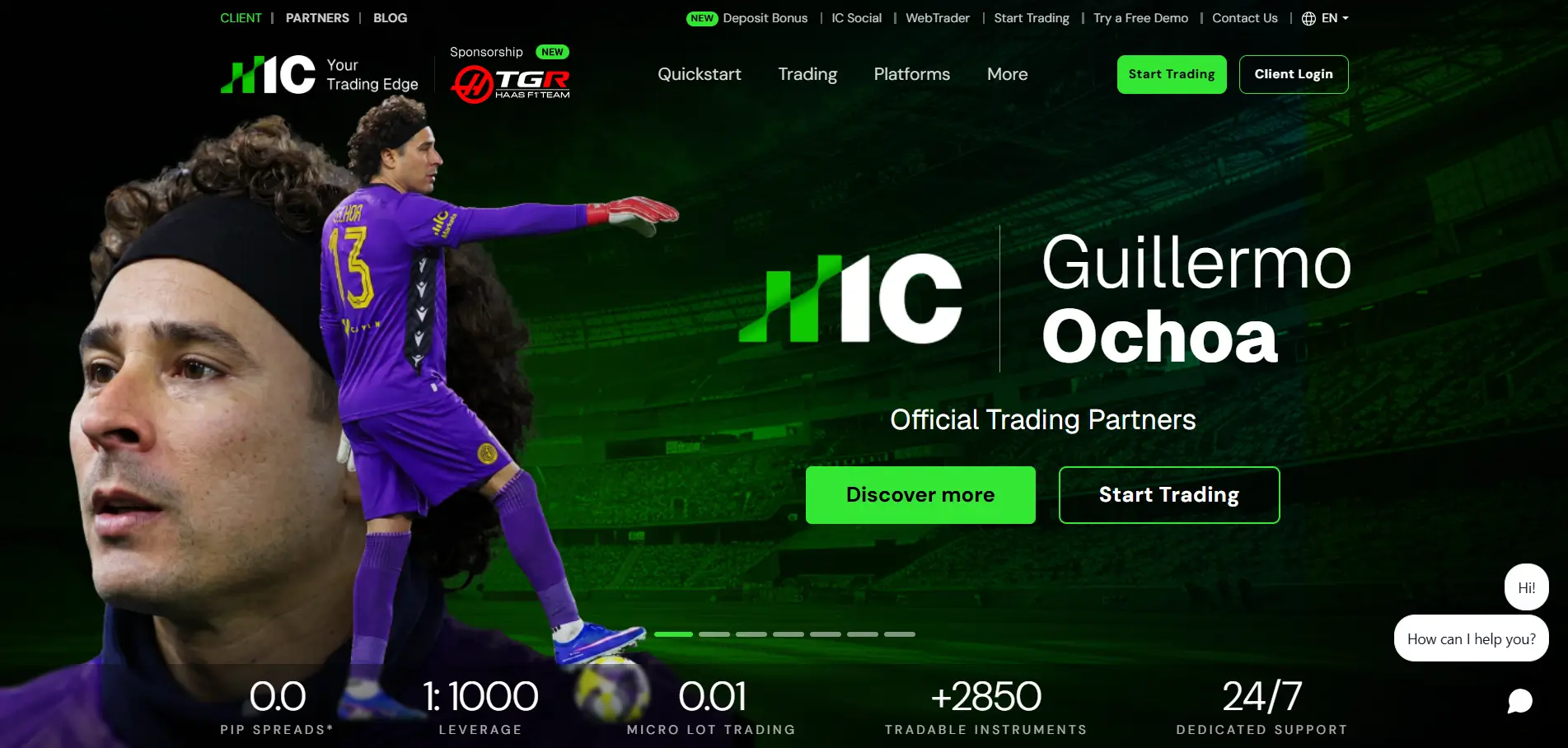
MT4, MT5, cTrader, and TradingView are all available, which means traders are not locked into a single execution environment. The MT4 infrastructure runs on fast servers with co-location close to major liquidity providers, reducing latency at the order level rather than just at the platform level.
The minimum deposit is $0, which is the highest on this list. For consistent traders, the tighter spread environment typically offsets this within the first few months of active trading. Regulated by FSA with segregated client funds.
Strengths: Institutional-grade liquidity, VPS hosting support, full EA compatibility, 24/7 support, deep raw pricing on major pairs.
Worth Noting: Higher minimum deposit. Best suited to traders with consistent monthly volume who benefit from the tighter spread savings.
Expert Tip: IC Markets offers free VPS hosting for accounts trading 15 or more standard lots per month. For algorithmic traders running EAs around the clock, this removes latency between the EA and the broker's server entirely.
IC Markets is listed among our best ECN brokers and best scalping brokers. Popular with traders in Singapore, Japan, and Australia.
RoboForex supports MT4 across its Pro, ProCent, ECN, and Prime account types, with spreads from 0.0 pips on ECN accounts and leverage up to 1:2000 on some setups.
The broker's R StocksTrader platform sits alongside MT4 for traders who want equity access in addition to forex, though MT4 remains the primary interface for most users.

EA trading is fully supported, and the broker runs regular cashback programs that return a portion of trading costs to active accounts.
The ProCent account lets traders run live EAs with minimal capital exposure before scaling, which is a practical way to validate strategy performance in real conditions.
Regulated by FSC with a minimum deposit of $10. Non-trading fees including inactivity charges run slightly above average, so the full fee schedule is worth checking if trading frequency is inconsistent.
Strengths: High leverage, cashback rewards, ProCent account for live EA testing, broad platform support, low slippage.
Worth Noting: Non-trading fees are above average. Check inactivity policy before funding.
RoboForex features in our best high-leverage brokers rankings.
Trader's Way offers zero-commission MT4 trading across its MT4.ECN and MT4.VAR account types with spreads starting from 0.0 pips. The $10 minimum deposit and fast account opening process make it one of the more accessible options for traders who want to test a live MT4 setup quickly.
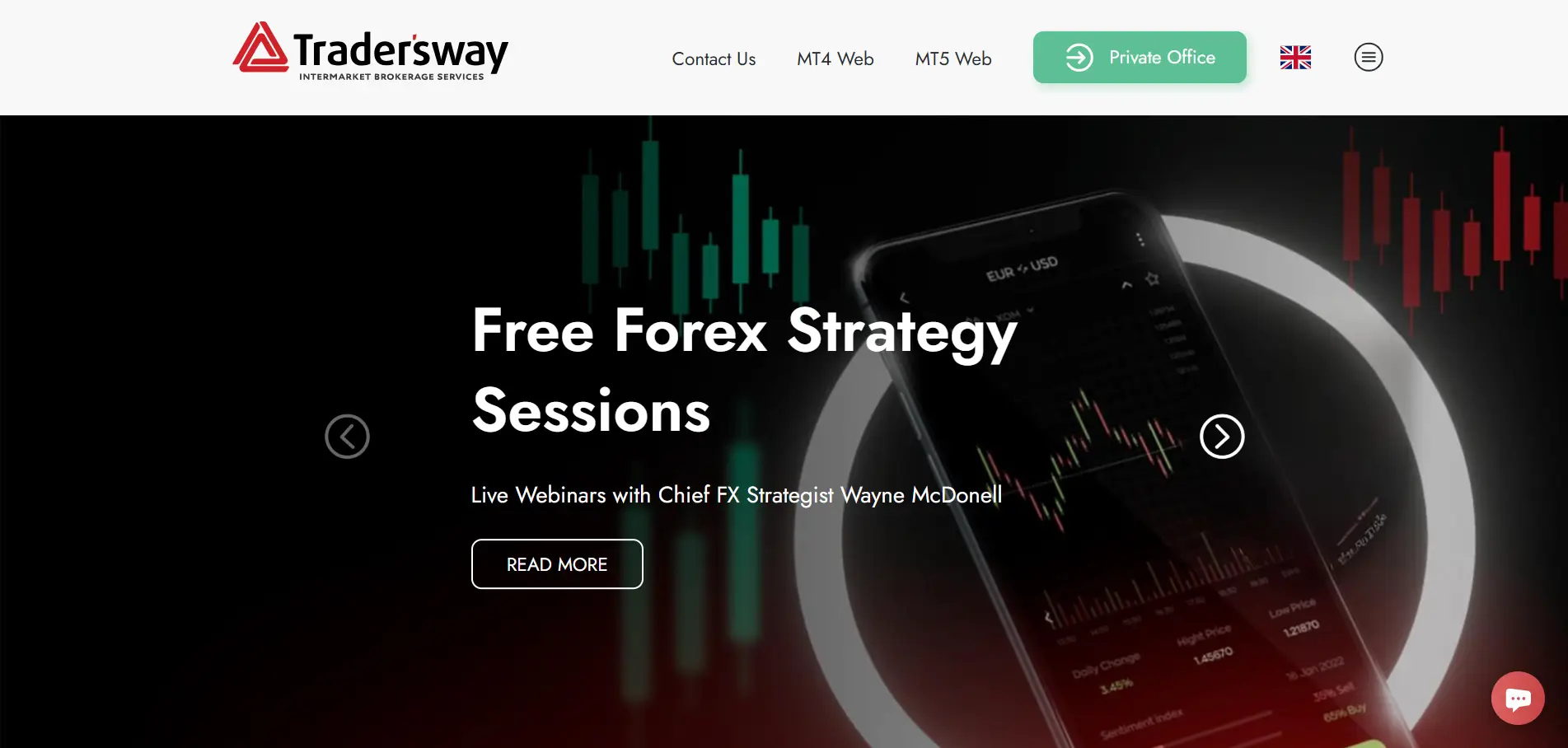
EA trading is supported without restrictions on trade frequency or duration. The MT4 interface connects to the same execution environment as MT5 and cTrader accounts, giving traders flexibility to switch platforms if needed.
Note: Trader's Way holds no license from any recognized financial authority as of 2026. There is no independent oversight of fund management, no formal complaints process, and no compensation scheme.
The trading conditions are competitive, but this risk should be weighed carefully before depositing significant capital.
Strengths: Zero commission, competitive spreads, full EA support, fast account setup, low entry deposit.
Worth Noting:Unregulated. No client fund protection. Approach with limited capital.
| Feature | MT4 | MT5 |
|---|---|---|
| Released | 2005 | 2010 |
| Primary Focus | Forex trading | Forex, stocks, futures, options, crypto |
| Order Types | 4 (Market, Limit, Stop, Trailing Stop) | 6 (adds Buy Stop Limit, Sell Stop Limit) |
| Timeframes | 9 timeframes | 21 timeframes |
| Built-in Indicators | 30 | 38+, plus 44 graphical tools |
| Market Depth | Not available | Available (stocks and futures) |
| Programming Language | MQL4 | MQL5 (faster backtesting) |
| Backtesting | Single-threaded, slower | Multi-threaded, faster |
| OS Compatibility | Windows, mobile (Android/iOS) | Windows, macOS, Web, mobile |
| Best for | Forex-focused traders, EA users | Multi-asset traders, advanced analysis |
The Short Answer: if you trade forex and already use EAs built in MQL4, stick with MT4. The platform is stable, the EA library is enormous, and most MT4 brokers have optimized their execution for it over many years.
If you trade stocks, futures, or need more timeframes and faster backtesting, MT5 makes sense. See our full MT5 brokers comparison for more detail.
| Broker | Spreads | Commission | Leverage | Min. Deposit | Regulation |
|---|---|---|---|---|---|
| Exness | 0.0–0.3 pips | $0–$3.50 | 1:Unlimited | $50 | CySEC, FCA |
| XM | 0.8–1.6 pips | $0–$3 | 1000:1 | $5 | ASIC, CySEC |
| LiteFinance | 0.0–3.0 pips | $0.25 | 1:1000 | $10 | SVG, CySEC |
| IC Markets | 0.0 pips | $0–$3.50 | 1:1000 | $0 | FSA |
| AvaTrade | 0.0 pips | None | 1:1000 | $100 | ASIC, FSCA, CySEC |
| OctaFX | 0.6 pips | $0 | 1:1000 | $25 | FCA, CySEC |
See full brokers list for Bangladesh!
| Broker | Spreads | Commission | Leverage | Min. Deposit | Regulation |
|---|---|---|---|---|---|
| Exness | 0.0–0.3 pips | $0–$3.50 | 1:Unlimited | $50 | CySEC, FCA |
| XM | 0.8–1.6 pips | $0–$3 | 1000:1 | $5 | ASIC, CySEC |
| LiteFinance | 0.0–3.0 pips | $0.25 | 1:1000 | $10 | SVG, CySEC |
| IC Markets | 0.0 pips | $0–$3.50 | 1:1000 | $0 | FSA |
| AvaTrade | 0.0 pips | None | 1:1000 | $100 | ASIC, FSCA, CySEC |
| Tickmill | 0.0–1.6 pips | $0–$3 | 1:1000 | $100 | FSA, CySEC |
See full brokers list for India!
Yes, and the reason is practical rather than sentimental. MT4's MQL4 language has 20 years of production-tested EAs behind it. A professional running a strategy written in MQL4 has no reason to rewrite it in MQL5 unless the strategy demands features only MT5 provides.
The code works, the broker support is mature, and the execution environment is well understood.
Institutional traders generally use different systems entirely, but among retail professionals managing their own capital, MT4 with a high-quality ECN broker remains a practical, cost-efficient setup.
The 30+ built-in indicators, combined with custom additions from the MQL4 community, cover most analytical needs without requiring additional software.
MT4's MACD implementation, for example, is trusted by traders who use it to identify trend reversals. Traders using Moving Average crossover EAs consistently report win rates of 50 to 60% in trending markets with proper parameter tuning. These are not theoretical results; they come from years of live trading data across the platform.
Picking a broker based on the bonus, not the execution. Welcome bonuses and deposit matches are easy to advertise. Execution speed, requote frequency, and real spread averages during live sessions are harder to assess but matter far more to actual trading results.
Not testing the demo account during volatile periods. A demo account during quiet Asian session trading tells you almost nothing about how the broker performs at London open or during NFP releases. Test during high-activity windows before funding.
Ignoring risk management tools. MT4 makes it straightforward to set Stop Loss and Take Profit on every order. Traders who skip this consistently take larger losses than necessary when a trade moves against them. Risking no more than 1 to 2% of capital per trade is the standard professional benchmark.
Over-relying on indicators without market context. MT4's indicator library is a tool, not a signal generator. An RSI reading of 30 in a strong downtrend is not automatically a buy signal. Indicators should confirm analysis, not replace it.
Running EAs without backtesting them. MT4's Strategy Tester is there for a reason. An EA that hasn't been tested across at least 12 months of historical data on multiple pairs has unknown performance characteristics. Live capital is not the right testing environment.
Expert Tip: Before going live with any broker, place three to five real trades with the minimum lot size and minimum deposit. This costs very little but reveals the actual execution quality, real spread behavior, and withdrawal process far better than any review can.
The four main panels are Market Watch (live prices), Navigator (accounts, EAs, indicators), Chart Windows (analysis), and Terminal (open trades, history, account details). Spend 30 minutes on a demo account just clicking through each panel before placing a single trade.
Open the pairs you plan to trade. Add two or three indicators maximum to start. More indicators create more conflicting signals, not more clarity. A 20-period moving average and RSI cover most basic analysis needs while you're learning the platform.
Click New Order, select the pair and lot size, set a Stop Loss and Take Profit, and confirm. Do this five times on demo before going near a live account. The mechanics should be automatic before real money is involved.
Use demo to test your strategy, not just the platform. A demo account is for validating strategy logic, not just getting comfortable with buttons. Run at least 20 trades on demo with consistent rules before evaluating whether the approach makes sense.
Fund your live account with what you can afford to lose. Start with the minimum deposit and minimum lot size. The goal is live experience, not returns. Once execution feels consistent and the strategy holds up, scale gradually.
Focus on three things in this order: regulation, execution quality, and cost structure. Regulation protects your funds. Execution quality determines whether you actually get the prices you click. Cost structure affects every trade you place. Spreads, commissions, and any non-trading fees should all be reviewed before depositing.
MT4 itself is well suited to beginners because the interface is consistent and the demo account mirrors live conditions accurately. The broker behind it matters equally. XM and Exness both offer beginner-friendly conditions with low minimum deposits, demo accounts, and strong support teams that understand the MT4 environment.
The MQL4 EA library is the main reason. Thousands of production-tested automated strategies exist for MT4 that have no direct MT5 equivalent. Beyond automation, the platform's stability and familiarity keep experienced traders on it even when newer options are available. Most major brokers continue investing in MT4 infrastructure because demand hasn't dropped.
All six brokers reviewed here offer demo accounts with no time limit. Use them to test execution speed, spread behavior during different sessions, and EA performance before committing real capital. The demo environment on regulated brokers typically reflects live conditions accurately on major pairs.
FCA, ASIC, and CySEC are the most protective jurisdictions for retail traders. FSA and FSC offer lighter oversight. Unregulated brokers like Trader's Way carry no formal client protection. Always verify the license on the official regulator's website before depositing. The scam brokers list on Top Asia FX is also worth checking.
Yes. EA support is one of MT4's core strengths and all brokers on this list permit automated trading. The practical difference is in execution quality: IC Markets and Exness both offer VPS-compatible setups with low-latency server connections that matter for high-frequency EAs. Slower execution on a lower-quality broker can turn a profitable EA into a losing one.
More than most traders realize until they calculate it. On a standard lot (100,000 units) of EUR/USD, a 0.1 pip difference in spread costs $1 per trade. Over 500 trades per year, that's $500. On an ECN account targeting 2 to 3 pips per trade, the spread is 5 to 10% of the target profit. It compounds meaningfully over time.
MT4 uses encrypted data transfer and supports two-factor authentication. The platform's security is solid. Safety in practice depends on the broker's regulation and fund management practices. A secure platform connected to an unregulated broker still carries significant risk. Choose the broker first, then the platform.