
 IUX
IUX
 Exness
 Vantage
 XM
XM
 ICMarkets
 LiteFinance
 Moneta
 Tickmill
 South Africa (9)
 India (9)
 Bangladesh (12)
 Germany (9)
 Thailand (10)
 Philippines (9)
 Nigeria (10)
 Vietnam (10)
 Malaysia (9)




Build your Forex skills step by step with micro accounts—risk less, gain more experience.




A micro account lets you trade real markets with real money at a fraction of the capital a standard account requires. For traders who are still building confidence, learning a new strategy, or testing a broker's execution before committing more funds, it is one of the most practical account types available.
Let’s evaluated each broker's micro account conditions on live accounts, checking minimum deposit requirements, actual spread behavior on small lot sizes, withdrawal speed, and whether the account truly supports trading at 0.01 lots without restrictions.
If you are also comparing by trading style or region, check best brokers for beginners, best low spread brokers, or brokers by country before deciding.
| Broker | Min. Deposit | Spreads | Commission | Leverage | Regulated | Platforms |
|---|---|---|---|---|---|---|
| Exness | $50 | 0.0–0.3 pips | $0–$3.50 | 1:Unlimited | Yes (CySEC, FCA) | MT4, MT5 |
| XM | $5 | 0.8–1.6 pips | $0–$3 | 1000:1 | Yes (ASIC, CySEC, DFSA) | MT4, MT5, XM App |
| LiteFinance | $10 | 0.0–3.0 pips | $0.25 | 1:1000 | Yes (SVG, CySEC) | MT4, MT5, cTrader |
| FP Markets | $100 | 0.0–1.0 pips | $0–$3 | 1:500 | Yes (ASIC, CySEC) | MT4, MT5, cTrader |
| RoboForex | $10 | 0.0–1.3 pips | Varies | 1:2000 | Yes (FSC) | MT4, MT5, R Stocks |
| Tickmill | $100 | 0.0–1.6 pips | $0–$3.50 | 1:1000 | Yes (FCA, CySEC) | MT4, MT5 |
A micro account allows trading in micro lots, where one lot equals 1,000 units of the base currency rather than the standard 100,000 units. Each pip on a micro lot is worth roughly $0.10 on USD pairs, compared to $10 on a standard lot. This means the same price movement carries one-hundredth of the financial impact.
That difference matters most in two situations. For new traders, it means real market experience without the risk of losing significant capital while learning. For experienced traders testing a new strategy or a new broker's execution, it means doing so with minimal exposure before scaling up.
Micro accounts are not training wheels to be discarded. Many professional traders use micro lot sizing as part of their regular risk management, particularly when entering positions in volatile conditions or testing a new setup in live markets before committing full size.
Expert Tip: Treat a micro account with the same discipline as a standard account. The habits you build at 0.01 lots will carry directly into your trading when you scale up. Sloppy risk management on small sizes leads to the same behavior on large sizes.
These three account types serve different purposes. Here is a clear side-by-side breakdown:
| Feature | Cent Account | Micro Account | Standard Account |
|---|---|---|---|
| Min. Deposit | $1 to $10 | $1 to $100 | $500 to $1,000+ |
| Trade Size | 1 cent lot = 10 units | 1 micro lot = 1,000 units | 1 standard lot = 100,000 units |
| Pip Value (USD) | $0.01 | $0.10 | $10 |
| Risk Level | Very low | Low | Higher |
| Best suited for | First-time traders, strategy testing | Building skills with real exposure | Experienced traders with solid capital |
Cent accounts are the smallest starting point but carry an important limitation: spreads and fees represent a larger percentage of each trade, which can make them less efficient for anything beyond pure practice. Micro accounts offer a better balance between low risk and realistic cost structure.
Exness offers micro account conditions through its Standard and Standard Cent account types, with a minimum deposit of $50. The Standard Cent account operates in cent lots, making it one of the smallest entry points available from a fully regulated broker. Spreads start from 0.0 pips on Zero accounts, and commissions range from $0 to $3.50 per lot depending on account type.
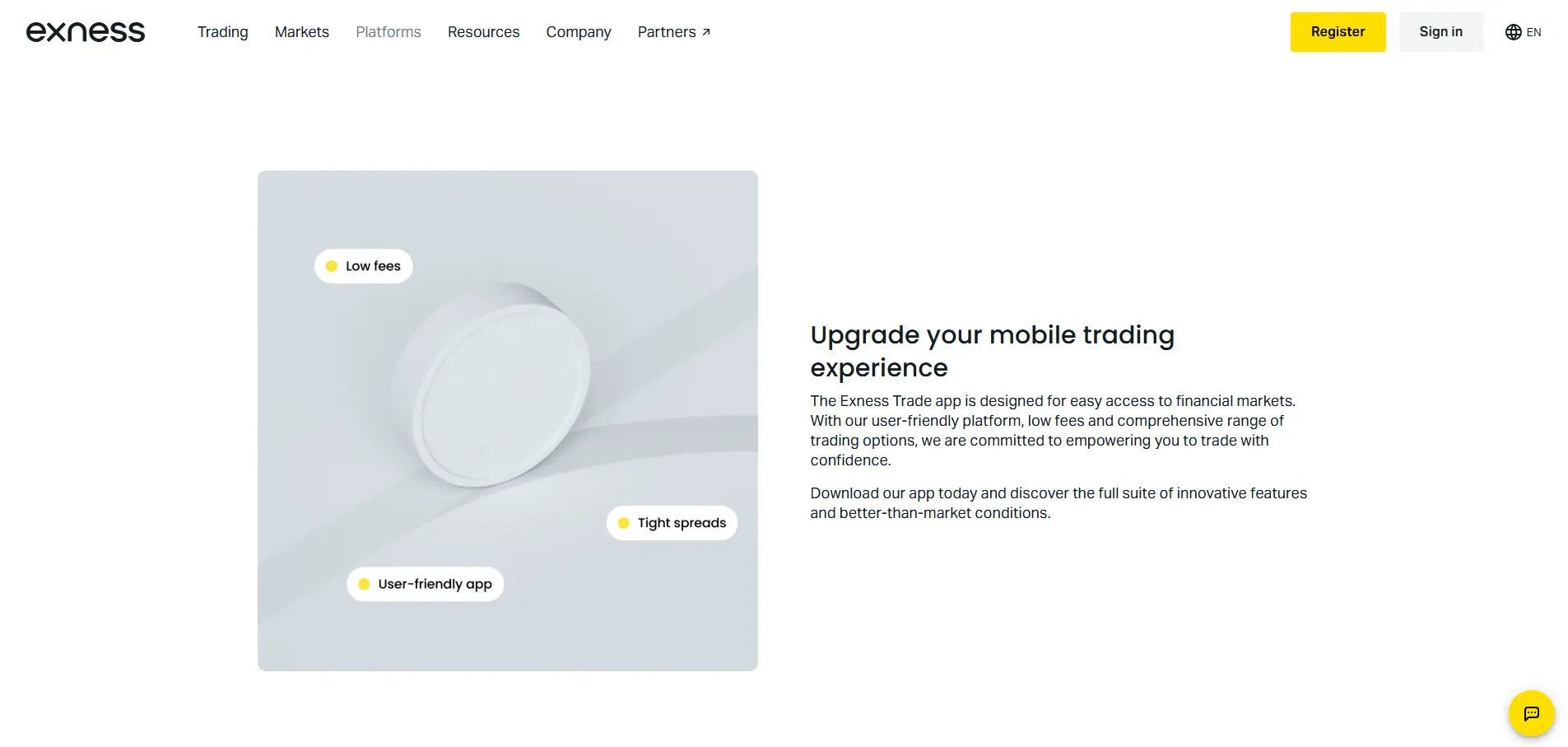
Execution speed is a genuine strength. Orders fill in milliseconds with near-zero requote frequency, which matters even on micro lot sizes because entry price quality affects the percentage return on a small account more than a large one. The broker is regulated by CySEC and FCA, with client funds in segregated accounts.
Payment options cover a wide range of local methods across Asia, the Middle East, and Africa, which is useful for traders in regions where international card payments carry additional costs. Withdrawals process quickly through most e-wallet options.
Strengths: Cent lot support, very low entry deposit, fast execution, 0% stop-out level, broad local payment options, strong regulatory credentials.
Worth Noting: Unlimited leverage is available on some accounts. For micro account trading, stick to modest leverage while building strategy consistency.
Expert Tip: On Exness Standard Cent accounts, the balance is displayed in cents rather than dollars. A $10 deposit shows as 1,000 cents. This makes position sizing feel more accessible and reduces the psychological pressure of watching dollar-based swings on a small account.
Exness features in our best fast execution brokers list and is a top pick for traders in Bangladesh, India, and across Asian markets.
XM is the strongest overall choice for new traders opening a micro account. The $5 minimum deposit is the lowest on this list, the account types include a dedicated Micro account supporting 0.01 to 0.1 lot sizes, and the educational resources are the most developed of any broker reviewed here. Beginners get access to webinars, video tutorials, and written guides covering both platform use and trading fundamentals.
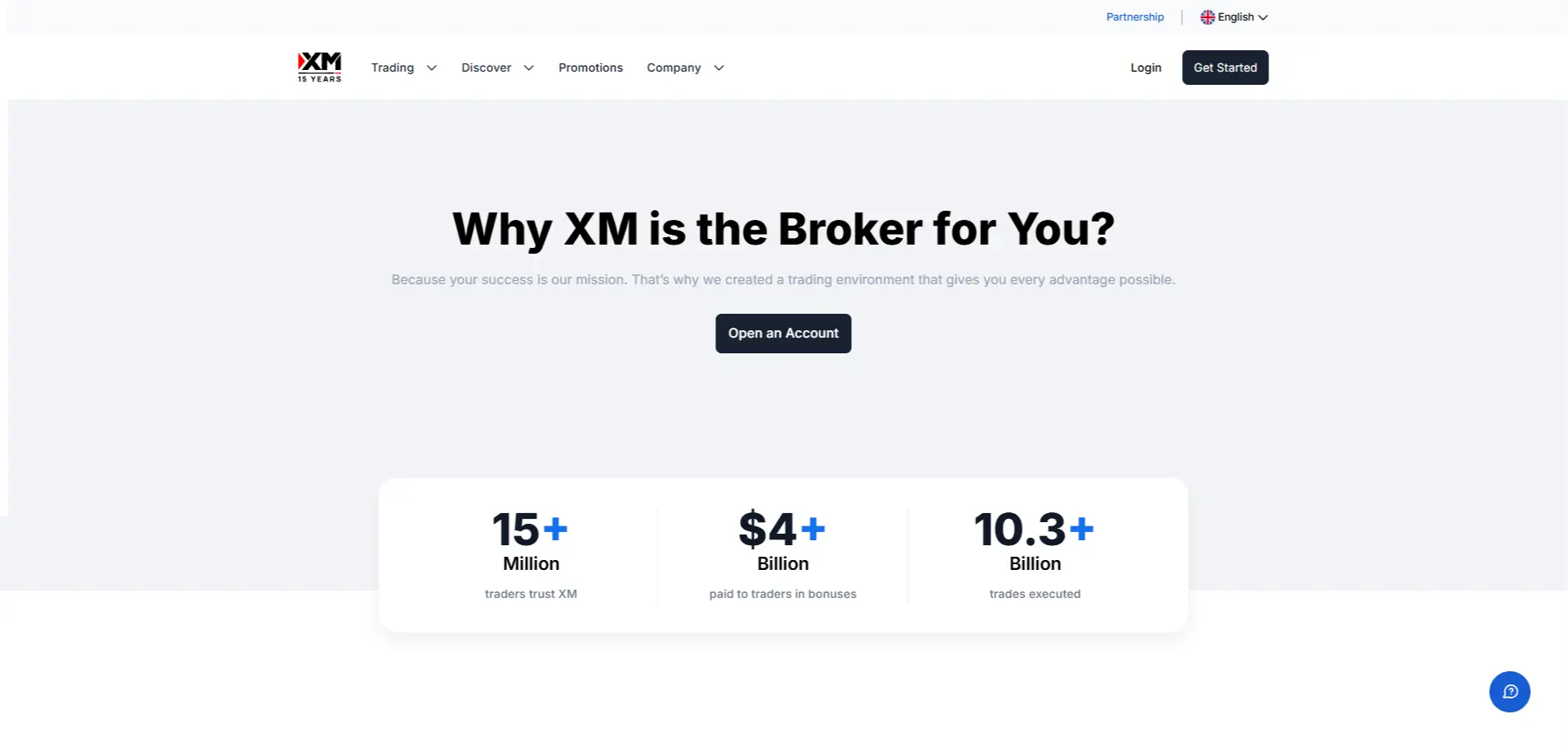
Spreads start from 0.0 pips on Zero accounts with commissions up to $3 per lot. Standard Micro accounts carry no commission with spreads typically from 1.0 pips on EUR/USD, which is reasonable for the account type. XM is regulated by ASIC, CySEC, and DFSA, giving it the strongest regulatory standing on this list.
MT4 and MT5 are both available, along with the XM mobile app. Demo accounts are also free and mirror live micro account conditions accurately, which makes them genuinely useful for practicing before going live.
Strengths: Lowest minimum deposit on the list, dedicated Micro account type, best education content, top-tier regulation, free demo with realistic conditions.
Worth Noting: Not available to US-based traders. Spreads on Micro accounts are slightly wider than ECN alternatives.
XM is listed in our best brokers for beginners rankings and is widely used by traders in Malaysia, the Philippines, and Pakistan. Check no-deposit bonuses and deposit bonuses available for new accounts.
LiteFinance has supported cent accounts since 2005, making it one of the longest-running brokers in the micro trading space. The Classic account starts at $10 and supports trading from 0.01 lots, while the ECN account offers tighter spreads from 0.0 pips with a $0.25 commission per lot, the lowest commission rate on this list.
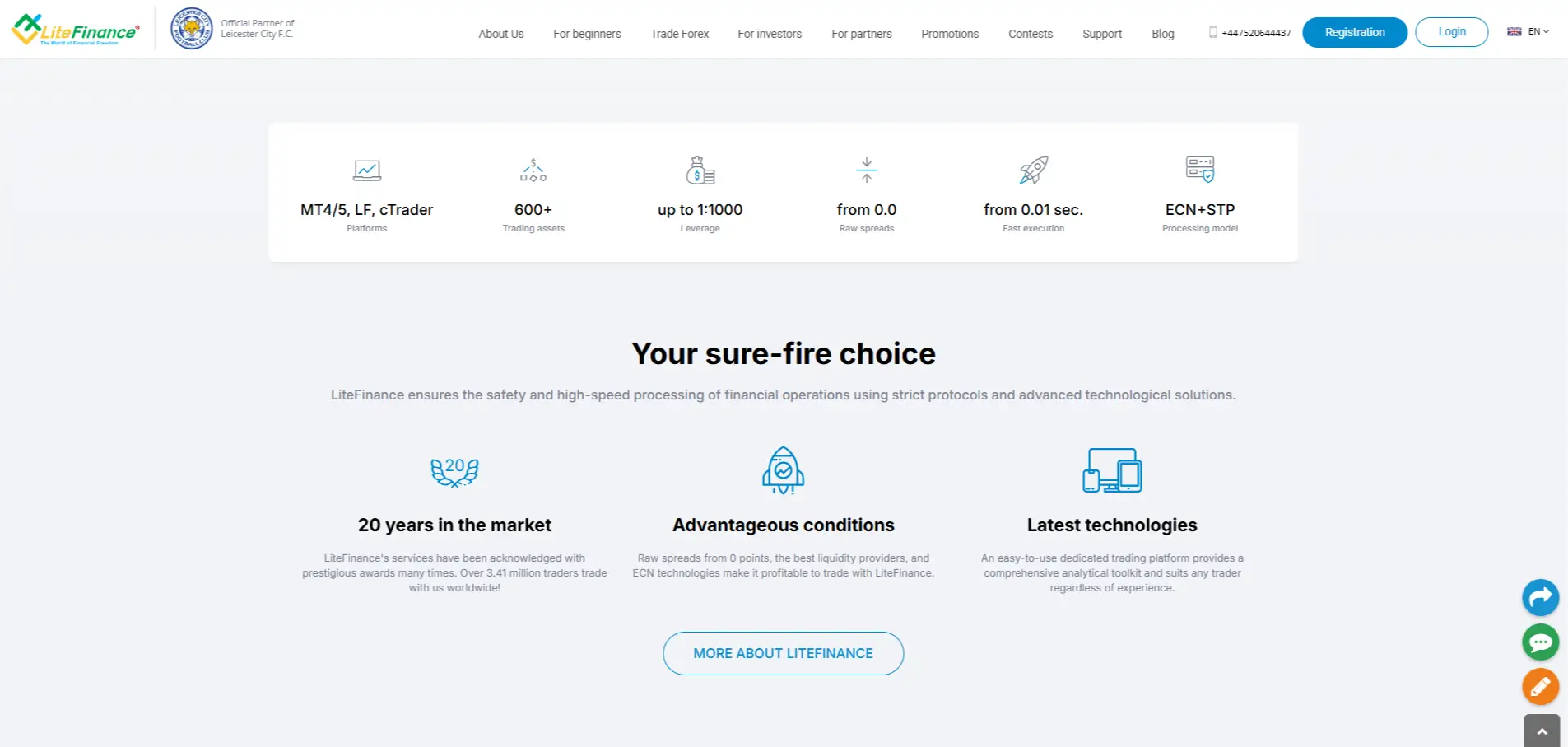
Execution speed is consistently fast, and the broker processes withdrawals automatically on most payment methods, which is a practical advantage for traders who move money regularly. The platform covers MT4, MT5, and cTrader, giving more flexibility than most micro account brokers.
Copy trading is built into the platform, which means micro account holders can follow and mirror verified traders while building their own skills. This combination of low-cost trading and social features makes LiteFinance a practical choice for traders who want more than just a basic account to practice on.
Strengths: Long track record in micro trading, lowest commission per lot on the list, copy trading included, cTrader support, fast automated withdrawals.
Worth Noting: Spreads on Classic accounts can be wider than ECN alternatives during low-liquidity periods. The $50 minimum is higher than Exness and XM.
LiteFinance supports social trading and copy trading alongside standard micro account trading. It is also listed on our best MT5 brokers page.
FP Markets offers the widest range of account types suited to smaller traders: cent accounts, mini accounts, and standard micro accounts are all available under one roof. This makes it easier for traders to step up gradually without switching brokers as their capital and confidence grow.
Spreads on Raw accounts start from 0.0 pips, with commissions of $3 per lot. Standard accounts carry no commission with slightly wider spreads from around 1.0 pip on major pairs. FP Markets is regulated by ASIC and CySEC, both well-regarded authorities for retail trader protection.
The broker supports MT4, MT5, and cTrader, and the cTrader implementation includes Level 2 market depth data, which is useful for traders who want to understand liquidity depth even on small position sizes. The minimum deposit for micro accounts is $100.
Strengths: Widest selection of small account types, cTrader with Level 2 data, strong ASIC and CySEC regulation, competitive Raw account spreads.
Worth Noting: The $100 minimum deposit is higher than Exness, XM, and RoboForex. Better suited to traders with slightly more starting capital.
FP Markets is listed among our best ECN brokers and is a strong pick for traders in Australia and Singapore.
RoboForex offers the highest leverage on this list at 1:2000, which makes it a frequent mention for traders who want to trade micro lots with maximum position flexibility. The ProCent account type starts at $10, displays the balance in cents, and supports trading from 0.01 micro lots on MT4.
Beyond the cent account, RoboForex also covers MT4, MT5, WebTrader, and R Stocks Trader, giving traders access to equities alongside forex and CFDs. A cashback program returns a portion of trading costs on active accounts, which adds real value over time for traders who execute frequently even on small sizes.
Regulation comes from FSC. Non-trading fees including inactivity charges run slightly above average, so the full fee schedule is worth reviewing before opening an account if you plan to trade occasionally rather than consistently.
Strengths: Highest leverage on the list, cent account from $10, cashback for active traders, R Stocks Trader for equity access, broad payment method support.
Worth Noting: Non-trading fees are above average. Check inactivity policy before opening if you trade occasionally.
RoboForex is listed in our best high-leverage brokers rankings and supports both MT4 and MT5 trading.
Tickmill is the most cost-efficient option on this list for traders who want tight spreads alongside regulated micro account access. The Pro account delivers spreads from 0.0 pips with a $2 commission per lot, making the all-in cost per trade one of the lowest available from a fully regulated broker. The Classic account carries no commission, with spreads from around 1.6 pips on major pairs.
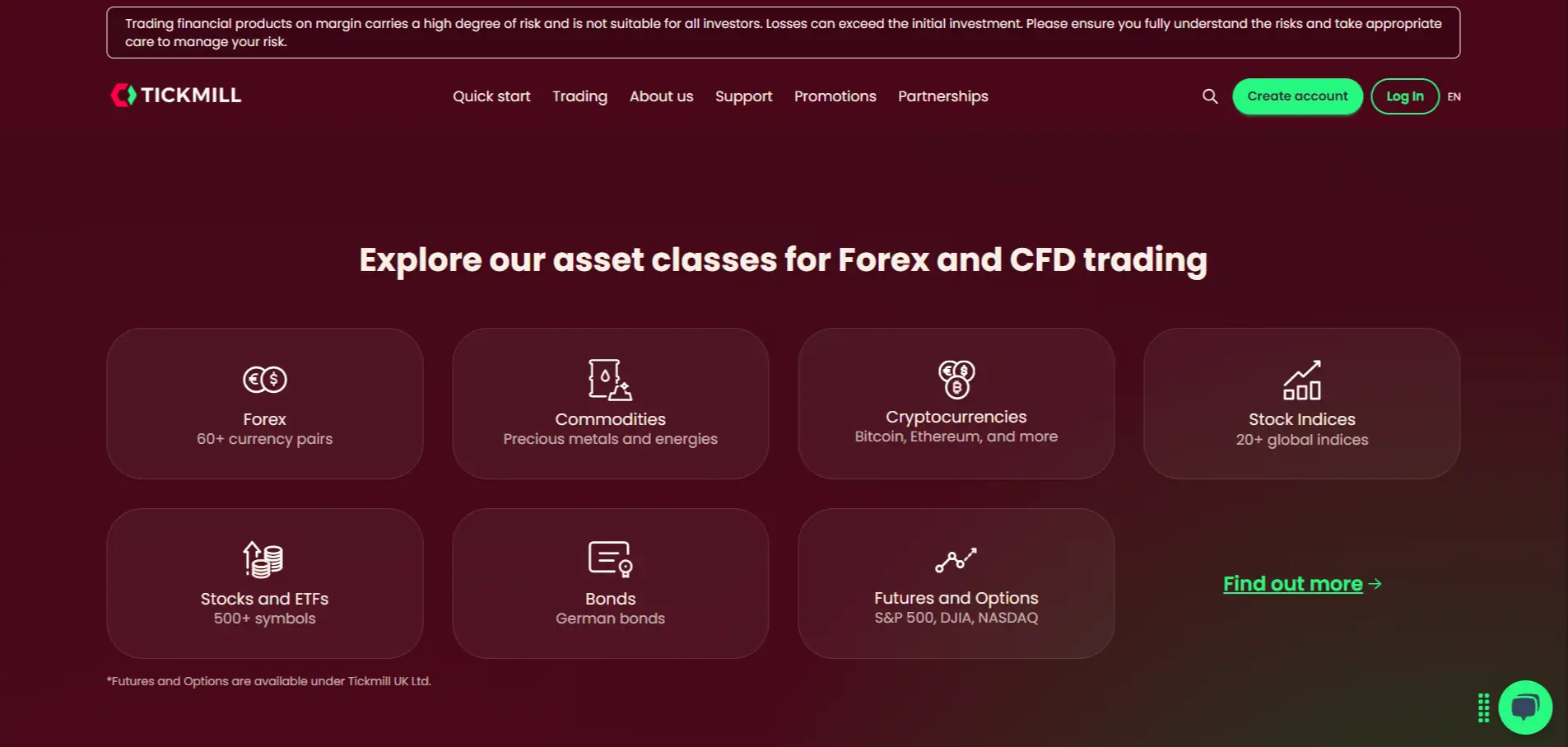
Regulation comes from FCA and CySEC, both strong jurisdictions for retail trader protection. MT4 and MT5 are supported. The minimum deposit is $100, and execution quality is consistently fast, with low slippage on standard market conditions.
Tickmill does not offer a cent account, but micro lot trading at 0.01 lots is supported on all account types. For traders who want the lowest possible cost per trade from a top-tier regulated broker, this is the strongest option on the list.
Strengths: Lowest all-in cost per trade on the list, FCA and CySEC regulation, fast execution, low slippage, clean platform performance.
Worth Noting: No cent account option. Higher minimum deposit than Exness, XM, and RoboForex. Better suited to traders who prioritize cost efficiency over minimum capital access.
Tickmill features in our best low spread brokers and best scalping brokers lists. Strong option for traders in the UK and Europe.
Expert Tip: Before funding any micro account, complete at least two weeks of demo trading during real market hours, including through at least one major news event. Seeing how the platform handles volatility before your own money is at risk is a step most beginners skip and later regret.
The cost-to-balance ratio on a micro account is far more sensitive than on a standard account. Here is a practical breakdown of how spread size affects a $10 account on a 0.01 lot EUR/USD trade:
| Spread Size | Trade Size | Cost Per Trade | Effect on $10 Account |
|---|---|---|---|
| 0.5 pip | 0.01 lot (1,000 units) | $0.05 | Low cost, sustainable |
| 1.0 pip | 0.01 lot (1,000 units) | $0.10 | Manageable, adds up over time |
| 2.0 pips | 0.01 lot (1,000 units) | $0.20 | 2% of account gone before market moves |
| 3.0 pips | 0.01 lot (1,000 units) | $0.30 | 3% loss before any profit is possible |
The practical takeaway: on a $10 account, a broker charging 3 pips on EUR/USD requires the market to move 3 pips in your favor just to break even. A broker with 0.5-pip spreads only needs half a pip. Over dozens of trades, that difference determines whether the account grows or erodes regardless of strategy quality.
| Feature | MT4 | MT5 |
|---|---|---|
| Ease of use | Very beginner-friendly, clean layout | Slightly more complex, more tools visible |
| Micro Lot Support | Yes, 0.01 lots | Yes, 0.01 lots |
| Timeframes | 9 | 21 |
| Built-in Indicators | 30 | 38 |
| Expert Advisors | Widest availability | Available, smaller library |
| Best for | First-time traders on micro accounts | Traders scaling up or testing multi-asset strategies |
MT4 is the more practical starting point for micro account traders. The interface is simpler, the automated trading library is larger, and most brokers have optimized their MT4 infrastructure more thoroughly than MT5. Once you are comfortable with the platform and ready to expand beyond forex into stocks or futures, MT5 becomes worth considering.
Treat small money with the same discipline as large money. A $50 account managed carelessly will become a $5,000 account managed carelessly. The habits form at the small scale and carry over. Risk management, position sizing, and trade journaling all apply regardless of account size.
Keep leverage modest while learning. Leverage of 1:10 to 1:20 on a micro account keeps pip movements manageable and reduces the emotional pressure of watching the account swing. High leverage on a small account amplifies losses as efficiently as it amplifies gains, often faster.
Focus on one strategy and one or two currency pairs. Micro accounts are well suited for strategy testing in live conditions. Pick one approach, apply it consistently across a defined set of pairs, and track the results over at least 30 to 50 trades before drawing conclusions about whether it works.
Keep a trade journal from the first trade. Record entry, exit, reasoning, and outcome for every trade. After 30 trades, patterns in your own decision-making become visible. Most traders discover their worst losses come from the same type of mistake, which is much easier to fix once you can see it clearly.
Move to a standard account only when your micro account is consistently profitable. Profitability on a micro account does not guarantee it on a standard account, but consistent losses on a micro account will almost certainly continue at scale. Use the micro account as a genuine proving ground, not just a practice tool.
| Risk Warning: Trading forex and CFDs involves significant risk of loss and is not suitable for all investors. Never trade with money you cannot afford to lose. Past performance is not indicative of future results. Micro accounts reduce the financial risk of individual trades but do not eliminate the risk of losing your deposited capital. |
Exness and Tickmill both deliver the tightest spreads in practical testing. Exness Zero accounts show 0.0-pip spreads on EUR/USD during peak hours. Tickmill's Pro account averages around 0.1 to 0.2 pips with a $2 commission. For pure cost efficiency, these two lead the list. Compare them using the broker comparison tool.
Exness is one of the strongest options for traders starting with very small capital. The Standard Cent account allows trading from $10 with cent lot sizing, fast execution, and strong FCA and CySEC regulatory coverage. For traders who specifically want the smallest possible entry point from a well-regulated broker, it is a top choice.
Safety comes from regulation strength. XM holds licenses from ASIC, CySEC, and DFSA, making it the most comprehensively regulated option on this list. Tickmill's FCA license is also one of the most protective for retail traders. See the full best online brokers list for verified credentials across more options.
Yes, but the goal of a $10 micro account is primarily skill development, not profit generation. With strict risk management and tight spreads, gradual account growth is possible. The more valuable outcome is gaining live trading experience without meaningful capital at risk while building the discipline and analytical habits that determine success at larger account sizes.
Yes. Cent accounts display the balance in cents rather than dollars, so a $10 deposit appears as 1,000 cents. This allows trading in very small increments with pip values around $0.001. Exness, LiteFinance, and RoboForex all offer cent account options alongside standard micro accounts.
A cent account uses cent-denominated balance display and trades in units of 10, making it the smallest possible entry point. A micro account uses standard dollar balances and trades in 1,000-unit lots. Micro accounts have a more realistic cost structure for traders who plan to scale up, while cent accounts are better suited to absolute first steps or testing with the smallest possible amounts.