
 IUX
IUX
 Exness
 Vantage
 XM
XM
 ICMarkets
 LiteFinance
 Moneta
 Tickmill
 South Africa (9)
 India (9)
 Bangladesh (12)
 Germany (9)
 Thailand (10)
 Philippines (9)
 Nigeria (10)
 Vietnam (10)
 Malaysia (9)





Margin Call and Stop Out Level: A Deep Dive for Forex Traders!



Share:
Share:
Broker
8 min read
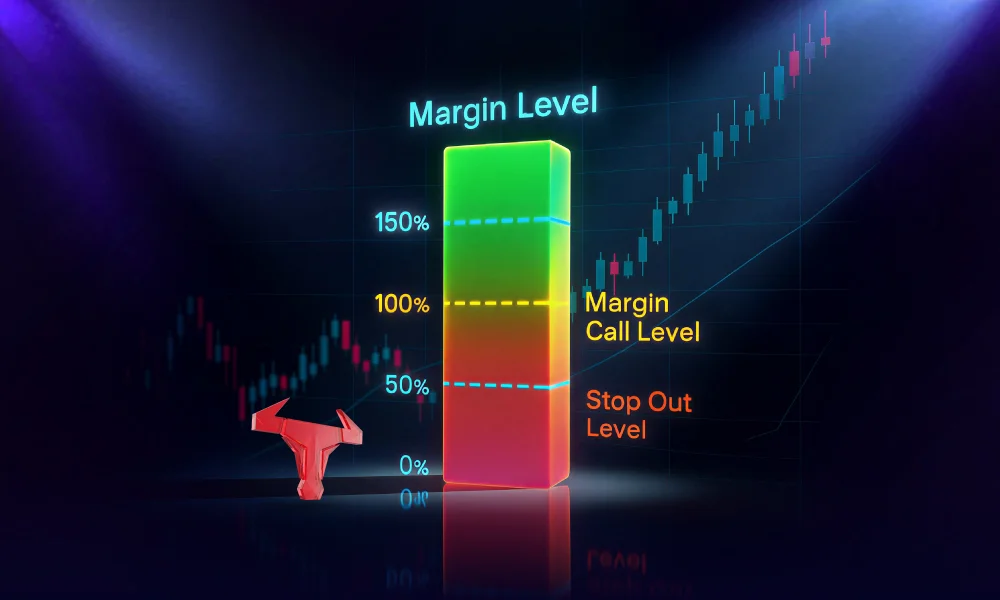
Hello trader, let’s talk about margin calls and stop out levels.
Whether you’re new to trading Forex or you’ve been at it for a while, you’ve probably heard “margin call” and “stop-out level” being loosely thrown around.
But what do these terms mean, and why are they of concern to you? It’s simple.
Traders can save their accounts from getting wiped out completely by simply understanding these concepts and how to navigate them.
So, let me break them down as much as I can.
Margin Call Meaning
A margin call is a warning sign demonstrating that a trader’s margin level is dropping dangerously low and their trades are not yielding returns.
Think of a margin call as the scenario. A broker tapping the shoulder of a trader and saying they’re running out of money to keep trades open.
But What Determines When You Get a Margin Call?
To explain this, I’d need to talk about the margin level and margin call level for a bit so you get the general gist.
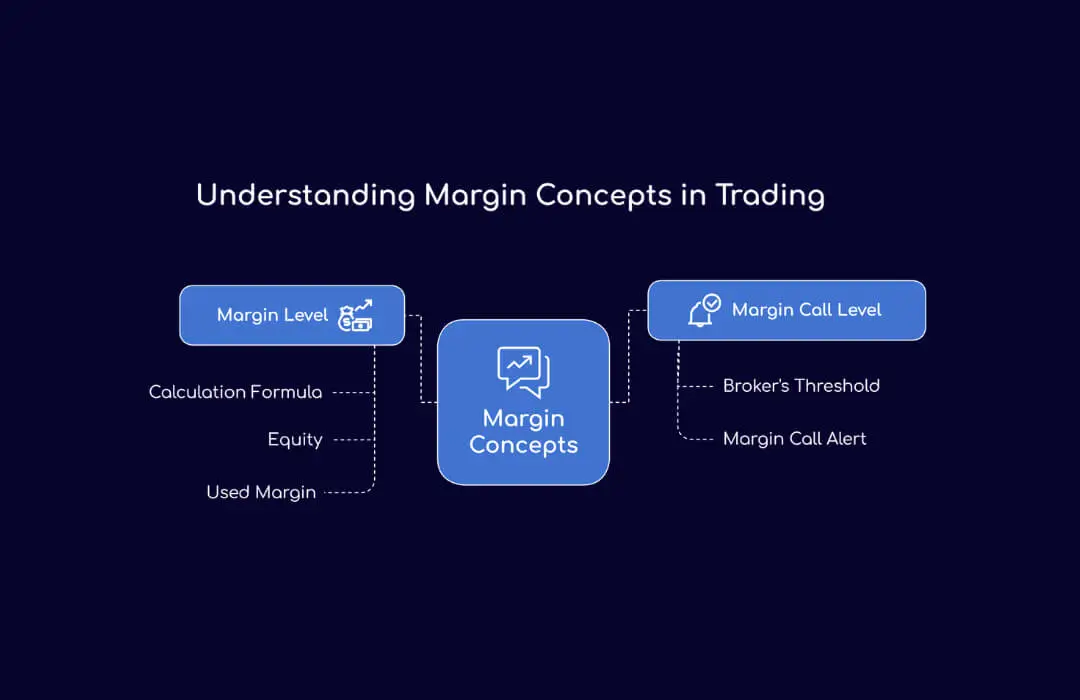
Margin Level
Margin level is a percentage that tells traders how much money they have left compared to how much they are using to keep trades open.
The formula to calculate margin level is:
Margin Level (%) = (Equity / Used Margin) × 100
For instance, if Mae has $2,000 in her account and she’s using $1,000 in margin, her margin level is:
($2,000 / $1,000) × 100 = 200%
Learn more about used margin and equity concepts in Forex trading.
Margin Call Level
The margin call level refers to a point or threshold set by a broker in which they’ll proceed to send a margin call to a trader, signifying that they’re running out of margin.
How does Mae’s 200% margin level affect her margin call level?
Let’s say Mae’s broker set her margin call level to 80%.
If her 200% margin drops to 80%, then her broker will issue a margin call.
At this point, Mae has three options:
- Add more money to her account understanding account balance.
- Close some open trades (beginning with the losing ones).
- Wait for the market to become favorable again (which in my opinion, is quite risky).
Check out different brokers’ margin call levels to see how this varies.
What is a Stop-Out Level?
A stop-out level is the point where a broker begins to liquidate a trader’s assets because their margin has dropped to a depleted level.
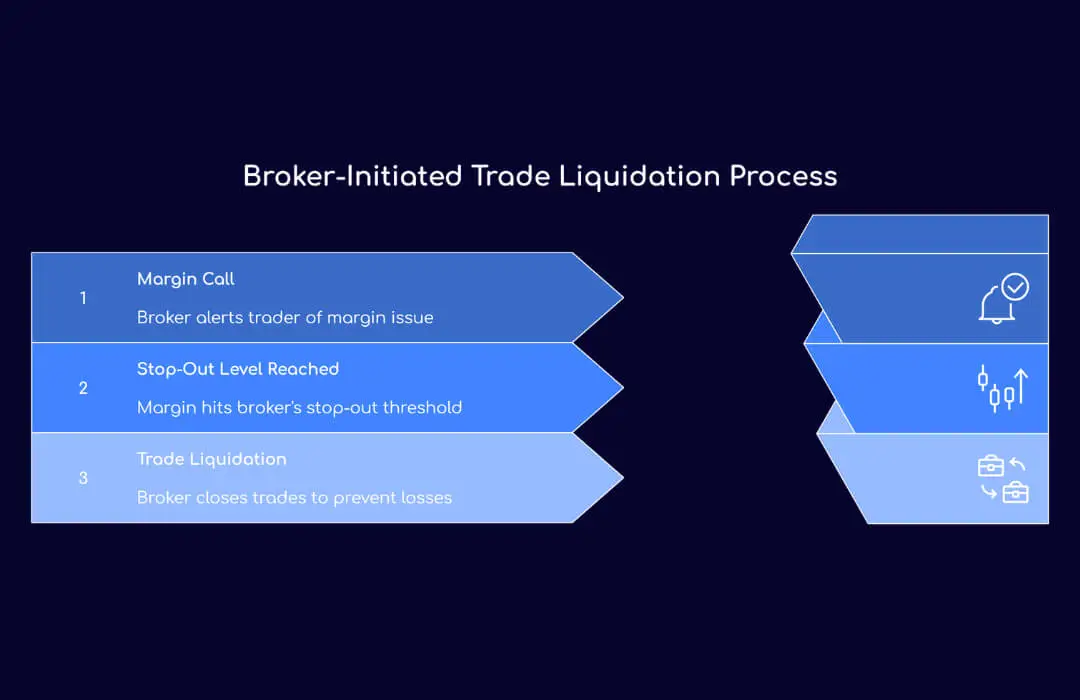
Meanwhile, the stop-out is the action or process of a broker closing a trader’s open trades in order to bring their margin to a safe level.
Unlike margin call, a stop-out is more action-oriented.
I think of a stop-out as a broker saying, “enough is enough!” with a big stop sign.
Funny thought, but I’d like to think it’s quite accurate.
The goal of a stop-out is to protect the trader and the broker alike from reaching a negative balance because of negative market movements.
Brokers tend to set the stop-out level between 50% and 150% of the required margin.
What Happens When a Trader’s Margin Reaches the Stop-Out Level?
Automatic liquidation.
When a trader’s margin reaches the point of the stop-out level, their broker will start closing their trades instantly, and without prior warning.
Let’s take a look at an example -
So Erica deposits $1,000 into her trading account and opens a leveraged trade which is worth $10,000. She decides to use a 10:1 leverage.
Her broker has a stop-out level of 20%, which means if her margin level (Equity/Margin × 100%) falls to 20% or lower, the broker will start closing her trades.
Here’s How the Trade Plays Out
- Erica’s trade initially goes well, but then the market moves against her.
- Her account balance drops as her losses begin to accumulate.
- When her Equity (balance + floating profit/loss) falls to $200, her margin level reaches 20%.
What’s Next for Erica?
Since Erica’s margin level has dropped below the stop-out level, her broker immediately starts closing losing trades, starting with the ones with the largest loss.
This way, they both can avoid reaching a negative balance.
However, the stop-out process is different for traders using the TradeLocker platform.
Unlike many others, TradeLocker does not automatically liquidate its traders’ positions when they reach the stop out level.
TradeLocker appears a bit more forgiving. They reduce a trader’s trade size gradually (usually by 0.1 lots) rather than closing the position completely.
Margin Call and Stop-Out Level Explained with an Example
Trading Scenario: Margin Call Level at 50% and Stop-Out Level at 20%
Michael has $10,000 in his trading account and he decides to open trades that require a $1,000 margin.
If he starts to incur losses along the line, when Michael's losses reach $9,500, his equity will drop to $500 (which is 50% of his margin) → His broker will issue a margin call.
When his losses hit $9,800, his equity becomes $200 (which is 20% of his margin) → A stop-out will occur, which means his trades start closing automatically.
We’ve spoken so much about margin call and stop-out level.
Let’s discuss how traders can effectively manage them for an optimal trading experience.
Margin Call Level at 100 with No Separate Stop Out Level Example
Karim is an enthusiastic trader who deposits $1000 into his account.
He decides to trade long on 1 mini lot (10,000 units).
Here are Karim’s trading details at the time of market entry:
- EUR/USD Price = 1.15000
- Margin Requirement = 2%
- Required Margin = $230
- Used Margin = $230
- Equity = $1,000
- Free Margin = $770
- Margin Level = 435%
So far, Karim is confident in his trade but then disaster strikes.
The market takes a nosedive as a major economic event shakes the market and USD drops by 500 pips to 1.10000.
At this point, Karim’s trading details are now:
- Floating Loss = -$500 (floating P/L explained)
- Equity = $500
- Free Margin = $280
- Margin Level = 227%
Because Karim’s margin level is still above 100%, there’s no problem yet. He can still bounce back from the loss.
However, when the EUR/USD takes another hit, things get uncomfortable for him.
The USD drops again but this time, by 288 pips to 1.07120.
Now, Karim’s account is in the red. Here are the trading details:
- Floating Loss = -$788
- Equity = $212
- Free Margin = -$2
- Margin Level = 99%
His margin level has reached 99%, which is lower than the margin call level, so his broker issues a margin call to warn him.
At this rate, Karim is unable to open any new trades.
He can only do these:
- Fund his account with more money to increase his margin level.
- Manually close some of his trades to free up used margin.
- Wait and hope for the market to reverse.
This is where things become dicey.
Because with no stop out level, his broker won’t automatically close losing trades for him. It is all on him now.
This is not the worst case scenario, considering that Karim still has some equity left.
Since there’s still some equity left in Karim’s account, and there’s no stop out level, trades still remain open if he doesn’t close them.
If the EUR/USD keeps falling, his floating losses will continue to rise.
However, his broker will only step in to liquidate his holdings if his equity hits 0.
What does that look like?
- His account drops from $1,000 to just $212.
- He has lost 79% of his initial balance.
- His trades are forcefully closed, leaving him with barely anything left.
This is why trading without a stop out is a risky game, and many traders lose at the end.
How to Avoid Margin Calls and Stop-Outs?
I hate surprises, especially when it comes to my money.
If you’re like me, you’d do everything to avoid margin calls and stop outs on your forex account.
Here are my trusted strategies:
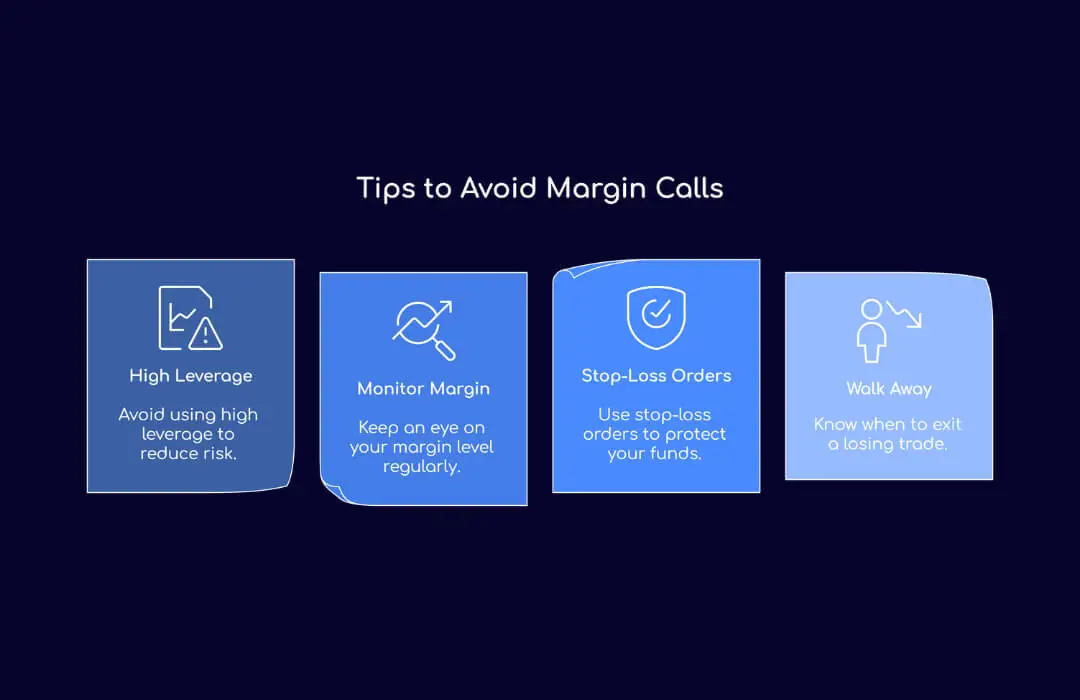
Stay Away from High Leverage
The more leverage used, the higher risk a trader’s account is at. Don’t use high leverage even if a broker offers it. Read about margin trading.
Always Monitor the Margin Level
Keep your margin level visible. 300%+ is safe. Below that, consider closing losing trades or depositing funds.
Use Stop-Loss Orders
Stop-loss orders help traders avert losses before they likely happen. Check Forex order types to use them properly.
It is nice to hope the market will turn around, but setting a stop-loss level will guard your funds even when you may not have your eyes on the market.
Know When to Walk Away
Traders need to know when to walk away from a trade.
If a trade has been causing significant loss on your account and depleting your margin level, it might be time to let it go.
Rounding Up
Margin calls and stop-out levels may sound scary, but their goal is to protect traders. Any serious trader should seek to understand what these concepts are and how they work, so they are never caught off-guard.
Explore unrealized P/L and floating P/L to see how trades affect margin in real time.
F. Nathan
Felix Nathan is a professional trader, market analyst, and business development executive with over a decade of experience in the forex and financial markets. Felix specializes in providing actionable market insights, trading strategies, and risk man...