
 IUX
IUX
 Exness
 Vantage
 XM
XM
 ICMarkets
 LiteFinance
 Moneta
 Tickmill
 South Africa (9)
 India (9)
 Bangladesh (12)
 Germany (9)
 Thailand (10)
 Philippines (9)
 Nigeria (10)
 Vietnam (10)
 Malaysia (9)





What is a Spread in Forex Trading?



Share:
Share:
Broker
6 min read

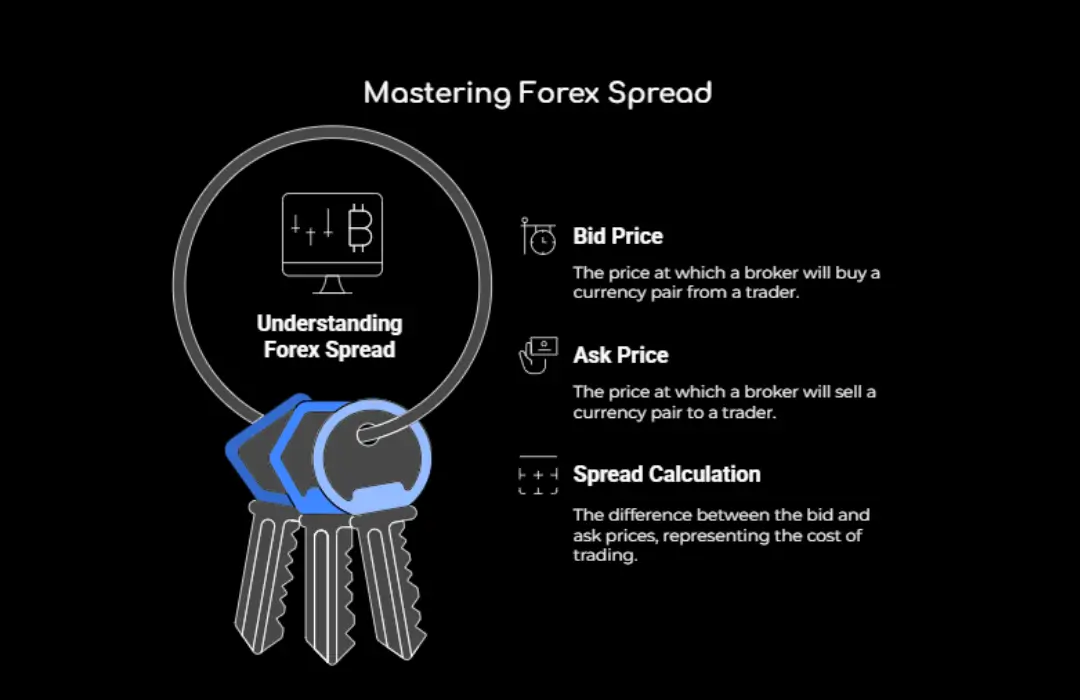
A spread in forex is the difference between the bid and ask price of the base currency pair.
The base currency refers to the currency pair being traded at any point in time.
Brokers often quote the bid and ask prices beforehand, to give their traders dorts of a heads up.
But this is not all about spread in Forex. Here’s some more information that you need.
What is Spread in Forex?
As I said before, a spread in forex is the difference between the bid and ask prices of a base currency pair.
Learn more about "what is forex?".
How Do the Bid and Ask Prices Come About?
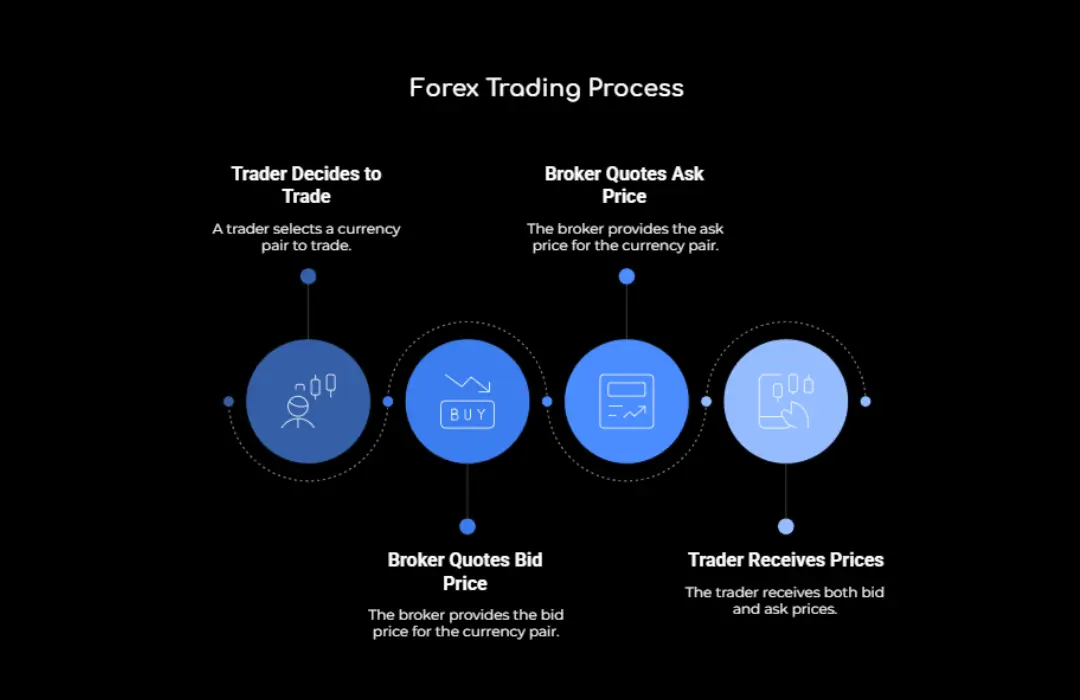
When a trader wants to trade a particular currency pair, the broker will quote the bid and ask prices.
The bid price is the price that the trader can sell the base currency while the ask price is that which the trader can buy the base currency.
The spread in forex is also called the bid/ask spread or transaction cost.
The spread is also called transaction cost because it is the cost of getting instant transactions during trading.
This is how brokers who don’t collect commissions get their profit.
They don’t charge a separate fee for making a trade. Instead, add the cost to the buy and sell price of the currency pair you wish to trade.
Learn more about what is margin trading and used margin.
How Does a Broker Make Money From a Spread?
The broker makes their money by selling the currency to traders, usually more than they paid for it.
Also, they gain profits when they purchase the currency from traders at a lower price than they’d sell.
Consider this example.
Tim is selling his old tv to a thrift electronic store.
Given the specifications of his tv, the ideal selling price would be $500.
This means that the store owner would have to buy Tim’s tv at a cost lower than that, maybe $350.
This way they can make a profit when he sells it.
This difference between the $500 and. $350 is called the spread.
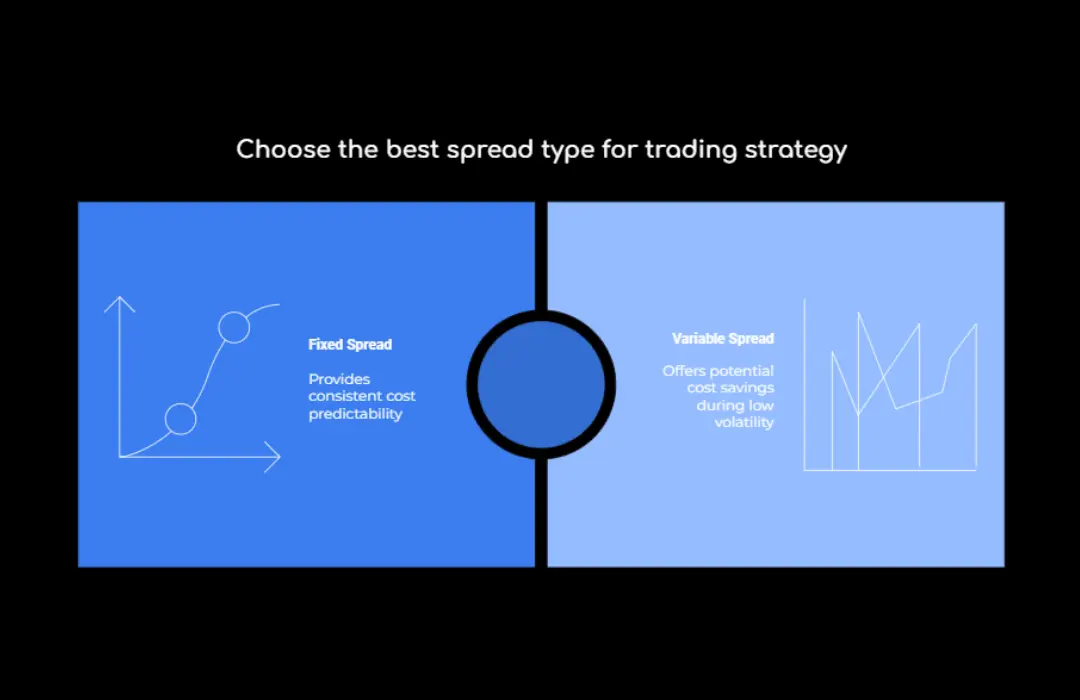
A spread is not a linear concept. There are two types of spread in Forex; fixed and variable spread.
Types of Spreads in Forex
Two types of spreads exist in Forex.
The first type is called the fixed spread, while the second is known as the variable or floating spread.
However, the type you’ll come across while trading depends on the Forex broker.
Fixed Spread in Forex
Fixed spreads are spreads that remain unchanged irrespective of the market conditions at the time.
What this means is that the spread stays the same whether the market movement is stable or all over the place.
I find that brokers who often operate with the dealing desk model or as a market marker carry out fixed spreads.
What Does Using a Dealing Desk Model Mean?
In this model, the broker purchases large positions from their liquidity retailers and then resell these positions in relatively smaller sizes to traders.
This model gives the broker the liberty to provide fixed spreads. This is because they have total control over the price they give to their clients/traders.
Advantages and Disadvantages of Fixed Spreads
Like everything else in life, fixed spreads have its ups and downs.
Learn more about "what is margin level?" and used margin to better understand how spreads affect your trading costs.
Here’s a quick tabular rundown:
| Advantages | Disadvantages |
|---|---|
| It is easy to calculate transaction costs; transaction costs are very predictable. | Requotes frequently happen, especially during times of severe market volatility. |
| Requires small capital. | Traders may experience slippage. This happens when the market price is moving fast and your trade becomes totally different from the original price. |
| Good for trading with limited amount of money. |
Variable Spreads in Forex
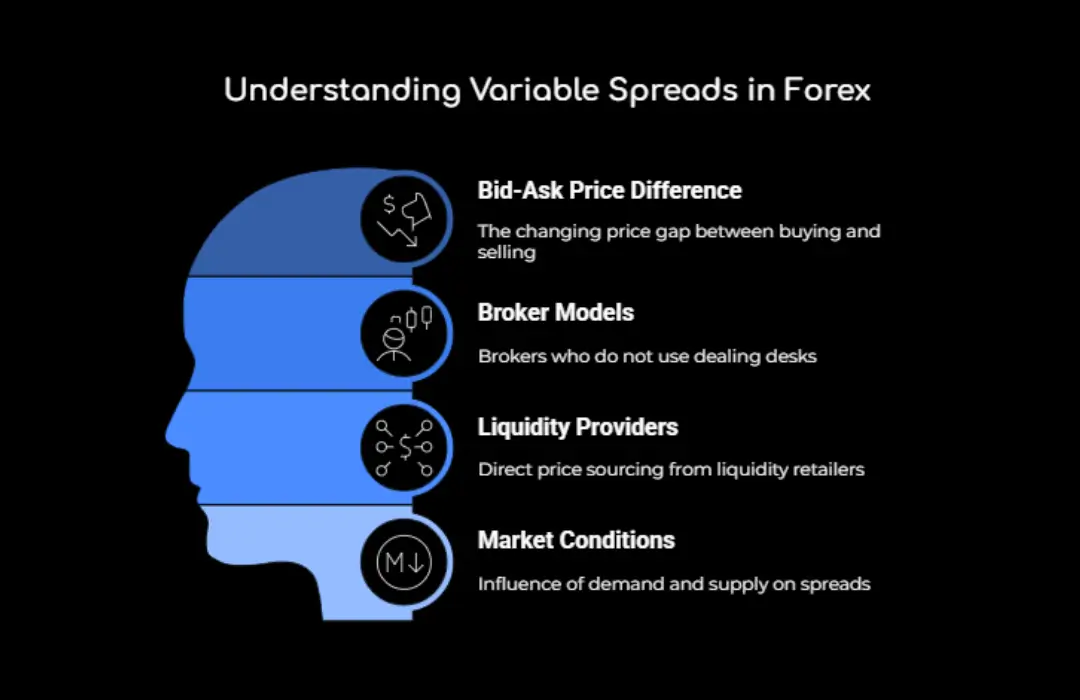
Unlike fixed spreads, variable spreads always change.
In other words, the price difference between the bid and ask prices continues to vary.
Variable spreads are the direct opposite of fixed spreads in many ways including the fact that it is done by brokers who don’t use the dealing desk model.
These types of brokers get their prices directly from their liquidity retailers. They don’t interfere with the prices in any way.
They don’t control their spreads and the spreads often widen or tighten depending on the demand and supply of currencies and the market conditions.
Advantages and Disadvantages of Variable Spreads
Because the variable spread is so volatile, there are a lot of ups and downs within it.
Let’s explore them.
| Advantages | Disadvantages |
|---|---|
| Variable spreads do not allow for required because of the variation in the spread. | Variable spreads aren’t a good option for scalp traders. This is because the widened spreads may gobble up their profits quickly. |
| Pricing is much more objective and transparent. | Variable spreads can lead to slippage and may not be ideal for new traders and the widened spread can confuse them. |
How to Calculate Spread in Forex?
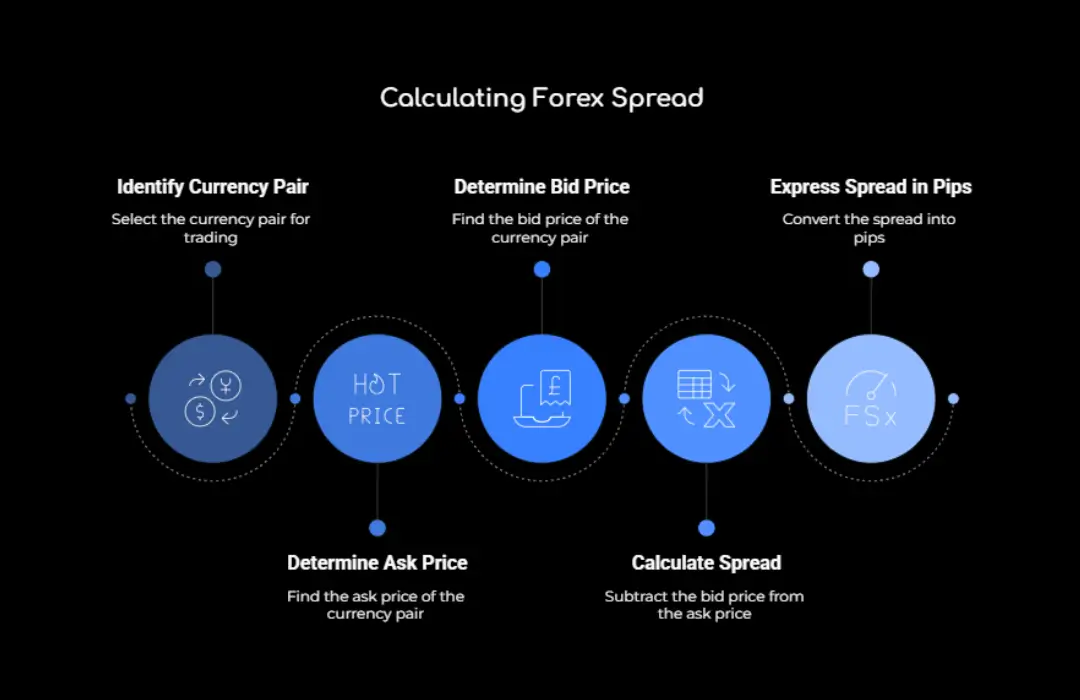
To calculate spread, do the following:
Find the Bid and Ask Prices
Let’s say Josh is trading the EUR/USD currency pair and it has an ask price of 1.1050 and a bid price of 1.1053.
Subtract the Bid Price From the Ask Price
Spread = Ask price - Bid price
Therefore, spread = 1.1053 - 1.1050 = 0.0003 or 3 pips
Why is Spread Important in Forex?
Spread is important in Forex because of it helps identify the level of liquidity or trading costs:
- Lower spreads typically mean lower trading costs.
- Higher spreads indicate lower liquidity or high volatility.
Fixed or Variable Spreads: Which is Better?
The better choice depends on your needs and the type of trading you intend to do.
For instance, if you do not trade often or have small capital in your account, you’ll benefit from fixed spreads.
On the other hand, you’ll benefit from variable spreads if you:
- Trade more frequently
- Have a large account
- Want fast trade execution
- Want to prevent requotes
Conclusion
A spread is the difference between the ask and bid prices of the currency pair you’re trading.
The broker usually quotes the bid and ask prices of the currency pair you want to trade, so you’ll have this information beforehand.
Consider using it to calculate the spread.
The formula for calculating spread is Ask price - Bid price.
F. Nathan
Felix Nathan is a professional trader, market analyst, and business development executive with over a decade of experience in the forex and financial markets. Felix specializes in providing actionable market insights, trading strategies, and risk man...