 IUX
IUX
 Exness
 Vantage
 XM
XM
 ICMarkets
 LiteFinance
 Moneta
 Tickmill
 South Africa (9)
 India (9)
 Bangladesh (12)
 Germany (9)
 Thailand (10)
 Philippines (9)
 Nigeria (10)
 Vietnam (10)
 Malaysia (9)





Forex vs. Futures: Why Forex Might Be the Smarter Choice for Traders?



Share:
Share:
Education
8 min read

Forex and futures both let you speculate on price movements, but forex offers several edges that appeal to active traders. With over $7 trillion in daily volume, the forex market delivers unmatched liquidity and consistently tight spreads on major pairs. It runs 24 hours a day, five days a week, so you can react to global news instantly instead of waiting for an exchange to open.
Forex also has a much lower barrier to entry, letting you start with smaller accounts and flexible position sizes like micro lots, while futures contracts lock you into standardized sizes that may not suit smaller portfolios. Leverage in forex is typically higher, giving you more control per dollar of capital.
That said, futures trade on centralized exchanges with greater price transparency and no counterparty risk from brokers.
What is Forex Trading?
Forex trading is ideally trading that involves converting one currency to another. For instance, converting GBP to EUR or USD. That's why it bears the second name, currency trading.
Forex trading is one of the top and most active trading markets worldwide. You can say the forex market is the biggest financial marketplace globally.
It doesn’t end there. The forex market has a daily trading volume of up to $7.5 trillion.
Forex trading was initially run by banks and other related financial institutions. However, online trading platforms have made it easier for individual traders to get into FX trading.
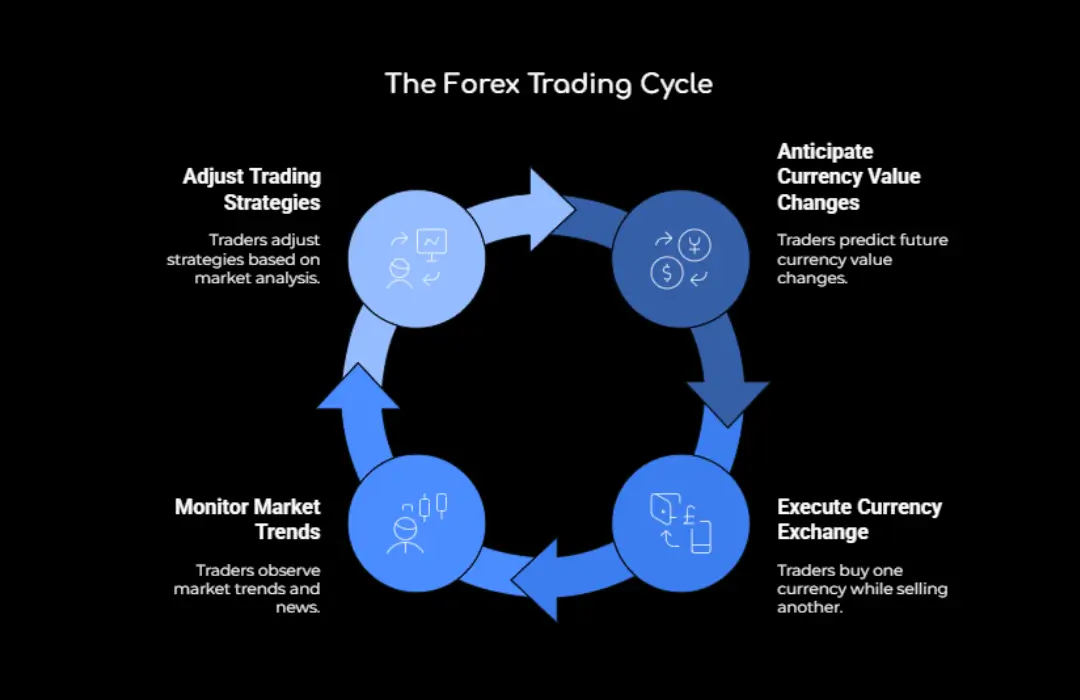
One of the key things that drive forex trading is anticipation. Sounds interesting, doesn’t it? Let me explain.
The whole premise of forex trading is buying one currency while simultaneously selling another because you’re anticipating some change in their values.
For instance, if the GPB will likely gain against the EUR, you may buy GBP and sell EUR (likely to sell the GBP at a higher rate).
That said, let’s talk a little about the market itself.
You can also learn more about margin call and stop out levels among forex brokers which are crucial in trading.
What is the Forex Market?
The forex market or FX market for short is the marketplace where currency exchanges occur. It is the biggest and most liquid asset market worldwide.
The market has no centralized marketplace. Rather, trading is over the counter (OTC). This means that forex trading is over a decentralized broker-trader network instead of a centralized one such as the New York Stock Exchange.
In the forex market, you get to trade currencies against each other in currency pairs. What I mean is that if you want to trade the euro against the U.S. dollar, you’ll use the EUR/USD currency pair.
Forex markets offer currency swaps, futures, forwards, and options. They are more or less cash and derivative markets.
What Are Some Things Forex Traders Can Do with Their Trade?
- Leverage on geopolitical happenings.
- Hedge against international currencies.
- Diversify their portfolios.
How Does the Forex Market Work?
The forex market operates 24 hours daily on weekdays, from 5 p.m. ET on Sundays to 4 p.m. ET on Fridays.
The 24-hour trading day begins in the Asia Pacific region before moving to Europe and North America.
What Are the Benefits of Forex Trading?
By investing in the forex market, you:
- Have access to trade more than 80 currency pairs.
- Can open a position or trade using leverage. This allows you to maximize profit.
- Can trade spots, options, or futures.
- Can maintain either long or short positions.
What is Futures Trading?
Futures trading is a form of trading where a buyer and seller agree to exchange the underlying market at a fixed price and date.
During this period, the buyer has an obligation to buy the underlying asset, and the seller, has to sell on or before the agreement expires.
The underlying market in this context is any financial instrument, like a security, bond, etc.
Futures are derivatives. This means that they are financial agreements that get their value from the changes in the underlying asset or market.
Futures tend to hedge the price moments of company shares, indexes, or stocks. This way, they can prevent losses from unfavorable price changes.
The fundamental premise of futures trading is that it operates on an agreement or contract between a buyer and a seller.
The contracts in futures trading are dependent on the future value of a company’s shares or stock market index.
As I said earlier, can fix a price for their underlying asset or market and set an expiry date for the contract. Both buyer and seller are aware of these details beforehand.
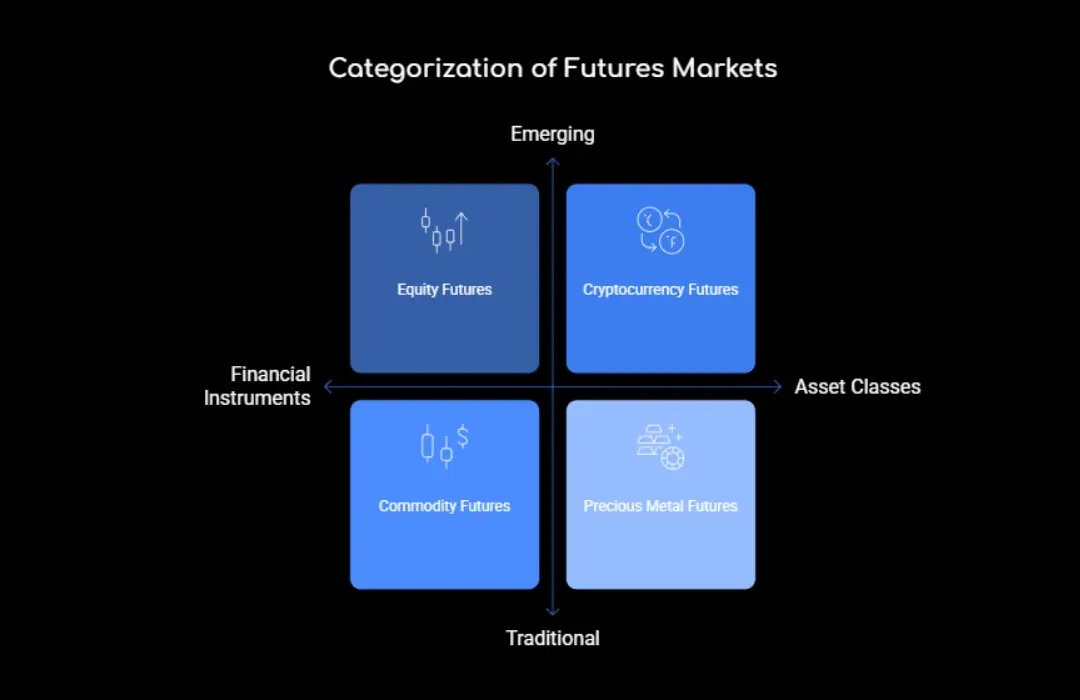
Underlying assets in future markets are made up of:
- Equity futures based on stocks trading
- Currency futures
- Cryptocurrency futures based on the market movement of bitcoin, Ethereum, etc
- Commodity futures such as crude oil
- Energy futures like natural gas, gasoline, etc
- Stock index futures
- Precious metal futures like gold
- Interest rate futures that hedge against bonds and treasuries against future interest rate movements
How Does Future Trading Work?
Future trading sets up a contract binding a buyer and a seller to exchange underlying assets at a fixed price and within a set period.
Futures contracts have standardized asset delivery, quality, and quantity, which makes futures trading easier.
What Are the Advantages of Futures Trading?
With futures trading, you can:
- Get no fees for overnight funding.
- Open long or short positions.
- Exchange assets like commodities, bonds, forex, and indices.
- Open a trade with leverage and gain profit.
It’s time to really get down to business. Let’s take a look at the differences between forex and futures trading.
Futures vs. Forex Trading: What are the Differences?
Take a closer look at some of the key features that shape the differences between futures and forex trading:
Market Hours
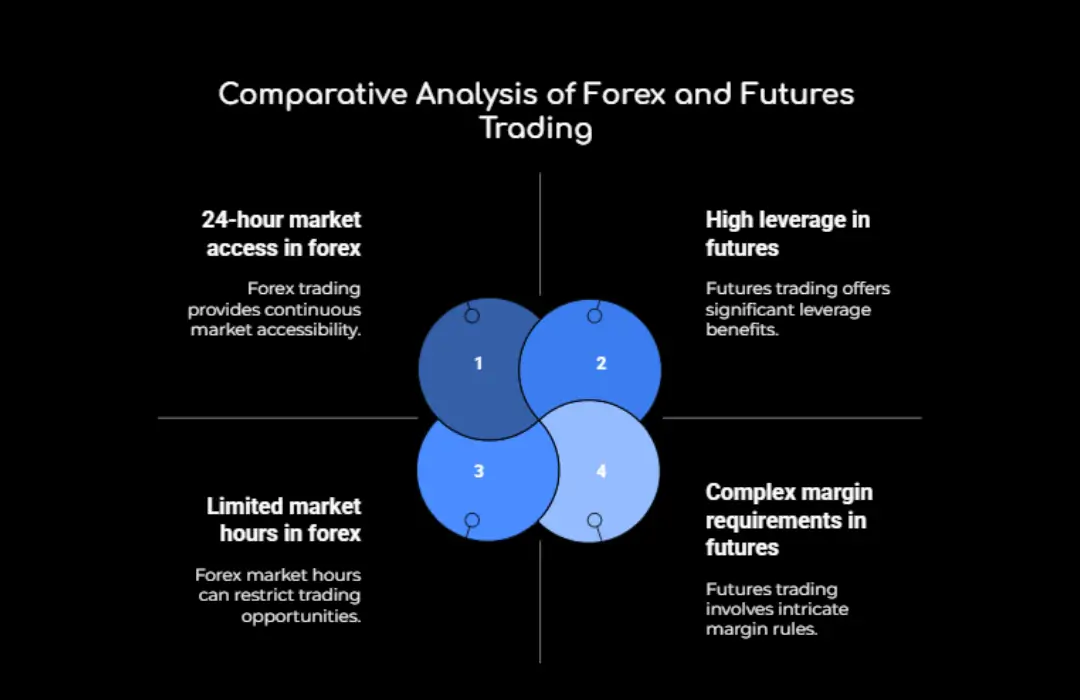
The forex market runs from Monday through Friday, for 24 hours each day. This 24-hour time frame allows traders across various time zones to trade without hiccups.
The forex market opens at different times across time zones.
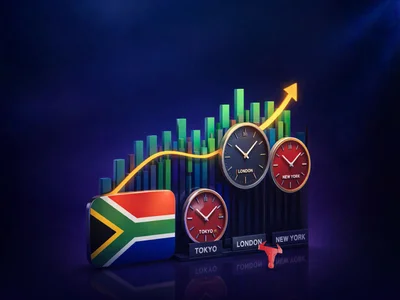
For instance, it opens in Sydney at 5 p.m. EST on Sundays, 7 p.m. EST in Tokyo, 3 a.m. EST in London, and 8 a.m.EST in New York.
The futures market, on the other hand, trades are open only during specific periods, depending on the underlying asset and exchange.
There are overnight contracts within the futures market, which means it is possible to trade futures contracts outside of regular market hours.
However, there wouldn’t be as many people trading during this period, compared to the spot forex market which is available 24 hours daily with high liquidity.
Liquidity
The forex market is the most liquid financial market in the world, with over $7 trillion in daily trades.
What this means is that its market capacity is so large that its trading volume and transaction sizes are larger than any other financial market’s.
This high liquify allows traders to enjoy better trading execution and tighter spreads in the market.
When it comes to the futures market, liquidity tends to vary with different assets.
For instance, futures contracts based on commodities and major indices are usually more liquid than the rest of assets.
In short, the futures market is less liquid than the forex market.
Leverage Ratio
The forex market offers a high leverage ratio
Traders can even use up to 500:1 leverage or more. This allows them to control larger positions with minimal capital.
However, using large leverage can increase your chances of getting significant losses.
Leverage in the futures market is ideally lower than forex’s. You’d typically find a 20:1 leverage in the futures market.
In the futures market, margin requirement is based on the broker and the contract, unlike in the forex market where your margin requirement will depend mostly on your leverage.
Risk Management
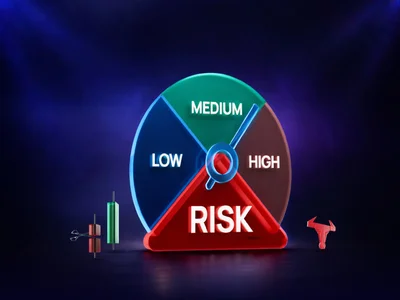
Implement stop levels while trading forex. This will help to efficiently manage any trading risks. Risks in the forex market happen to be easier to manage.
This is because online platforms allow brokers to send traders margin calls when they are exceeding their margin level.
If used margin drops below your margin level, even after receiving a margin call, your broker will close your trades to avoid incurring more loss.
In the futures market, your broker can liquidate open positions when the loss is far greater than your account balance.
Which means you’d be liable for any losses you incur. Yikes!
Price
Under normal market conditions in forex, traders are certain of the price and can trade instantly which is not the case in the futures market.
In the futures market, they may not instantly be certain of the price and the process of executing their trade isn’t immediate.
Commissions
Many forex brokers do not charge traders for commissions and forex traders don’t pay exchange fees since forex trades are over the counter.
Regulations
Unlike futures, the forex market is decentralized and not as regulated. Regulation in forex is different across countries, which influences trader protection and trade transparency.
This is probably the only feature that places the features market ahead of the forex market.
The futures market is more regulated. This is because of its centralized nature and standardized contracts. That's why the futures market is more transparent and secure for traders.
Conclusion
The forex and futures markets are great investment options for traders worldwide.
However, before investing in either, you need to consider their features and benefits. This way, you can choose what suits you perfectly.
F. Nathan
Felix Nathan is a professional trader, market analyst, and business development executive with over a decade of experience in the forex and financial markets. Felix specializes in providing actionable market insights, trading strategies, and risk man...