 IUX
IUX
 Exness
 Vantage
 XM
XM
 ICMarkets
 LiteFinance
 Moneta
 Tickmill
 South Africa (9)
 India (9)
 Bangladesh (12)
 Germany (9)
 Thailand (10)
 Philippines (9)
 Nigeria (10)
 Vietnam (10)
 Malaysia (9)





How Does Forex Trading Work in South Africa? SA Trading Rules & All



Share:
Share:
Education
8 min read

Forex trading in South Africa works as it does everywhere. You sign up with an online broker, log in to a trading platform like MT4 or MT5, and trade currency pairs such as USD/ZAR.
When you expect the price to go up, you place a buy trade. When you expect it to go down, you place a sell trade. The money you make or lose depends on how the price moves after that.
Same as in other countries, see?
But yes, the rules and regulations are different in SA. How different it is! Let’s figure that out together.
Is Forex Trading Legal in South Africa?
Yes, forex trading is legal in South Africa. But it is closely followed by the FSCA rules. It checks brokers and makes sure they trade fairly and don’t misuse people’s money. This is why traders are encouraged to use FSCA-licensed brokers.
There are also limits in place, like lower leverage for regular traders (30:1), to reduce risk and prevent reckless trading with the rand.
You can use international brokers, but protection is usually weaker with offshore companies. That’s why it’s always smarter to check if a broker is properly regulated before trading.
Forex Trading Law in South Africa
South Africa has clear rules for forex trading, and they’re there to protect traders and the country’s money system. 2 main authorities handle this:
FSCA (Financial Sector Conduct Authority)
This is the main regulator. The FSCA licenses and monitors forex brokers. Any broker operating in South Africa must have an FSP (Financial Services Provider) license. Trading with an FSCA-licensed broker helps ensure fair practices and better client protection.
SARB (South African Reserve Bank)
SARB controls how money moves in and out of the country. Its role is to protect the Rand and keep the financial system stable, especially when traders send money offshore.
That’s the law the broker should follow. And for the trader, there are a few more laws. Such as-
- You don’t need a license to trade your personal funds.
- But if you trade or manage money for other people, you must be registered as an FSP.
- Up to R1 million per year under the Single Discretionary Allowance (SDA).
- Up to R10 million per year under the Foreign Capital Allowance, but this requires tax clearance from SARS.
- If you’re 18 years or older, your forex limit in South Africa is R1 million offshore each calendar year without any special approval.
South Africa Leverage Rules:
To reduce risk for retail traders, the FSCA tightened leverage rules in 2021. Most retail traders are limited to 30:1 leverage, especially when trading with regulated Over-the-Counter Derivative Providers (ODPs).
Is Forex Trading Profitable In South Africa?
Yes, forex trading can be profitable in South Africa. Because the SA law about forex is easier than in other countries. On top of that, many brokers let you start trading with just R100.
That opens up the door to explore, learn, practice on demo accounts, manage risk, and trade with discipline. That’s why you will often hear or see a list of the Top 10 richest Forex traders in South Africa with names like-
- Ref Wayne.
- Jabulani Ngcobo.
- HabbyFX.
- Louis Tshakoane.
They wouldn’t get there if it weren’t profitable or even if it's hard to trade, right?
How Much Money Do You Need to Trade Forex in South Africa?
You can start forex trading in South Africa with a very small amount, usually around R20–R500, if you use a broker like Exness or XM.
This is good for learning how trading works without risking much money. However, most experienced traders suggest starting with about R1,800–R3,600 (roughly $100–$200).
Why?
Well, because with this amount, you have more room to manage risk properly, place sensible trades, and avoid losing everything from one small mistake.
Very tiny deposits don’t leave much space for learning because even a small loss can wipe out the account.
Starting small is fine for practice, but if you want to trade more seriously and grow steadily. That’s why when you have R3,000 or more, it makes it easier to follow safe rules like risking only 1–2% per trade and building skills over time.
Forex Trading Strategies in South Africa
In South Africa, traders often use strategies like Trend Following, Breakout Trading, and Support & Resistance. These help them follow the market, trade when prices break key levels, or buy/sell when prices bounce.
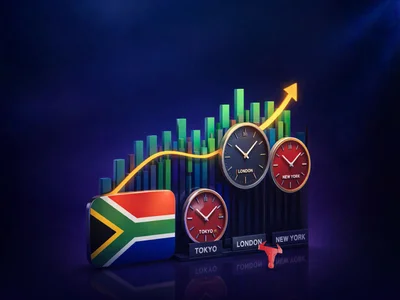
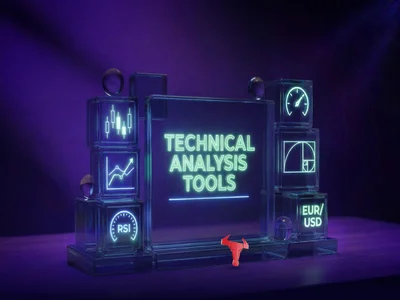
Traders use simple tools like moving averages and charts to make decisions. To succeed, it’s important to manage risk and watch how different markets overlap (like London and New York).
Sometimes you can even combine these strategies like:
Day Trading
Day trading involves buying and selling currencies within the same day. You open positions in the morning and close them before the market closes to avoid overnight risk.
In South Africa, traders often focus on volatile pairs like USD/ZAR or EUR/ZAR. Day trading requires quick decision-making and constant attention to charts.
You can use tools like moving averages, RSI, and support/resistance levels. It’s best suited for traders who can dedicate several hours to monitoring the markets every day.
Swing Trading
Swing trading is about holding trades for several days or even a few weeks to capture short- to medium-term market moves. It works well if you can’t watch the market all day.
Swing traders use a combination of technical analysis and fundamental analysis. You can look at news events or economic indicators to identify trends.
The goal is to profit from larger price swings rather than small daily movements. That’s why it's a more stressful strategy than day trading.
Scalping
Scalping is a fast-paced approach where traders make many small trades throughout the day, aiming for tiny profits on each trade. It relies on very tight spreads and fast execution.
So, accounts like VIP or Raw accounts are often preferred. Scalpers pay close attention to technical indicators such as VWAP, Bollinger Bands, and support/resistance levels.
Position Trading
Position trading is a long-term strategy where traders hold trades for weeks, months, or even years. This approach focuses on fundamental trends rather than short-term fluctuations.
You can rely on economic data, interest rates, inflation, and geopolitical news. Position trading is less stressful because it doesn’t require watching the market constantly.
Trend Following
Trend following is about trading in the direction of the market’s overall movement, either upward or downward. Traders use tools like moving averages, trendlines, and MACD to identify trends.
This strategy avoids going against the market, which can reduce losses. It’s most effective when a currency pair shows a strong directional move over a period of time.
Range Trading
Range trading is applied when the market is moving sideways between support and resistance levels. Traders buy near the support line and sell near the resistance. This strategy works well during low-volatility periods.
Tools like the stochastic oscillator or RSI can help confirm entry points. Range trading is less effective in trending markets, so timing is very important.
News Trading
News trading involves reacting to economic releases and global news events that can move the market quickly. In South Africa, traders often watch SARB interest rate decisions, GDP reports, or US Fed announcements.
This strategy can produce quick profits, but it comes with higher risk. Traders need fast execution and access to reliable news sources to make it work.
Risk Management In South Africa
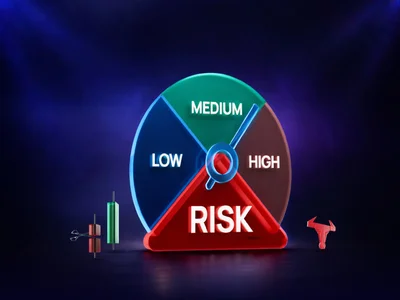
SA traders use tools like stop-loss orders to limit losses, set risk/reward ratios (like aiming to earn $2–$3 for every $1 risked) to manage risk.
They never risk more than a small part of their capital on one trade, usually less than 2%. Rather than that, you can also follow those to manage risk-
- Always aim for trades where your potential reward is higher than the risk, like 1:2 or 1:3.
- Set automatic exit points for both losses and gains.
- Only risk a small percentage of your total capital on any single trade, around 1–2% is common.
- Use leverage carefully. While it can multiply profits, it also magnifies losses, especially on volatile pairs like USD/ZAR.
If you trade, keeping those in mind, then that will be enough.
Best South Africa Brokers
A good forex broker in South Africa is all about trust and reliability. You want a broker that the FSCA regulates, keeps your money safe, right? Lucky for you, these brokers tick all the boxes:
- LiteFinance.
- NordFX.
- XM.
- Vantage.
Each of these is popular with SA traders for its safety, features, and ease of use. So you can focus on trading without the stress.
Final Thoughts
Trading forex in South Africa can be exciting and profitable, but you need to stay safe and smart. Always choose FSCA-regulated brokers & manage your risks carefully, and stick to strategies that suit your style.
F. Nathan
Felix Nathan is a professional trader, market analyst, and business development executive with over a decade of experience in the forex and financial markets. Felix specializes in providing actionable market insights, trading strategies, and risk man...