 IUX
IUX
 Exness
 Vantage
 XM
XM
 ICMarkets
 LiteFinance
 Moneta
 Tickmill
 South Africa (9)
 India (9)
 Bangladesh (12)
 Germany (9)
 Thailand (10)
 Philippines (9)
 Nigeria (10)
 Vietnam (10)
 Malaysia (9)





Is Day Trading Hard?



Share:
Share:
Education
11 min read
Here's the honest truth.
It sounds exciting when you first hear about day trading, buying and selling stocks or currencies within the same day. Make quick trades, earn quick money, and live the dream.
But once you step into the real market, the first question that hits is: Is day trading hard?
The short answer is yes, day trading is hard. But it’s not impossible if you're willing to put in the work.
But if you also have questions in mind like 'is forex gambling,' the answer to this is also no. You need pure strategies and must invest a lot of time in learning; that's why it's hard.
However, if you try to just throw your dart by thinking about luck without any prior knowledge, then it is going to become gambling for you.
Day Trading Can Feel Like Trying to Catch Lightning in A Bottle
Prices move fast. Emotions run high. Mistakes are costly. Here’s why many beginners find it tough:
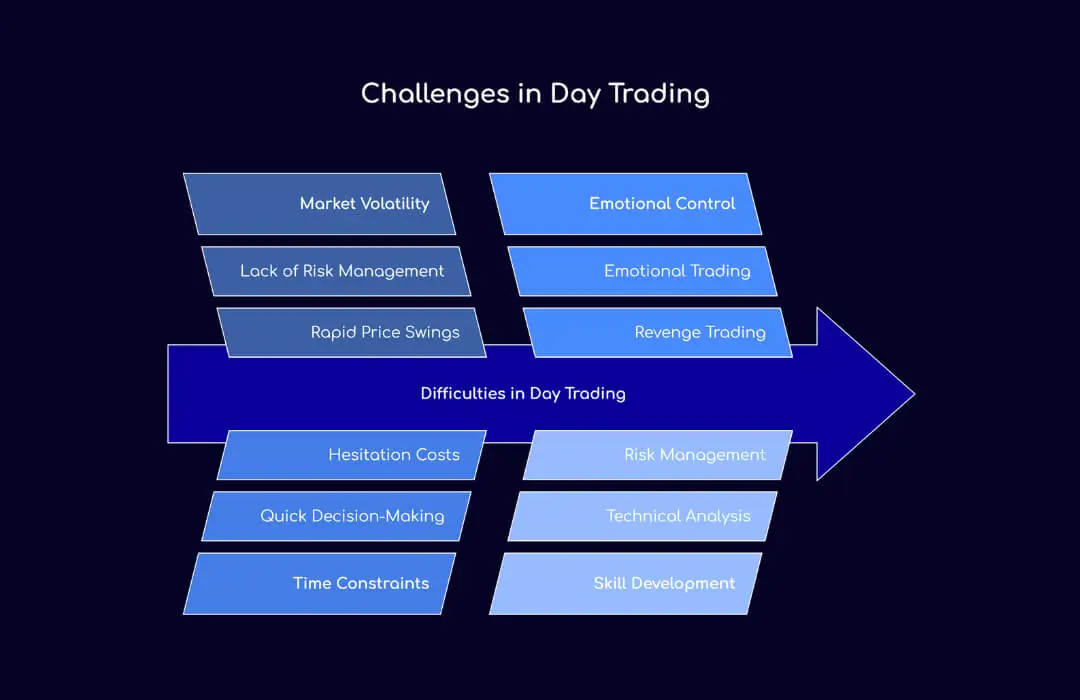
Markets Can Swing Wildly Within Seconds
One minute you're up 20 pips, the next minute you’re down 50, and you barely blinked.
Without a solid plan and risk management (like using stop-losses, proper lot sizes, and knowing when not to trade), you can wipe out your account faster than a sneeze.
Volatility isn’t bad for trading, it is actually what makes profits possible. But without discipline, it turns opportunity into disaster.
Day Traders Live in the Fast Lane
You don’t have hours to deliberate whether a setup looks good. When your setup appears, you have seconds to analyze, decide, and execute; all without second-guessing yourself.
Hesitation results in missed profits, and impulsiveness in heavy losses. It’s a tough balancing act, and it’s why having a predefined trading plan is absolutely crucial. If you’re making decisions during the heat of battle, you’re already losing.
The Unavoidable Emotional Rollercoaster
Picture this: You start the day with $100 profit, then a few bad trades later, you're -$150.
You get desperate to “make it back,” so you revenge trade.
This emotional rollercoaster is where most new day traders crash out.
Because when money is on the line, and moving up and down minute by minute, it feels personal. But if you treat trading emotionally, you’ll burn out fast.
To survive day trading, you need emotional detachment, ruthless discipline, the “next trade” mindset (which is not trying to "win back" past losses).
In short: you must control yourself harder than you try to control the market.
Sure, You Might Catch a Few Lucky Wins at First
But over time, luck dries up.
Consistent day traders aren’t just "fast clickers". They are:
- Experts in technical analysis.
- Sharp with fundamental news (even if they don’t trade it directly.
- Masters of risk management.
- Highly aware of market patterns, timing, and psychology.
Every decision they make is calculated and not random.
Day trading is a skill, and like any high-performance skill like playing an instrument, racing a car, or boxing professionally. It takes training, practice, losses, reflection, and refinement.
There’s no shortcut, but there is a method.
What Beginners Often Struggle With?
When You’re New, Treating the Market Like an All-You-Can-Eat Buffet is Super Tempting
You see a price move and think, "That looks good! Let me get in on that!"
Then another one... "Ooh, that looks good too!" Before you know it, you’re juggling 5 trades at once, with no real strategy.
Overtrading happens when you take too many trades, trade setups that aren’t truly strong, and feel the “urge” to be in the market all the time.
This results in more exposure, more risk, and faster account blowouts.
So, here’s a heads up: Only trade your best setups. If there’s no A+ setup, sitting on your hands is okay (and often smarter).
In Trading, How You React to A Loss Makes or Breaks You!
A beginner might lose a trade and immediately think they have to win it back right away.
So, they rush into another trade without thinking clearly. Then another. And another.
This is called revenge trading, and it’s a fast track to draining your account (and your confidence).
It is always better to accept the loss. Step back. Review what happened. Only take another trade when you’re calm and it meets your setup criteria.
Unrealistic Expectations
Most successful traders take years to become consistently profitable. Accounts grow steadily, not explosively, when managed properly.
When beginners expect to double their account weekly, never lose a trade, or quit their jobs after a month, they set themselves up for disappointment, frustration, and unnecessary risk-taking.
Here’s a better mindset:
- Treat your early trading like going to school.
- You’re paying tuition with small losses, gaining knowledge, and building skills. Profits come later, as a byproduct of doing the right things consistently.
Is Day Trading Harder Than Forex Trading?
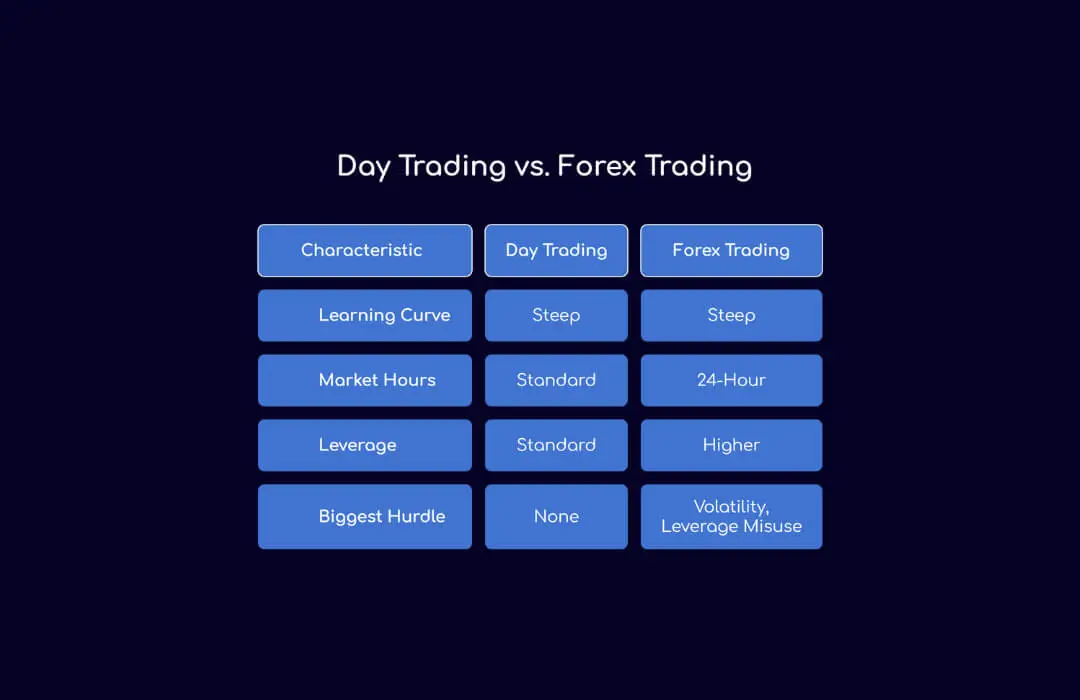
Both day trading stocks and forex trading come with steep learning curves.
Forex trading adds another layer of complexity because of 24-hour market hours and higher leverage, meaning bigger potential gains and bigger risks.
For forex traders, volatility, fast-moving currency pairs, and leverage misuse are the biggest hurdles.
If You’re Dreaming of Day Trading Success, You’ll Need These Skills
Risk Management: Protect First, Profit Later
Think of risk management like wearing a seatbelt while racing at top speed.
Before you ever hit "buy" or "sell", you must know how much you are willing to lose on that trade, where you’ll place your stop-loss, and how much of your account is at risk (it should be small—typically 1-2%).
Without risk management, one bad trade can erase weeks or months of hard work.
But with it, losses become manageable, and your account survives long enough for you to learn, grow, and eventually win.
The golden rule is to always focus on protecting your capital first. Big wins will come—but only if you’re still in the game.
Technical Analysis: Read the Story the Market Tells
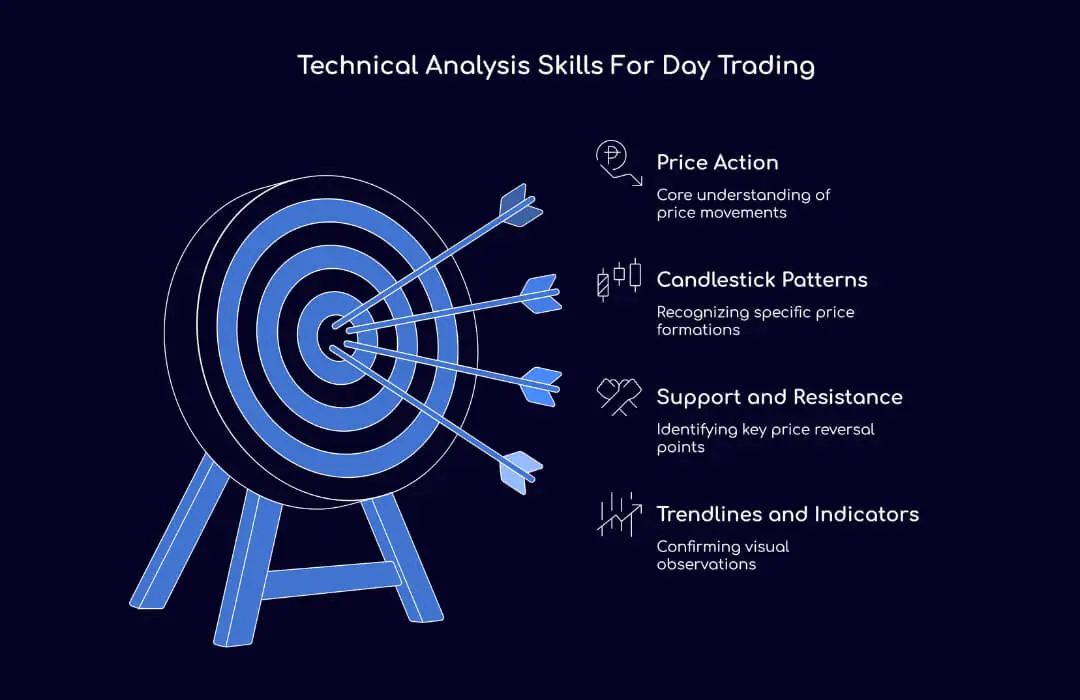
You don't need a PhD to succeed in day trading. But you do need to be fluent in the language of charts.
At minimum, you should understand:
- Price Action: How prices move and react at certain levels.
- Candlestick Patterns: Recognizing patterns like Dojis, Engulfing Bars, and Pin Bars.
- Support and Resistance: The invisible "floors and ceilings" where price often reverses.
- Trendlines and Basic Indicators: To help confirm what your eyes are already seeing.
Technical analysis helps you make informed decisions, not emotional guesses.
Emotional Discipline: Master Your Mindset
The charts aren’t your biggest enemy; your emotions are.
Fear, greed, excitement, anger… they all show up when real money is on the line. And they love convincing you to break your trading rules, chase losses, close good trades too early, and hold bad trades too long.
Winning traders have one thing in common. They feel the emotions, but they stick to their plan anyway.
Write down your trading plan before the market opens. When emotions kick in, you follow the script, not the impulse.
Adaptability: Evolve as the Market Changes
Markets aren't static. What worked yesterday might flop tomorrow.
Maybe volatility spikes. Maybe news drops out of nowhere. Maybe your favorite pattern stops working for a while.
The best traders adapt without blinking. They adjust position sizing, tweak their setups, and stay aware of bigger market conditions.
Patience and Practice: The Only Shortcut is No Shortcut
Day trading mastery takes time. You won’t become a consistent trader in a week, or even a few months.
It is a skill that demands studying charts, reviewing your trades, learning from your mistakes, journaling your progress, and practicing again (and again, and again).
Is Day Trading Worth It?
It can be, but only if you treat it like a serious business, not a get-rich-quick scheme.
You’ll need:
- A solid trading strategy.
- Mastery of risk management.
- Emotional discipline.
- Willingness to lose money while learning (it happens).
FAQs
How Much Time Per Day Do I Need to Commit to Day Trading?
Active day trading typically requires 4-8 hours of focused screen time during market hours, plus 1-2 hours for pre-market analysis and post-market review. Part-time day traders might dedicate 2-4 hours during peak volatility periods (like market open/close). However, the quality of focused attention matters more than total hours—distracted trading often leads to costly mistakes.
Can I Day Trade Successfully with a Full-Time Job?
Day trading while working full-time is extremely challenging and often counterproductive. The constant market monitoring, split attention, and emotional stress can harm both your job performance and trading results. Consider swing trading or position trading instead, which require less active monitoring and can be managed around work schedules.
What's the Difference in Difficulty Between Day Trading Different Markets (Stocks vs Forex vs Crypto)?
Forex day trading is often considered most challenging due to 24/5 market hours, high leverage, and complex fundamental factors. Stock day trading offers more predictable hours but requires understanding of individual company dynamics and sector rotations. Crypto day trading involves extreme volatility and 24/7 markets with less regulatory oversight. Each market demands specific skills and risk tolerance levels.
How Do I Know if I'm Naturally Suited for Day Trading?
Key personality traits include: high stress tolerance, quick decision-making ability, emotional detachment from money, analytical thinking, and patience to wait for quality setups. If you're impulsive, emotional about losses, need immediate gratification, or struggle with discipline, day trading will be significantly harder. Consider paper trading for 3-6 months to assess your natural tendencies.
What's the Typical Learning Curve Timeline for Day Trading Proficiency?
Most traders need 6-12 months to understand the basics, 1-2 years to develop consistent strategies, and 3-5 years to achieve steady profitability. However, 80-90% of day traders quit within the first year due to losses and stress. The timeline varies greatly based on dedication, starting capital, market conditions, and ability to learn from mistakes rather than repeat them.
How Much Starting Capital Do I Realistically Need to Make Day Trading Worthwhile?
While brokers allow accounts as low as $500-$1,000, realistic day trading requires a $10,000-$25,000 minimum. The PDT (Pattern Day Trader) rule in the US requires $25,000 for unlimited day trades. Smaller accounts face restrictions and struggle to generate meaningful income while managing risk properly. Under-capitalization is a leading cause of day trading failure.
What Are the Tax Implications That Make Day Trading More Complex?
Day trading profits are typically taxed as ordinary income (not capital gains), resulting in higher tax rates. You'll need detailed record-keeping for every trade, wash sale rule compliance, and potential quarterly estimated tax payments. Some traders qualify for trader tax status, offering better deductions but requiring meeting specific IRS criteria. The administrative burden adds significant complexity beyond just trading.
How Do I Handle the Social Isolation That Comes with Day Trading?
Day trading can be extremely isolating since you're working alone during market hours when others are at traditional jobs. Combat isolation by joining online trading communities, finding local trader meetups, maintaining relationships outside of trading, and setting boundaries between trading and personal time. Many successful traders also pursue hobbies or part-time activities to maintain social connections.
What Are the Physical Health Challenges of Day Trading?
Extended screen time causes eye strain, poor posture leads to back/neck problems, stress contributes to sleep disorders and digestive issues, and a sedentary lifestyle impacts overall fitness. Successful day traders invest in ergonomic setups, take regular breaks, exercise daily, and maintain strict sleep schedules. The mental stress can also manifest as physical symptoms if not properly managed.
How Do I Transition From Paper Trading to Live Trading Without Getting Overwhelmed?
Start with the smallest possible position sizes (micro lots in forex or single shares in stocks) for the first 1-3 months of live trading. Expect your emotions and decision-making to change dramatically when real money is involved. Focus on following your trading plan rather than profits initially. Many traders experience "demo-to-live trading shock" and need time to adjust to the psychological pressure of real money at risk.
F. Nathan
Felix Nathan is a professional trader, market analyst, and business development executive with over a decade of experience in the forex and financial markets. Felix specializes in providing actionable market insights, trading strategies, and risk man...