 IUX
IUX
 Exness
 Vantage
 XM
XM
 ICMarkets
 LiteFinance
 Moneta
 Tickmill
 South Africa (9)
 India (9)
 Bangladesh (12)
 Germany (9)
 Thailand (10)
 Philippines (9)
 Nigeria (10)
 Vietnam (10)
 Malaysia (9)





What Is Forex? A Beginner-Friendly Guide to FX Trading

Share:
Share:
Education
14 min read
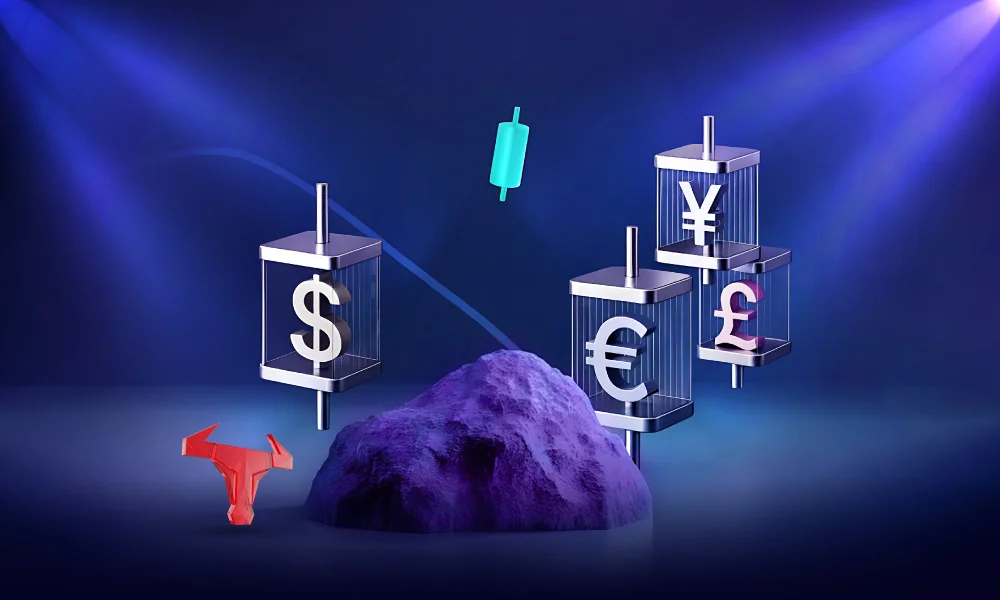
Forex — short for foreign exchange — is the global marketplace where currencies are traded against each other. It's the largest and most liquid financial market in the world, with daily trading volumes exceeding $7 trillion. Banks, governments, corporations, and individual traders all participate, buying one currency while simultaneously selling another.
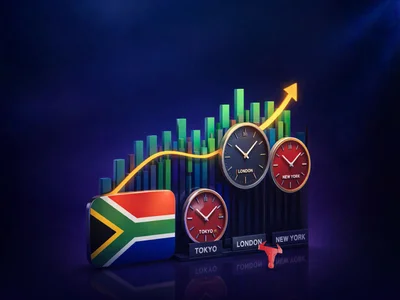
Currency values fluctuate based on economic data, interest rates, political events, and market sentiment. Unlike stock markets, forex operates 24 hours a day, five days a week, across major financial centers from Tokyo to London to New York. Most trading happens in pairs like EUR/USD or GBP/JPY.
What is the Forex Market?
In order to take part in Forex trading, you need to enter into the Forex market. But what exactly is it, right?
The Forex market is known as the Forex exchange market. This is moreover a decentralized global marketplace where you can purchase and sell currencies as a trader. But don’t confuse it with the stock market. The reason behind is unlike the stock market, there is no central location.
The interesting thing is that you don’t need to physically go to the Forex market for trading.
Yes, you have heard that right.
In fact, Forex trading takes place electronically through a network of banks, brokers, institutions, and retail traders connected through the interbank system.
Now comes an important point.
You will find a good number of best brokers for beginners out there. Your job is to compare brokers and pick the right one based on your trading strategy and condition.
Inside the interbank structure, you will see the banks trade directly with one another. Now the goal is to provide liquidity and determine exchange rates. And needless to say, they are the key contenders of the Forex market.
Now you might be wondering how the currencies are traded.
Well, the currencies are traded in currency pairs.
For example, EUR/USD or USD/JPY, where one currency is exchanged for another.
The Forex market runs 24/7. But not all days in a week. Based on the Forex market you are in, the exact days of week when the market operates vary.
You will find the Forex market is operating 5 days a week across major financial hubs including London, New York, Tokyo, and Singapore.
Another important fact!
The Forex trading activity is divided into trading sessions—Asia, London, and New York—with the London–New York overlap typically seeing the highest volatility and liquidity.
How Forex Trading Works?
If you have carefully read the previous section, this section will make more sense to you.
Why?
Because the first thing you need to know in order to understand how Forex trading works is having a core idea on the currency pairs.
Currency Pairs, Base vs Quote
And as I mentioned earlier, currencies are exchanged through currency pairs.
Now the first currency pair is called base currency pairs and then next one is known as quote currency pairs. The price you see represents how much of the quote currency is needed to buy one unit of the base currency.
Let’s assume a scenario.
EUR/USD is a pair. EUR is the base currency and USD is the quoted currency. What can happen here is if the price is 1.1000, therefore, it means 1 euro equals 1.10 US dollars.
Sometimes when the price rises, it will mean the euro is strengthening against the dollar. On the other hand, when it falls (due to many reasons), the euro is weakening relative to the dollar.
Bid vs Ask
Whenever you place any trade, it shows two sides. The bid and ask price. And that’s the core of Forex trading. Now the bid price is actually the price a trader is willing to pay.
Ask price?
Well, the ask price on the flip side, is the price sellers are offering.
Here comes spread.
But what is spread in Forex trading?
Spread is the difference between the bid and ask price. And in most cases, this represents the key transactional cost.
Remember I mentioned brokers earlier?
Most of the brokers out there make money through spreads. Now let’s come back to the main point.
For example, if EUR/USD is quoted at 1.1000 / 1.1002, the 2-pip difference is the spread. Your trade begins slightly negative by that amount.
Buy vs Sell
You can go long (purchase) if you expect the base currency to climb, and short (sell) if you expect it to decrease. In Forex trading, the position size is measured in lots, and each pip movement affects your pip value based on the transaction size.
Margin & Leverage
In case you don’t know, you as a trader need to deposit a certain amount to start trading. But there’s something called leverage. Now what leverage does is through it, you can control a larger portion of trade with only smaller upfront deposits.
Need an example? Why not!
Let’s say a broker, Exness offers you 1:50 leverage. This actually means you can then control $50,000 with depositing only $100 in your account. And the good news is that you will find many high leverage Forex brokers.
Now in this scenario, even if the trader moves 1% in your favour, your return will be amplified as per your deposit.
But there's another side of the story as well.
Think about a case when the trade moves 1% against your favour. What will happen is $50,000 which is 50% of your margin. And that is why they say that you need to take calculated risk in trading.
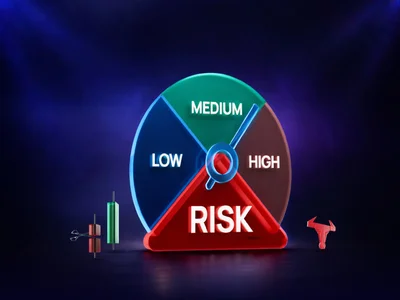
Have you ever wondered if Forex trading leads to wealth? Well yes, but you need to be careful about the things I just covered. Leverage can magnify both profit and loss as you saw. When you are a beginner, it will be a good move always go with low leverage.
Types of Forex Markets
The Forex market runs through three main segments. These are the sports market, forward market and futures market. You will discover each market plays a different role in the Forex market. And you as a trader should know what market is suitable for you.
Spot Market
This is where the individual traders take part. Yes, you can take part in the spot market via online brokers. Here, traders focus on short-term price movement and tend to generate profit from this. In order to make that happen, they go with tools like lot size, margin requirement, stop-loss orders, and take-profit orders.
Moreover, the spot market is the place where currencies are bought and sold at the current market price. This is also considered to be the largest segment of the global over-the-counter (OTC) market.
Forward Market
The forward market consists of private, customized contracts between banks or organizations to exchange currencies at a certain rate on a future date. Now the fact is these agreements are not traded on the exchanges. Rather, they are primarily used to hedge currency risk in international business transactions. Nothing much to do here for the retail traders.
Futures Market
The futures market is where standardized currency contracts are traded on a regulated exchange, such as the Chicago Mercantile Exchange (CME). Futures contracts, unlike the OTC market used for most retail foreign exchange trading.
Each currency futures contract contains conventional terms, such as contract size, expiration date, and tick value.
Traders must adhere to a certain margin requirement, and positions are marked to market daily. Because pricing and volume data are publicly available, the futures market offers a clear picture of liquidity and participation.
Currency Pairs (Majors, Minors, Exotics)
If you treat Forex trading as a game, currency pairs are the key play without any dount. Why I’m saying this is because currencies are traded in pairs as mentioned before. Traders buy one currency and sell another to make profits.
But not all currency pairs in the Forex market are the same. Yes, some pairs come with high liquidity on the other hand, some are not that much. And one of the key steps of smart and successful Forex trading is to choose the currency pairs wisely.
Major Currency Pairs
Well, what makes a currency pair something we call major? Major currency pairs are the ones that are mostly traded. Beyond that, they are also the most liquid currency pairs. And as a trader, there’s nothing wrong if you choose one even if you are a beginner.
Some of the major currency pairs in Forex market are:
- EUR/USD
- USD/JPY
- GBP/USD
- USD/CHF
You can see one thing in common. Most of the major currency pairs, you will find the US dollar there. Now this happens because the US has a comparatively more stable economy. Another reason is these pairs are heavily traded in the Forex market.
And the end result?
These pairs can generate higher bids and ask prices! You will also find tighter spreads on these pairs as well.
Minor Currency Pairs
Just opposite to the major currency pairs, minor currency pairs are not that much traded. And logically, minor currency pairs do not include the US dollar. Now the question is what group of traders target these pairs specifically?
You know what?
There are different types of traders around with unique purposes existing on the market. And so, there is a group of traders who want exposure to specific regional economies. This without involving the US dollar.
Also, minor currency pairs are more popular among experienced traders. Moreover, this is the group of traders who understand cross-currency relationships and correlations.
But as a beginner, it definitely requires much more awareness to trade in minor currency pairs like EUR/GBP or AUD/JPY.
Exotic Currency Pairs
Exotic currency pairs are interesting. They are rather the combination of one major currency like USD and another one from developing countries. Examples can include USD/TRY (US Dollar / Turkish Lira) or EUR/ZAR (Euro / South African Rand).
If you compare exotic currency pairs with major or even minor currency pairs, they are traded less frequently. So what does this mean?
Definitely the exotice currency pairs are low liquidity. And then a currency pair is low liquid, this means the spreads are supposed to be wider. Hence, no real profitability for retail traders.
But then again due to political instability and some other reasons like inflation shocks, or sudden shifts in global capital flows, these currencies often experience sharp price swings.
What Moves Forex Prices?
Trading is not about choosing a random broker and relying on them to be a successful trader. There’s more to learn, analyze, and yes, experience. When you have an overview of what makes the Forex prices moving, you can then better make decisions.
There are a handful of reasons why the ups and downs in the prices of the currencies take place.
Economic indicators come first. Major economic indicators regularly contribute much in moving the Forex market. Key economic reports like CPI (inflation), employment data (nonfarm payrolls), and GDP growth signals strength or weakness of an economy.
Sometimes, the inflation of an economy can go higher than what is expected. Due to this the central bank interest will rise too. Now this can strengthen any currency pairs.
Forex Trading Costs
Remember what I said in the earlier part of this blog? You need to take calculative risk in order to bring trading in your favour.
So, what I really mean is that you should have a concise idea of the costs related to trading. Other than that, you will find it hard to figure out where your profits go. Hence, knowing Forex trading costs is a must.
Basically, Forex trading costs are divided into some categories. These are spreads, commissions, swaps or rollovers and something called slippage.
Spread
I mentioned about spreads before. This is the difference between the bid and ask price and as a trader, you need to go with tighter spreads in order to make more profits. And undoubtedly, this is one of the major trading costs charged by the brokers around.
Then comes,
Commission
You will also find some brokers charging a fixed amount based on each trade you make. This is called commission. Yes, there are also some brokers who don’t charge commission but make their ways through wider spreads. These are brokers who operate through the ECN model.
On the flip side, other brokers operate as market makers.
But what do they actually charge?
What they usually do is never charge direct commissions but as I just covered, earn through spreads mainly. So if a broker doesn't charge you any commissions, the spreads become a bit higher. Now the choice is always yours.
Remember one very imporant thing!
Even a slight difference in spreads or commissions can compound significantly over time. So, be mindful about this.
Swap / Rollover
You need to pay or receive a swap or rollover free if you hold a trade overnight. But what does this adjustment indicate?
The adjustment indicates the difference in central banks interest rate between the two currency pairs you are trading. Now, to be more precise, this happens because in the foreign exchange market, you are buying one currency and selling another at the same time.
Final Words
If you’ve read this far, you already know more than most beginners who rush into Forex trading without understanding the basics. And trust me, that matters. The foreign exchange market rewards preparation, not excitement.
Forex is not complicated. You trade currency pairs. You manage risk. You respect leverage. That’s the foundation. The rest is discipline and consistency over time.
Start small. Focus on major currency pairs. Keep your risk controlled. Learn how spreads, swaps, and margin work before increasing position size.
Forex trading can create opportunity, but only if you treat it like a skill to build, not a shortcut to money. Take your time. Structure first, profit second.
FAQs
What is forex FX in simple terms?
Forex is where currencies get exchanged. That’s the simple version. When you trade dollars for euros before traveling, you’re participating. Traders do the same thing online, trying to profit from price changes. Currencies move in pairs, like EUR/USD, rising and falling against each other.
How does forex trading work?
You buy one currency and sell another at the same time. You choose a pair and decide whether the price will move up or down. If you’re right, you profit from the difference. If you’re wrong, you take a loss. Everything happens through an online broker.
Is forex trading legal?
Yes, forex trading is legal in many countries. The important part is regulation. Brokers must follow rules set by financial authorities. Before opening an account, you should confirm the broker is licensed. That reduces the risk of fraud and protects your deposited funds.
Can beginners trade forex?
Beginners can trade forex, but preparation matters. Start with learning the basics and practice on a demo account first. Understand how orders work and how prices move. Keep risk small. Many new traders struggle because they enter the market without a structured plan.
How much money do I need to start forex?
You can start with 50 to 100 dollars at some brokers. Still, a larger balance helps with risk control. If you risk 1 percent per trade on a 1000 dollar account, that equals 10 dollars per trade. That structure keeps losses manageable.
What are the major currency pairs?
Major currency pairs include the US dollar and another strong currency. Examples are EUR/USD, GBP/USD, USD/JPY, and USD/CHF. These pairs have the highest trading volume. Higher liquidity often means tighter spreads and more stable price movement compared to less traded pairs.
What is leverage in forex and why is it risky?
Leverage lets you control a larger trade with a small deposit. With 1 to 100 leverage, 100 dollars controls 10,000. Profits increase, but losses grow at the same rate. Without strict risk management, leverage can drain your account faster than expected.
F. Nathan
Felix Nathan is a professional trader, market analyst, and business development executive with over a decade of experience in the forex and financial markets. Felix specializes in providing actionable market insights, trading strategies, and risk man...