 IUX
IUX
 Exness
 Vantage
 XM
XM
 ICMarkets
 LiteFinance
 Moneta
 Tickmill
 South Africa (9)
 India (9)
 Bangladesh (12)
 Germany (9)
 Thailand (10)
 Philippines (9)
 Nigeria (10)
 Vietnam (10)
 Malaysia (9)





Trading Forex During the New York Session



Share:
Share:
Education
6 min read

At the time European traders are retiring from lunch it’s already 8 AM EST, which is the start of the New York session.
The New York trading session is the second most liquid forex market session.
So, whether you’re just getting to work or still in your pajamas at home, the New York session always kicks off powerfully.
However, not every trader knows how to handle this high-liquidity session.
If you let me, I’ll show you around.
Why the New York Session is a Hot Spot?
The New York forex session runs from 8 AM to 5 PM EST, and it accounts for approximately 17% of all daily forex transactions.
The New York session is one of the most active sessions of each trading day; thanks to its overlap with the London session from 8 AM to 12 PM EST.
This New York-London Overlap is Responsible For
The New York-London overlap is the most dynamic period in forex trading, offering traders increased opportunities due to heightened market activity.
High Liquidity During This Period
This high liquidity is a result of the merging of two major forex markets. This also means there are tighter spreads are quick trade execution during this session.
Increased Volatility
Volatility during the New York-London overlap increases significantly, especially during the morning session.
The best part about this is that this session often experiences rapid price movements, so it is good for traders with breakout strategies.
Serious Action Across Major Currencies
During the New York-London overlap major currency pairs tend to enjoy some serious action.
For instance, EUR/USD, GBP/USD, and USD/JPY pairs.
Since the U.S. dollar is significant in about 85% of all trades, any major U.S. news or data can cause serious market moves.
What Does the New York Session Look Like Daily?
If this were TikTok, I’d have said “a day in the life of the New York session”.
Hilarious, isn’t it?
Anyway, the New York forex traders start their day just when the European traders are ideally wrapping up their lunch break.
So, the New York Session is in Three Parts
The New York session can be divided into three distinct phases, each with its own trading characteristics.
A quick look at the New York session kill zone helps show where volatility peaks and key moves often form before the main session phases unfold.
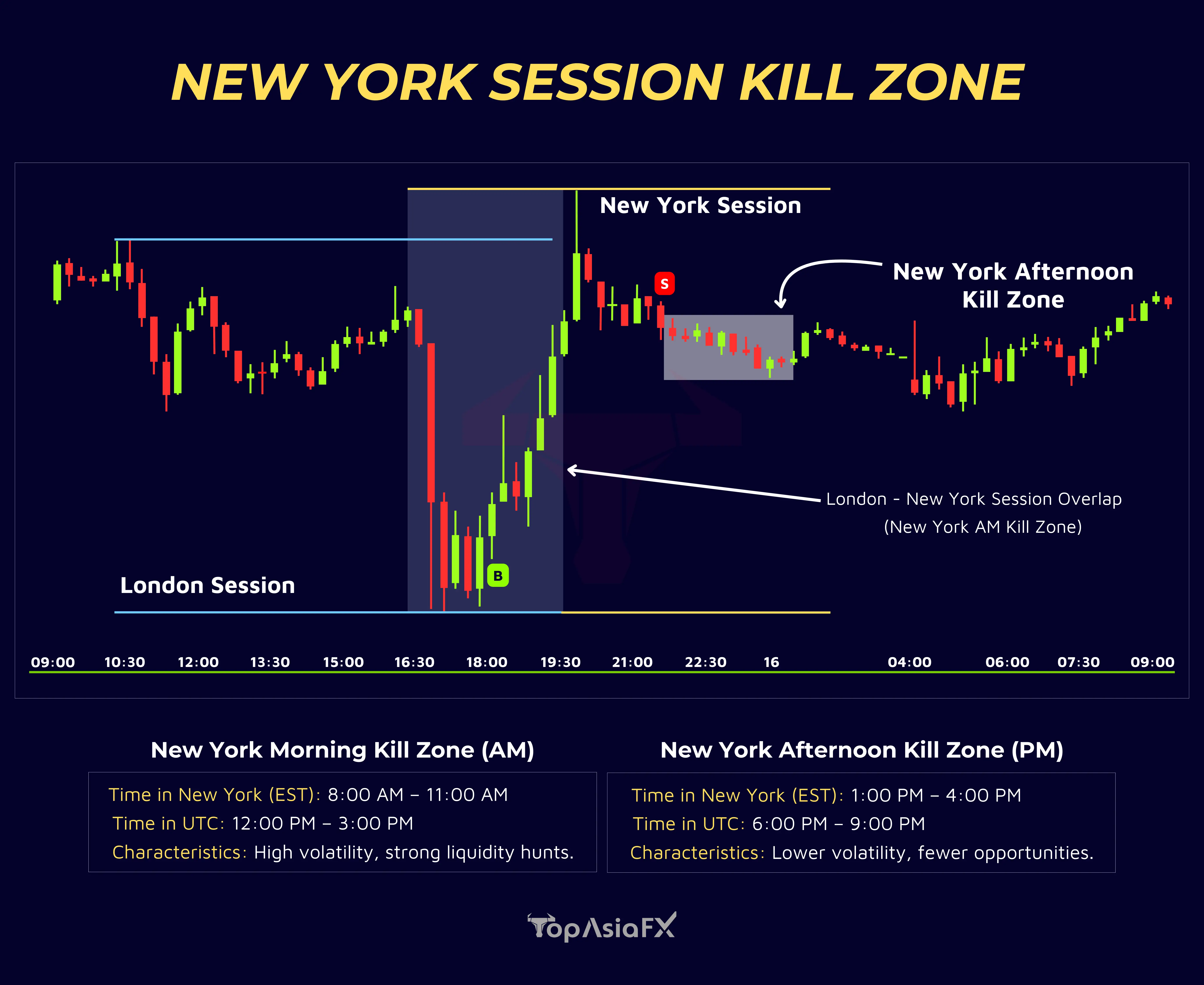
The Morning Session — 8 AM to 12 PM EST
Because of the London overlap, the New York session peaks during this period.
This period is notorious for increased volatility and opportunities for breakout trading.
Just after the morning session, the lunch session follows.
The Lunch Session — 12 PM to 1 PM EST
Some volatility from the high of the morning session still lingers during this period.
Nevertheless, the general aura of the lunch session is typically slow as traders are off to grab lunch.
Things further cool off in the afternoon session which comes after.
The Afternoon Session — 1 PM to 4 PM EST
At this point, European trade markets are already closing so market activity is dwindling.
This period is the best for range-bound strategies, where support and resistance levels are solid.
Even though the New York forex session closes officially at 5 PM EST, most traders wrap up their daily trades by this time.
Most Effective Trading Strategies for the New York Session
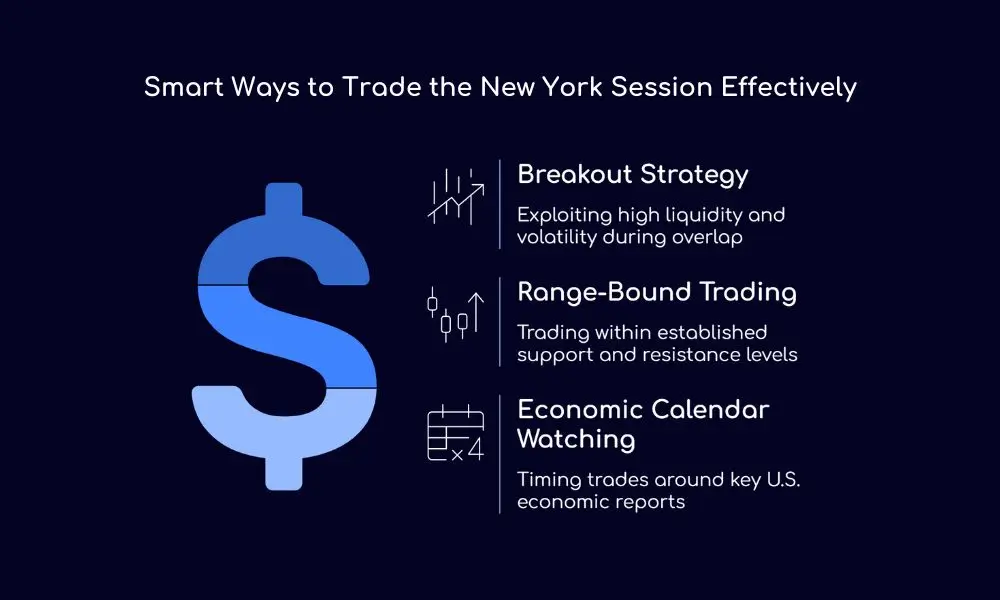
These are my top three trading strategies to guide any trader through the New York session:
Breakout Strategy During the Overlap
Liquidity tends to surge when the New York session overlaps with the London session.
The key here is to look for chart patterns, like triangles or consolidations that can break out with the high volatility in the morning session.
A well-time breakout can lead to solid profits, especially with heightened momentum and tight spreads.
Range-Bound Trading in the Afternoon Session
Market volatility reduces after the European market closes for the trading day.
This is why the afternoon session is a great time to major currency pairs that mostly adhere to support and resistance levels.
For example, if the price reaches an upper boundary, a good option will be to sell the pair. On the other hand, if it reaches a lower boundary, that is a good time to buy the pair.
Watching the Economic Calendar
Vital U.S. reports such as GDP reports, Federal Reserve interest rate decisions, and Non-Farm Payroll (NFP) data are often released at the start of the New York session.
Traders should always keep an eye on these news reports as their impact and timing can cause dramatic moves within the forex market.
What Are the Best Forex Pairs to Trade During the New York Session?
I find that currency pairs with the USD tend to get lots of traction.
With the most popular ones being:
- EUR/USD: There’s high liquidity and an abundance of trading opportunities with this currency pair.
- GBP/USD: This currency pair is accompanied by serious market action and volatility.
- USD/JPY: The U.S. dollar and Japanese Yen pair is an option for traders to make safe-haven investments. This pair is quite active in the early part of the New York session because Asian traders are still in play.
Top Tips for Trading in the New York Session
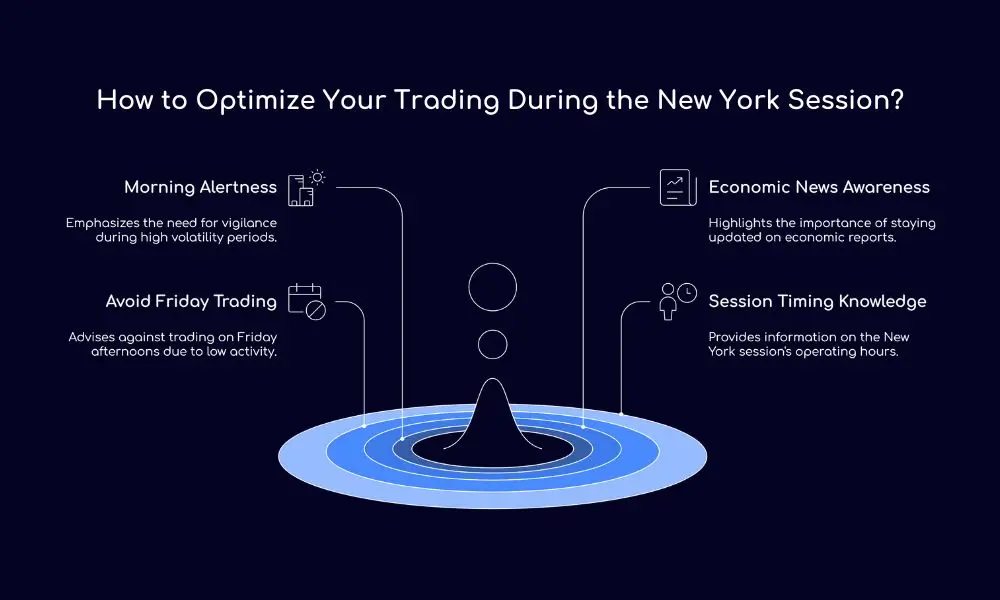
Mastering the New York session requires strategy and awareness. Here are key tips to navigate it effectively.
Be Alert in the Morning
Early trading hours are usually exciting and active because of the high volatility and liquidity.
Nevertheless, it can also be risky. So, remember to use stop loss orders to protect yourself.
Watch the U.S. Economic News
Always be on the lookout for the last in the U.S. economy as major reports often trigger the market to move.
This way, you can always be one step ahead.
Don’t Trade on Friday Afternoons
This is a common unspoken rule for the New York session.
Avoid trading during this period because traders are already closing positions ahead of the weekend.
In simpler terms, there’s little activity going on at this time.
Be Familiar with Your Session
It is important to know the session you’re trading with and its hours.
The New York session runs from 8 AM to 5 PM EST and is very liquid.
If you’re not interested in a rapidly moving market, the New York session may not be for you.
Wrapping Up
Trading forex during the New York session is almost like stepping into a beating heart. There’s so much liquidity and market activity.
The combination of liquidity, volatility, and overlaps contribute to this session being one of the most traded in the forex market.
So, will you be setting your alarm for 8 AM EST tomorrow?
F. Nathan
Felix Nathan is a professional trader, market analyst, and business development executive with over a decade of experience in the forex and financial markets. Felix specializes in providing actionable market insights, trading strategies, and risk man...