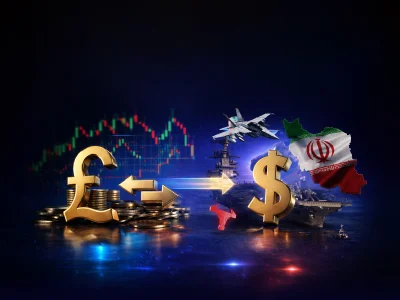
 IUX
IUX
 Exness
 Vantage
 XM
XM
 ICMarkets
 LiteFinance
 Moneta
 Tickmill
 South Africa (9)
 India (9)
 Bangladesh (12)
 Germany (9)
 Thailand (10)
 Philippines (9)
 Nigeria (10)
 Vietnam (10)
 Malaysia (9)





Size and Liquidity of the Forex Market



Share:
Share:
Markets
10 min read

If you ever wondered how big the Forex market is, here is a fact that will probably blow your mind. $7.5 trillion is traded every day in the Forex market.
This is more than the GDP of some countries that are moving through the market every single day. The size and liquidity of the forex market are some of the things that make it the largest in the world.
But why else is Forex the largest financial market in the world? And why is liquidity such a big deal for traders?
Maybe this article might help break things down.
How Big is the Forex Market?
In the Forex market, trillions of dollars change hands daily, as it is the busiest, largest, and most liquid market in the world which never closes.
Notably, foreign exchange trading operates 24/5, unlike the stocks market, which operates from 9:00-17:30, Monday to Friday.
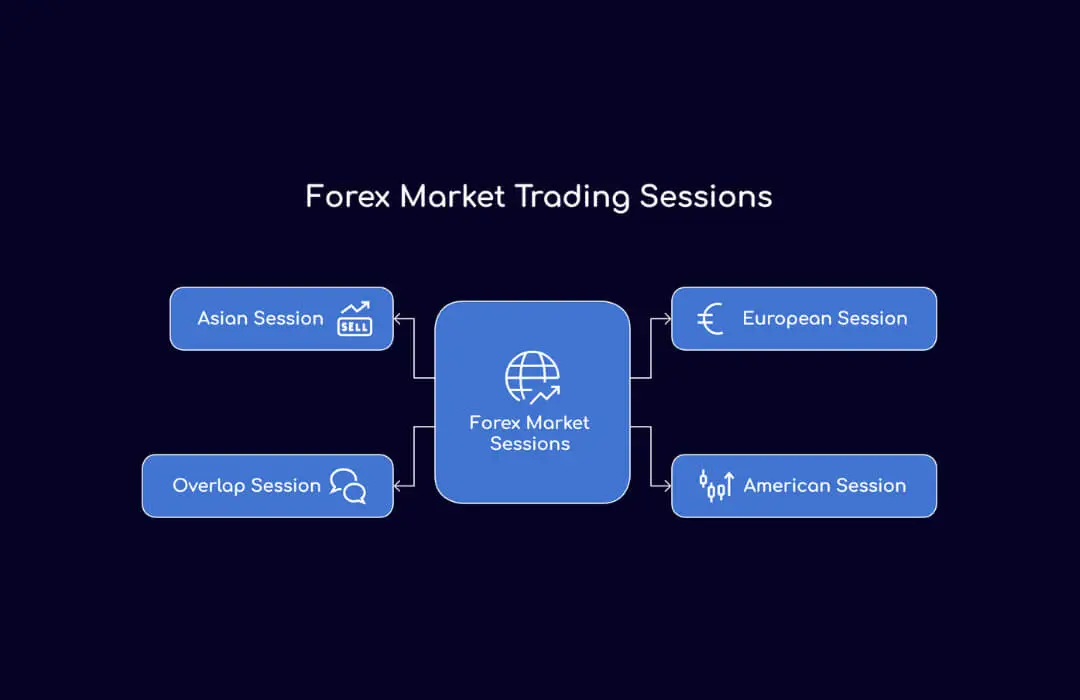
Additionally, forex trading operates over 4 sessions; Sydney, Tokyo, London, and New York.
How Does Forex Compare to Other Markets?
To put things into perspective, Forex has:
- A Daily Trading Volume of $7.5+ trillion
- An average Stock Market Daily Volume of ~$300 billion
- A Crypto Market Daily Trading Volume of ~$100 billion
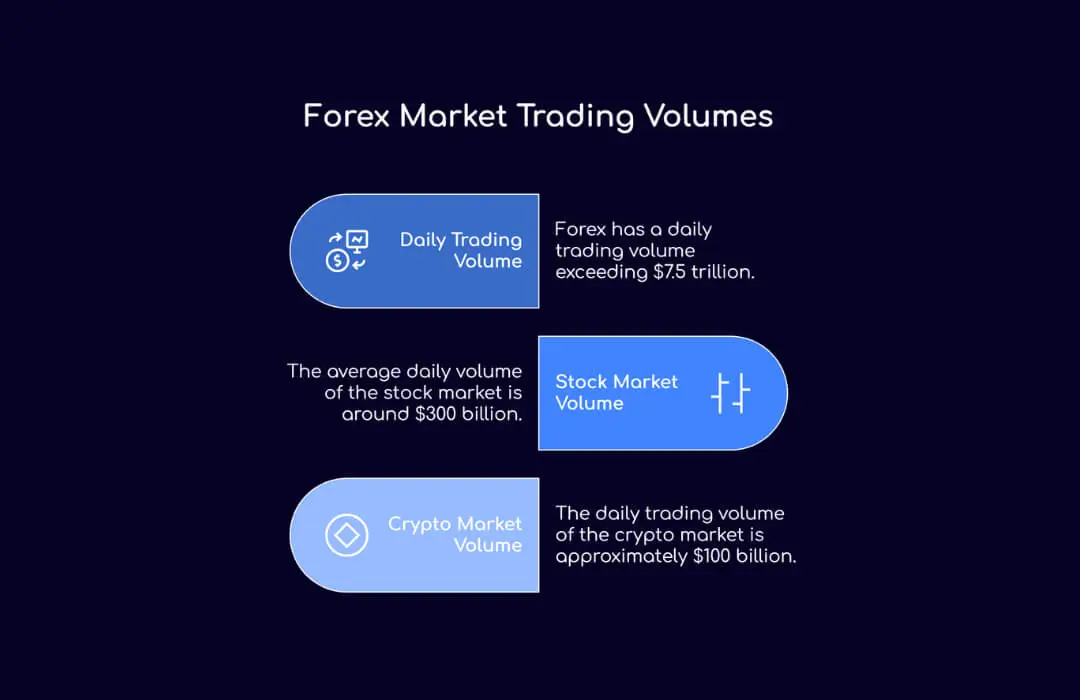
So Forex market is more than 25 times bigger than the global stock market in terms of daily transactions. Its massive size transforms it into a liquidity powerhouse.
Forex's size transforms it into a liquidity powerhouse, but does this mean anything significant for its traders?
What is Liquidity in Forex?
Simply put, liquidity is the ability to buy or sell an asset with minimal impact on price.
Think about selling a piece of artwork that is rare and expensive. You could be waiting weeks (or months) to find a buyer willing to pay the price you want.
On the contrary, if you were selling a smartphone that was in high demand you could get a buyer instantly. That's liquidity! The easier it is to buy and spill the asset, the more liquid the market.
The higher it is, the more instant trade execution, tighter spreads, and less room for manipulation from large players.
- More instant execution of your trades.
- Tighter spreads, which means cheaper trading costs.
- Lesser price manipulation from large players.
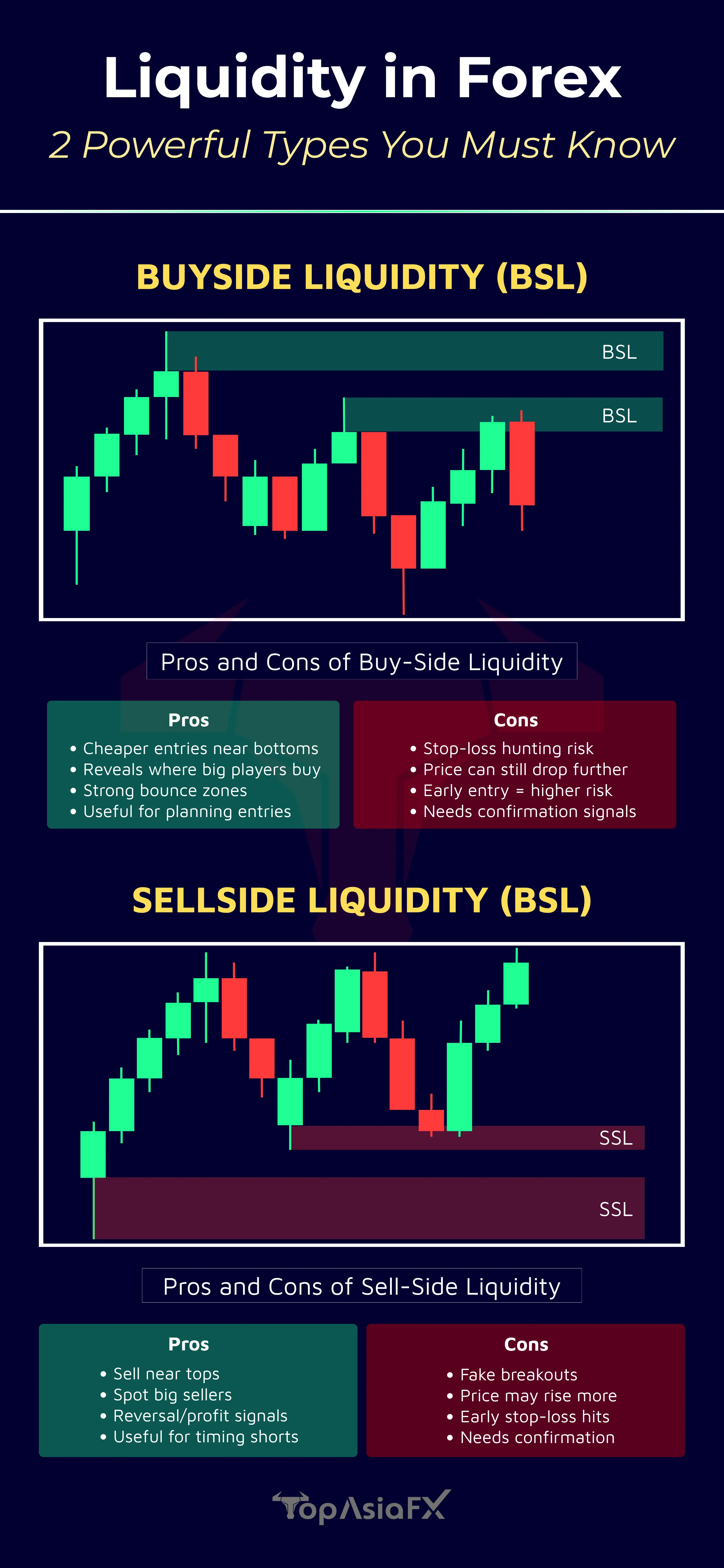
In Forex, liquidity often shows up in two main forms: Buy-Side Liquidity (BSL) and Sell-Side Liquidity (SSL). Each comes with its own pros and cons, as shown below.
Now let's go into the details of why Forex is the most liquid market in the world.
Why is Forex so Liquid?
There’s Global Participation
Forex is not limited to one country or a set of investors. It's a decentralized market with:
- Central banks (such as the U.S. Federal Reserve, and European Central Bank).
- Institutional traders (such as hedge funds, and banks).
- Companies (such as multinational corporations hedging currency exposure).
- Retail traders using demo accounts and live accounts.
This huge participation guarantees that there are always willing buyers and sellers, so Forex is very liquid.
24-Hour Market
As opposed to opening and closing stock markets every day, Forex is open on a daily basis from Monday through Friday. Wherever one trading session closes, another is open somewhere on the globe.
| Session | Major Financial Centers | Liquidity Level |
|---|---|---|
| Asian | Tokyo, Hong Kong, Sydney | Low to moderate |
| European | London, Frankfurt, Paris | High |
| American | New York, Chicago | Very high |
| Overlap | London and New York | Extremely high |
This continuous flow of trading maintains liquidity at an elevated level all the time.
Close Spreads and Quick Execution
Ever wonder why major currency pairs like EUR/USD, USD/JPY, or GBP/USD tend to have very tight spreads? It is because of their high liquidity.
For instance, the EUR/USD spread (bid-ask price difference) is usually as low as 0.1 pips in big markets.
Compare this to exotic currencies such as the Turkish Lira (TRY) or South African Rand (ZAR), whose spreads are 10+ pips because they are not as liquid.
Therefore, more liquidity = less trading cost = more profits for traders.
Which Forex Pairs Are the Most Liquid?
Not all currency pairs have the same level of liquidity.
Generally, the most liquid pairs are the major currency pairs, those that include the U.S. dollar (USD) and other top global currencies.
Let me give you a quick rundown.
If you ever wondered how big the Forex market is, here is a fact that will probably blow your mind. $7.5 trillion is traded every day in the Forex market.
This is more than the GDP of some countries that are moving through the market every single day. The size and liquidity of the forex market are some of the things that make it the largest in the world.
But why else is Forex the largest financial market in the world? And why is liquidity such a big deal for traders?
Maybe this article might help break things down.
How Big is the Forex Market?
In the Forex market, trillions of dollars change hands daily, as it is the busiest, largest, and most liquid market in the world which never closes.
Notably, foreign exchange trading operates 24/5, unlike the stocks market, which operates from 9:00-17:30, Monday to Friday.
Additionally, forex trading operates over 4 sessions; Sydney, Tokyo, London, and New York.
How Does Forex Compare to Other Markets?
To put things into perspective, Forex has:
- A Daily Trading Volume of $7.5+ trillion
- An average Stock Market Daily Volume of ~$300 billion
- A Crypto Market Daily Trading Volume of ~$100 billion
So Forex market is more than 25 times bigger than the global stock market in terms of daily transactions. Its massive size transforms it into a liquidity powerhouse.
Forex's size transforms it into a liquidity powerhouse, but does this mean anything significant for its traders?
What is Liquidity in Forex?
Simply put, liquidity is the ability to buy or sell an asset with minimal impact on price.
Think about selling a piece of artwork that is rare and expensive. You could be waiting weeks (or months) to find a buyer willing to pay the price you want.
On the contrary, if you were selling a smartphone that was in high demand you could get a buyer instantly. That's liquidity! The easier it is to buy and spill the asset, the more liquid the market.
The higher it is, the more instant trade execution, tighter spreads, and less room for manipulation from large players.
- More instant execution of your trades.
- Tighter spreads, which means cheaper trading costs.
- Lesser price manipulation from large players.
In Forex, liquidity often shows up in two main forms: Buy-Side Liquidity (BSL) and Sell-Side Liquidity (SSL). Each comes with its own pros and cons, as shown below.
Now let's go into the details of why Forex is the most liquid market in the world.
Why is Forex so Liquid?
There’s Global Participation
Forex is not limited to one country or a set of investors. It's a decentralized market with:
- Central banks (such as the U.S. Federal Reserve, and European Central Bank).
- Institutional traders (such as hedge funds, and banks).
- Companies (such as multinational corporations hedging currency exposure).
- Retail traders using demo accounts and live accounts.
This huge participation guarantees that there are always willing buyers and sellers, so Forex is very liquid.
24-Hour Market
As opposed to opening and closing stock markets every day, Forex is open on a daily basis from Monday through Friday. Wherever one trading session closes, another is open somewhere on the globe.
| Session | Major Financial Centers | Liquidity Level |
|---|---|---|
| Asian | Tokyo, Hong Kong, Sydney | Low to moderate |
| European | London, Frankfurt, Paris | High |
| American | New York, Chicago | Very high |
| Overlap | London and New York | Extremely high |
This continuous flow of trading maintains liquidity at an elevated level all the time.
Close Spreads and Quick Execution
Ever wonder why major currency pairs like EUR/USD, USD/JPY, or GBP/USD tend to have very tight spreads? It is because of their high liquidity.
For instance, the EUR/USD spread (bid-ask price difference) is usually as low as 0.1 pips in big markets.
Compare this to exotic currencies such as the Turkish Lira (TRY) or South African Rand (ZAR), whose spreads are 10+ pips because they are not as liquid.
Therefore, more liquidity = less trading cost = more profits for traders.
Which Forex Pairs Are the Most Liquid?
Not all currency pairs have the same level of liquidity.
Generally, the most liquid pairs are the major currency pairs, those that include the U.S. dollar (USD) and other top global currencies.
Let me give you a quick rundown.
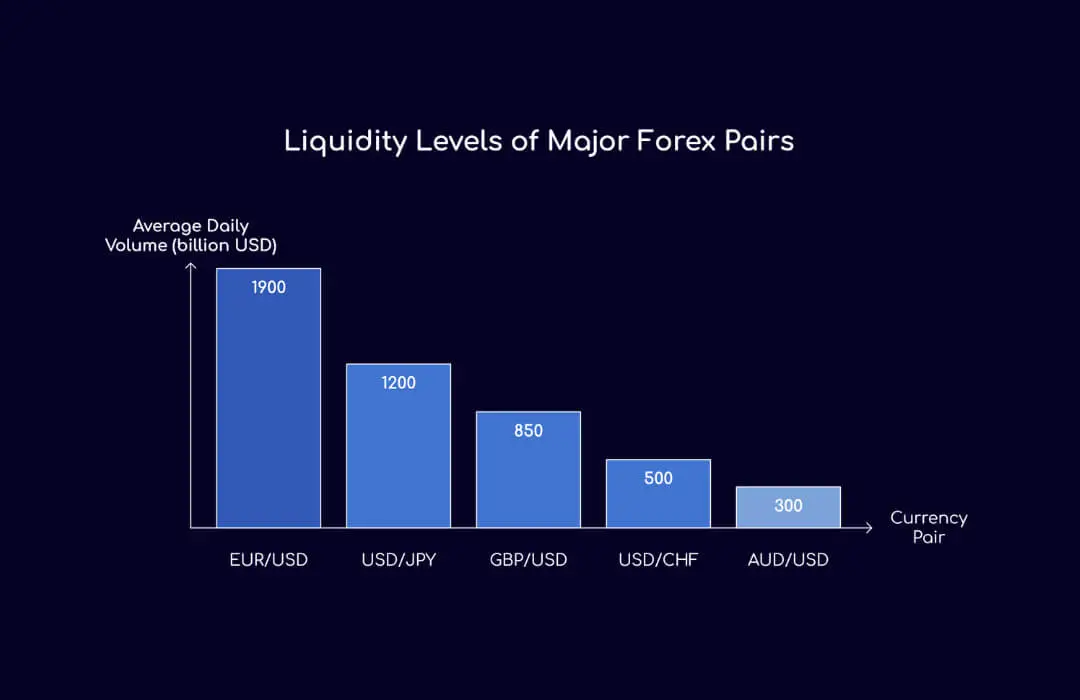
| Currency Pair | Average Daily Volume | Liquidity Level |
|---|---|---|
| EUR/USD | $1.9 Trillion | Extremely High |
| USD/JPY | $1.2 Trillion | Very High |
| GBP/USD | $850 Billion | Very High |
| USD/CHF | $500 Billion | High |
| AUD/USD | $300 Billion | High |
These five major currency pairs tend to offer the best trading conditions with low spreads, high liquidity, and fast execution speeds.
What Happens When Liquidity Decreases?
Even in a highly liquid market such as Forex, liquidity is not always stable. Here are some reasons why liquidity can drop in the Forex market:
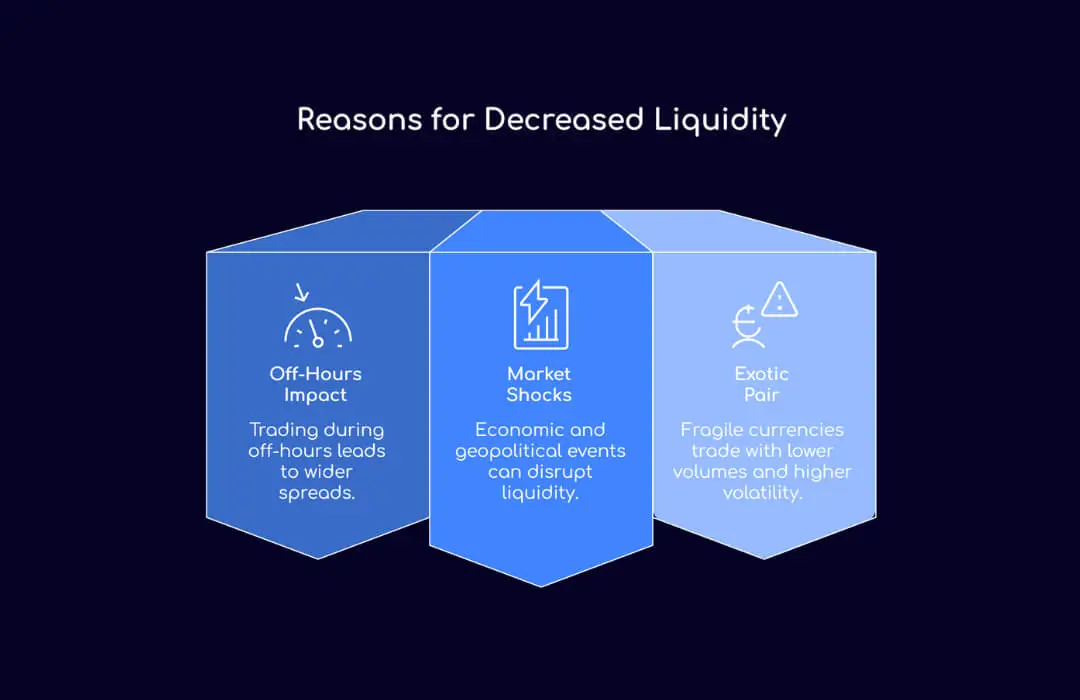
Low Liquidity During Off-Hour
Trading during the Asian session (with the exception of JPY pairs) can result in wider spreads and delayed fills.
Liquidity also dries up on weekends and public holidays when banks and institutions aren’t active.
Market Shock Events
Key economic releases like Non-Farm Payrolls, CPI, and interest rate decisions have the potential to cause abrupt price spikes.
Also, geopolitical events such as wars, elections, financial crises can create panic, thus liquidity crashes or spikes.
Low Liquidity of Exotic Pairs
Fragile currencies such as USD/TRY, USD/ZAR, or USD/MXN trade with lower volumes, and as such, are more volatile and subject to drastic price movements.
Why Liquidity is Important to Traders?
If you're a trader, one of the first things you should look out for before you get into a trade is liquidity.
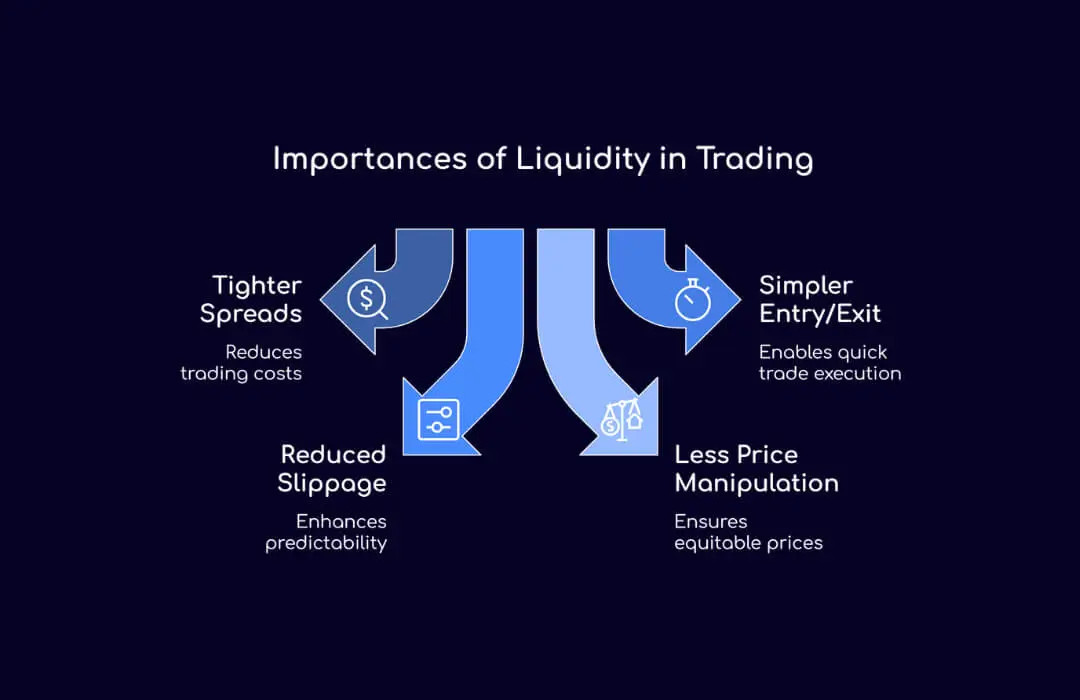
Here’s why:
- There’s tighter spreads, so you get to spend less on trading fees and commissions.
- It allows for simpler entry and exit, which means quicker trade execution.
- Reduced slippage in high liquid markets means that traders can predict their trading outcomes from the start.
- There’s less tendency for price manipulation, so, there are more equitable prices.
- High liquidity translates to better tradability, with less potential for abrupt price shifts.
Finalizing
Its massive size and large liquidity make the Forex market one of the ideal markets for traders across the globe.
Whether you are a scalper wanting quick trades or a swing trader browsing through trends, Forex offers an ideal environment.
Some things you should note about Forex:
- Forex is the biggest financial market, with more than $7.5 trillion in daily trade volume.
- Liquidity is greatest in large currency pairs such as EUR/USD and USD/JPY.
- Trading during times of maximum liquidity (London and New York overlap) provides better execution and narrower spreads.
- Low-liquidity hours (Asian session, holidays) can yield wider spreads and increased volatility.
F. Nathan
Felix Nathan is a professional trader, market analyst, and business development executive with over a decade of experience in the forex and financial markets. Felix specializes in providing actionable market insights, trading strategies, and risk man...