 IUX
IUX
 Exness
 Vantage
 XM
XM
 ICMarkets
 LiteFinance
 Moneta
 Tickmill
 South Africa (9)
 India (9)
 Bangladesh (12)
 Germany (9)
 Thailand (10)
 Philippines (9)
 Nigeria (10)
 Vietnam (10)
 Malaysia (9)





Forex vs Stocks: Which One Should You Choose to Trade?



Share:
Share:
Education
6 min read

Forex and stocks sit at the heart of two different trading worlds. One involves buying ownership in companies. The other involves exchanging currencies. Both attract millions of traders, but they operate on completely separate rhythms, risk profiles, and market structures.
Stock markets open and close with the business day. Forex runs around the clock, five days a week, following the sun across global financial centers. Stocks give you a piece of a company's future. Forex lets you speculate on the relative strength of entire economies.
This guide breaks down the key differences so you can choose your path with clarity.
Differences Between the Forex and Stocks Market
Before I do any deep-diving, here’s a snapshot of some notable differences between these two bad boys:
| Criteria | Forex Trading | Stock Trading |
|---|---|---|
| Market Structure | A decentralized, OTC market with no central exchange. | Comprises of centralized exchanges (NYSE, NASDAQ) with price transparency. |
| Ownership | There is no actual ownership in Forex just speculation on currency value. | Buying a stock gives the investor ownership of a company. |
| Short Selling | It is easy to go long or short in any trade. | Stock trading requires borrowing shares and may involve extra costs. |
| Dividends and Interest | Forex traders may earn or pay interest (rollover/swap rates). | Stock investors can receive dividends from company profits. |
| Market Hours | Operates for 24 hours a day, 5 days a week. | Runs through limited to exchange hours (e.g., NYSE: 9:30 AM–4 PM EST). |
| Liquidity | Extremely high (about $6 trillion daily). | Liquidity varies by stock and exchange. |
| Factors Influencing Prices | Global events, economic data, interest rates, and geopolitical factors affect forex prices. | Company performance, industry trends, market sentiment, and economy affect stock prices. |
| Leverage | High leverage (50:1 to 500:1). | Low leverage (2:1 for stocks, 4:1 for day traders). |
| Trade Choices | Choices are limited to currency pairs such as major, minor, and exotic. | Investors can choose from thousands of stocks across different exchanges. |
Now that you have a brief snapshot, here are more details on these differences.
Forex vs. Stocks: Which is More Profitable?
Forex Trading Never Sleeps (Unlike Stocks)
The forex market is open 24 hours a day for 5 days a week — traders can trade any time of the day, thanks to different forex trading sessions.
In contrast, stock markets run on specific fixed hours. The New York Stock Exchange (NYSE), for example, is only open from 9:30 am to 4:00 pm EST. If you miss these hours, you are out of luck.
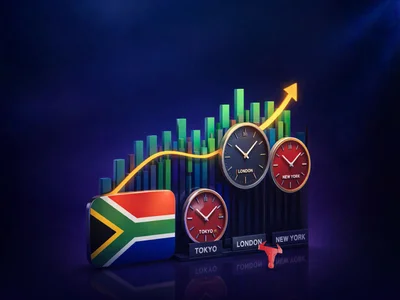
Forex allows traders to trade at any given time; morning, noon, or even at 3 AM when they can’t sleep. That’s why many traders study the Tokyo session, London session, and New York session.
So, Forex wins this round!
Forex Has Way More Liquidity
Liquidity is how easily you can buy or sell an asset without the price of the asset.
In forex, there are trillions of dollars traded each day which is the largest and most liquid market in the world. In contrast, the daily trading volume of the stock market is around $ 200 billion.
It is like comparing the daily trading activity of the foreign exchange market to the daily trading activity of the stock market as if the first were the Atlantic Ocean and kids pool.
But why is it important to us that the market is liquid? Well, if the market is liquid, then we can open and close the trades quicker and at a better price.
Again, Forex wins!
Forex is Harder to Manipulate
Did you hear about the GameStop short squeeze? Where retail traders on Reddit increased the stock price and forced big hedge funds to lose billions. This kind of market manipulation is quite common for stocks.
With forex, manipulation is a lot harder. The market is simply too big for one player to manipulate. Even the biggest banks and hedge funds in the world can’t move the market in their direction.
It is Cheaper to Trade Forex
Most forex brokers do not charge a commission. They earn their money through the spread, the difference between bid and ask prices.
Stock brokers though? They like fees! You have to pay them per trade. Regulatory fees? They have to be paid too! Exchange fees as well.
Also, stock brokers charge you if you do too few trades. How interesting.
Forex Offers HUGE Leverage
Leverage enables traders to leverage a big trade with a small amount of money.
In stocks, the leverage is at 2:1 (or possibly 4:1 for day trading with an account worth $25,000).
Forex leverage is 50:1, 100:1, 500:1. With $200 you can control $100,000.
Of course, margin trading and margin levels are critical to understand before diving into leverage. Trade leverage with caution: Although high leverage may increase your winnings, it may also magnify your losses. So, use it with care.
Forex Gives More Trading Opportunities
For instance, with stocks, investors need to wait for the right market conditions, sometimes weeks or even months, to see significant price movements.
But forex? Currencies change every day. And because forex involves trading one currency versus the other, traders can make money from rising and falling markets. You can even start with as little as $100.
Forex Trading is Worldwide
Stock traders often rely on earnings reports, company news, and insider information to predict the movement of stocks.
With forex, traders are dealing with world economic trends, inflation, interest rates, and geopolitical events. This makes it more dynamic and less dependent on the company. To stay ahead, traders often rely on forex risk management and technical analysis like chart patterns.
Although the Forex and stock markets differ significantly, they still share some similar features.
Here’s an overview to get you on track:
Similarities Between Forex and Stocks
| Criteria | Forex | Stocks |
|---|---|---|
| Involve Speculation | Traders buy and sell currency pairs while speculating on price movements. | Investors buy and sell stocks based on expected price changes. |
| Require Analysis | Traders use technical and fundamental analysis to note trends. | Investors often rely on financial statements, earnings reports, and market trends. |
| Influenced by Economic Factors | Interest rates, inflation, and global events have an impact on forex prices. | Economic growth, company earnings, and market trends influence stock prices. |
| Bear Risk | Leverage and market volatility can lead to losses if traders do not manage them properly. | Fluctuations in stock prices can lead to losses, especially during market downturns. |
Final Verdict: is Forex Better Than Stocks?
If you love fast-paced trading, lower costs, and 24/5 market access, forex is your best choice.
The forex market:
- Has more liquidity
- Has no commissions
- Is harder to manipulate
- Gives access to more trading opportunities
Obviously, forex trading has its cons. It isn’t risk-free.
Traders need good risk management strategies to avoid losing big. But if what you seek is a market that is flexible, liquid, and abundant with opportunities, then forex should be your final stop.
F. Nathan
Felix Nathan is a professional trader, market analyst, and business development executive with over a decade of experience in the forex and financial markets. Felix specializes in providing actionable market insights, trading strategies, and risk man...