 IUX
IUX
 Exness
 Vantage
 XM
XM
 ICMarkets
 LiteFinance
 Moneta
 Tickmill
 South Africa (9)
 India (9)
 Bangladesh (12)
 Germany (9)
 Thailand (10)
 Philippines (9)
 Nigeria (10)
 Vietnam (10)
 Malaysia (9)





What is Margin?



Share:
Share:
Education
8 min read
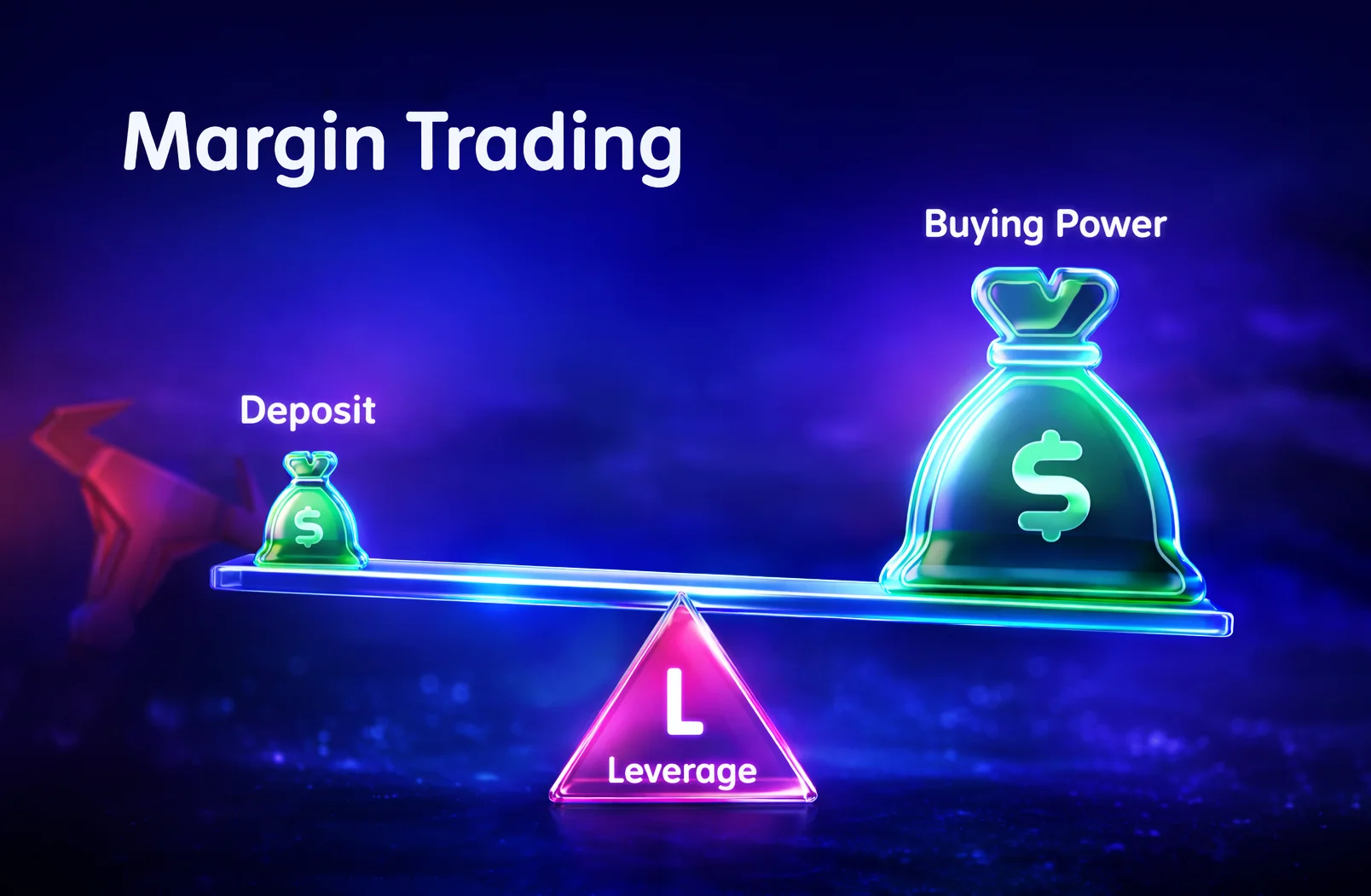
As a baby trader, once you understand margin and how it works, you are a quarter way into understanding how Forex works.
Margin is arguably one of the most pivotal concepts in trading forex, yet its meaning eludes many people.
The majority of retail traders still wonder, "What is Margin in Forex?", even if they have years of experience in the industry.
Margin, to put it simply is a deposit. It's a security deposit you make to open a leveraged trading position.
This deposit permits you to open a much larger position than your actual capital would allow.
Margin in Forex
Margin is the amount of money a trader deposits in their account in order to open and manage positions with leverage.
Margin allows traders to open and control positions that are worth more than their account balance.
Learn more about free margin.
How Does Margin Work?
Imagine margin as a security deposit.
When renting an apartment, the landlord can ask for a security deposit before you move in. You are not buying this apartment, but you can stay as long as you keep making payments.
In forex trading, the broker will ask you for a little money to be put into an account, called the margin, to let you control a much bigger position.
Consider this: If Demi desires to trade $100,000 of a currency pair but her broker demands only 1% margin, she will need to deposit $1,000.
The broker pays the rest, allowing Demi to trade a larger size than her current funds can handle.
Now, here's where margin and leverage go hand in hand.
Margin vs. Leverage
Leverage and margin are closely related concepts, but they are not the same.
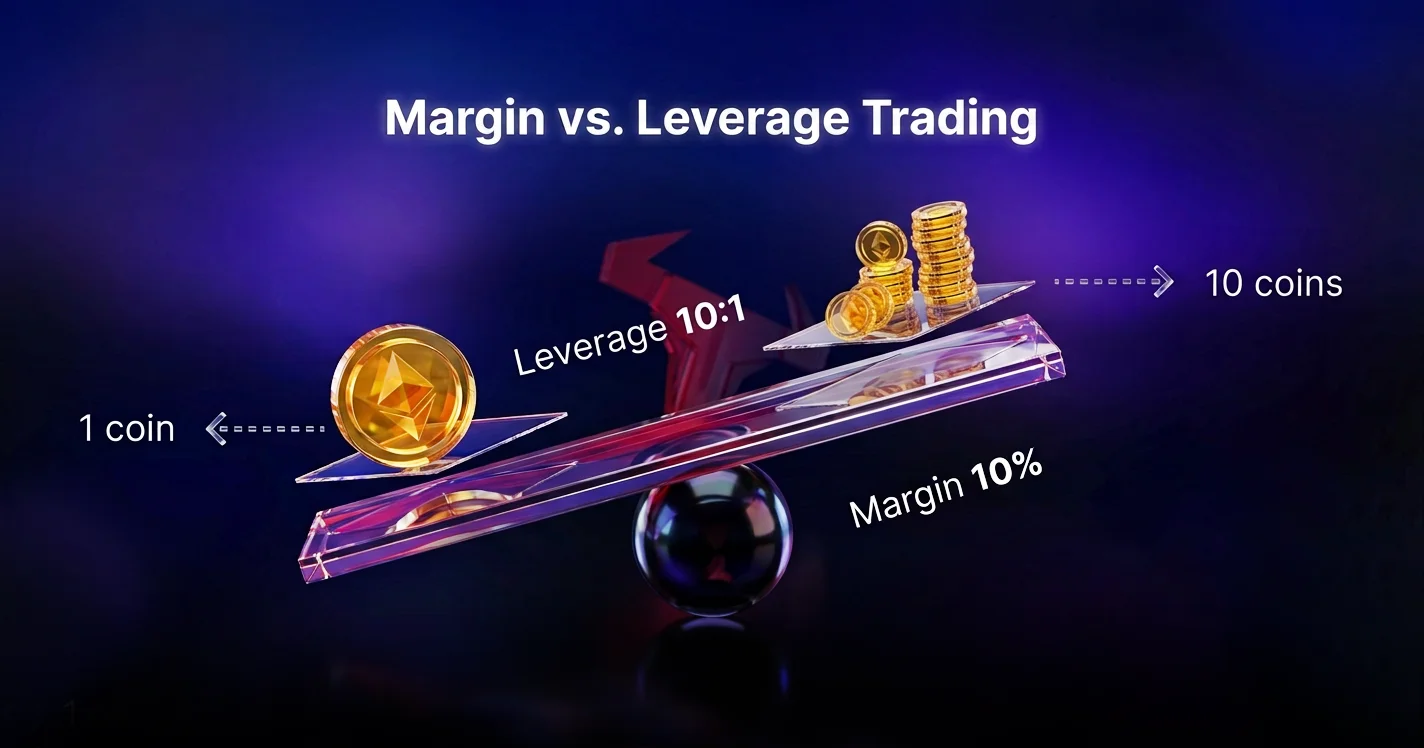
Leverage is the proportion of capital that a trader can control compared to their deposit.
A good example of this is a 100:1 leverage, which implies that for each $1 in their account, a trader can trade $100 in the market.
Margin means the percentage of the total position that a trader must put up to open a leveraged position.
For example, if a broker says they will give you 100:1 leverage, then your margin requirement on that trade is 1% (meaning you only need to put up 1% of the trade size).
Here’s a quick example for some added context:
Imagine a trader, Ken, is trading EUR/USD with leverage.
He plans to sell one standard lot (100,000 units) of EUR/USD for 1.2000.
With a 1% margin requirement, here's what will happen:
The full trade value is $120,000.
The margin required (1%) is $1,200. = $1,200
This means that in this case, managing a $120,000 trade only requires $1,200 to open.
Let’s talk about the margin requirement for a bit.
What is the Margin Requirement?
The margin requirement is the percentage of the total trade value that a trader needs to open a position.
The margin requirement depends on the currency pair you are trading and the broker.
So, if a trader is trading EUR/USD with a 2% margin requirement and wants to control $100,000, they only need $2,000 in margin.
Types of Margin in Forex Trading
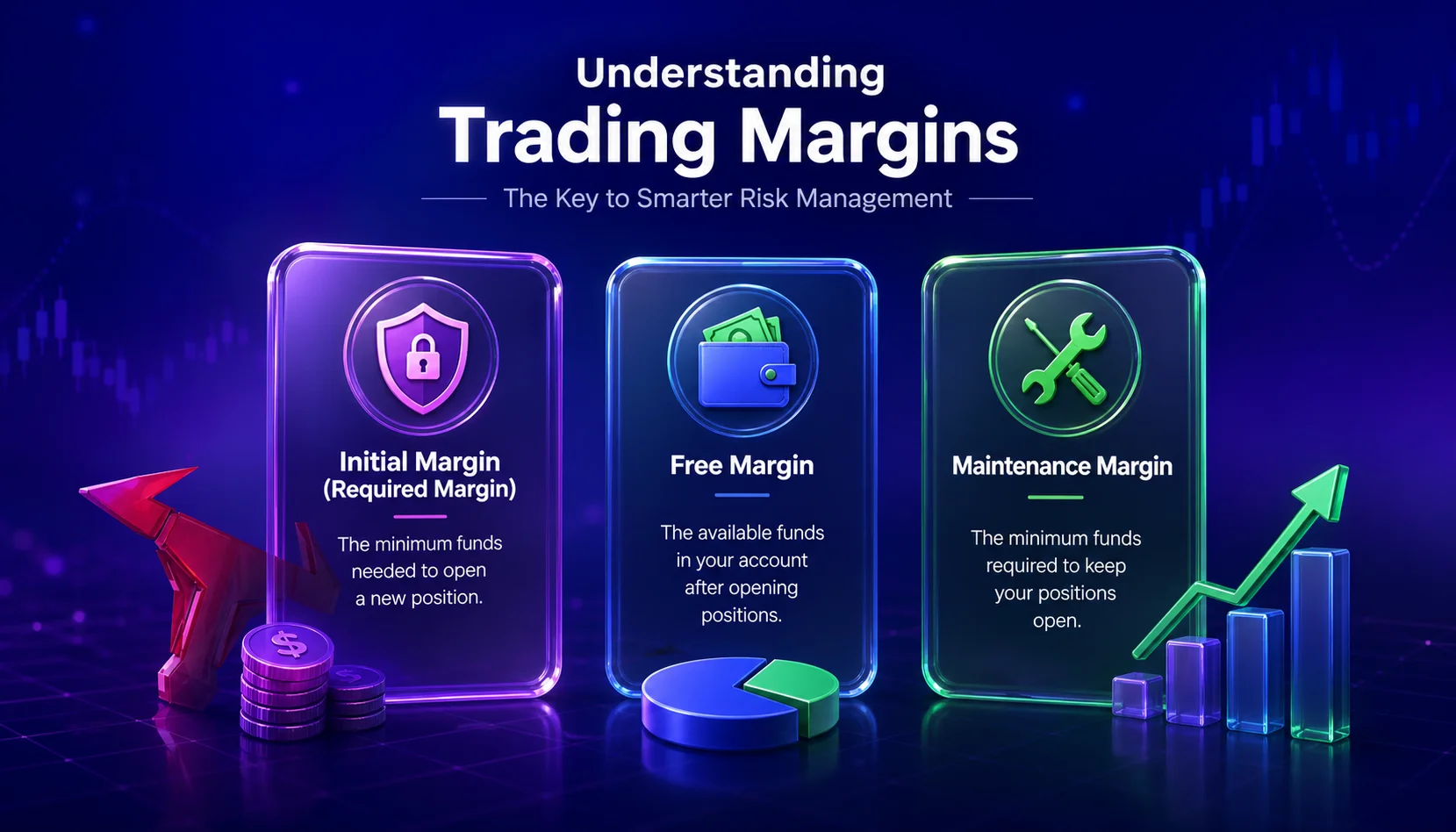
Various types of margins can influence your trading account:
Initial Margin (Required Margin)
This is the deposit to open a trade. The initial margin depends on the broker’s margin requirement.
For instance, a trader who wants to trade a $50,000 position with a 2% requirement on margin will need $1,000 in margin.
Free Margin
Free margin is the cash that is in the account but has not been set aside for margins in open trades; it is the amount that can be used to open new positions.
The formula for free margin is:
Free Margin = Account Equity - Used Margin
If a trader has a balance of $5000 in their account and has used $2000 for their current open trades, their free margin is $3000.
Maintenance Margin
A maintenance margin call is the minimum amount a trader must have in their account to keep trade open.
Otherwise, if the account balance drops below this level, the trader can get a margin call.
Speaking of which, what does a margin call mean in forex trading and how does it work?
What is a Margin Call in Forex?
A margin call is the result of an account's balance falling below the necessary amount required to maintain opened trades.
At this point, the broker will:
- Ask the trader to deposit more funds to cover their margin loss.
- Shut their trades automatically to avoid additional losses.
For example, if Fred has $2,000 in his account and he initiates a $100,000 trade with a 2% margin requirement, it means he used $2,000 in margin.
If the market turns against Fred, and his loss reaches $1,500, his balance will have dropped to $500.
Since Fred’s broker's maintenance margin is $1,000, he will receive a margin call.
How can Fred get out of this limbo?
He can add additional funds to bring his balance over the required margin, or the broker will close his positions to save him from any further losses.
Top Tips to Help You Trade on Margin
Margin trading can magnify earnings and losses alike. So, how can traders stay safe?
- Know the Broker’s Margin Requirements: Different brokers usually have different margin requirements, so it is important to understand these before you start trading.
- Use Stop-Loss Orders: Stop loss orders limit losses by closing a trade if the market moves against you. Learn about stop-out levels.
- Avoid Overleveraging: Just because you can doesn't mean you should. Very often traders are seduced by the fact that they can trade a large position with a small deposit. However, lower leverage also means lower risk.
- Regularly Monitor Your Trades: Maintain vigilance on the levels of your margin and modify the position if required.
- Maintain a Healthy Free Margin: Keep extra money in your account all the time to offset the market's ups and downs.
- Educate Yourself Continuously: Trading currencies on the Forex market is an art. It's essential to keep learning. Keep refining your strategies through practice. Do your best to stay updated.
Can A Trader Buy All Types of Securities on Margin?
No, it’s not possible for a trader to buy all types of stocks on margin.
The Federal Reserve Board is the regulatory organization which decides which securities are marginable. According to them, a trader can’t buy all ETFs, stocks, cryptocurrency via margin trading.
The broker may decide not to margin specific securities. So, the trader may have to be sure ahead of hand.
For instance, many brokers will not allow traders buy IPOs (Initial Public Offerings) via margin trading because of the volatile nature of such a security.
Can Futures Traders Trade on Margin?
Absolutely!
Futures traders can engage in margin trading. As a futures trader, make sure to consider that the minimum margin and initial margin requirements will be different from that of stock traders.
These margin requirements will depend highly on regulatory requirements but also the broker.
For stocks, traders can borrow up to 50% of the worth of their investment, but future traders may only need up to 12%.
In addition, the initial margin requirement for a futures trader is usually less than that of a stock trader in margin trading.
When Should I Not Use a Margin Account?
You should steer clear of margin trading if:
- You have less than $2,000 in your stock trading account.
- You want to purchase stocks on margin if you have an Individual Retirement Account (IRA).
- You intend to use a fiduciary trust account.
Is It Possible for Traders to Lose All Their Money in Margin Trading?
Very much so. Traders can lose all and more of their money in margin trading.
The risks in margin trade are quite high–which is why industry experts will only recommend it if the trader knows their way around the market.
What if all funds get lost and are unable to fulfill the interest-based duties to the brokerage firm?
Yikes!
Before things get to this point, the brokerage firm would have likely done one or more of the following:
- Issued a margin call, informing traders to add more funds or close open trades to free up more margin.
- Liquidate their securities if they start to feel like they might lose the funds they lent.
- Sue the trader if they don’t heed their margin call.
Finally, they may sue the trader if they are unable to pay the periodic interest.
You wouldn’t want that now, would you?
Closing the Curtain
Margin is a powerful mechanism that allows trading large positions with a small investment.
So, the best ways to manage it are to:
- Understand margin
- Manage risk wisely
- Avoiding overleveraging
So the next time "margin" comes up, you'll know it’s not just some complicated trading jargon, it’s your security deposit for bigger trading opportunities.
F. Nathan
Felix Nathan is a professional trader, market analyst, and business development executive with over a decade of experience in the forex and financial markets. Felix specializes in providing actionable market insights, trading strategies, and risk man...