 IUX
IUX
 Exness
 Vantage
 XM
XM
 ICMarkets
 LiteFinance
 Moneta
 Tickmill
 South Africa (9)
 India (9)
 Bangladesh (12)
 Germany (9)
 Thailand (10)
 Philippines (9)
 Nigeria (10)
 Vietnam (10)
 Malaysia (9)





Varieties of Forex Orders



Share:
Share:
Education
7 min read
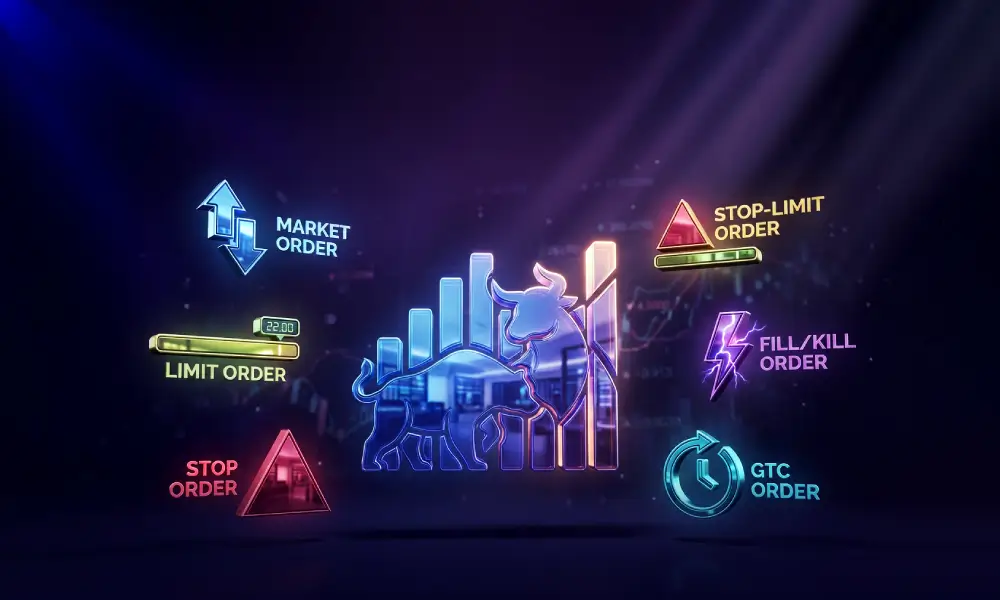
Forex trading is simply purchasing and selling currency pairs, but traders employ a variety of orders to carry out trades efficiently.
It is essential to fully understand the varieties of forex orders so you can manage risk, maximize profit, and enhance trading efficiency in general.
We'll go over the many kinds of Forex orders, their functions, and when to use them in this post.
This short guide will help you confidently navigate the Forex market regardless of your level of experience.
What is An Order in Forex Trading?
Forex trading orders refer to a command given to the broker by the trader. This order is issued for the broker to execute a trading transaction according to specific conditions.
An order allows you to automate trading and ensure that all trades are opened or closed at the right time and price without your involvement.
Online brokers provide a wide range of order types tailored to fit different trading tactics.
Generally, these orders can be divided into two main groups:
- Market Orders: This order type involves buying at the current price, regardless of the price.
- Pending Orders: Pending orders are executed only when price conditions are met.
Varieties of Forex Orders
Market Order
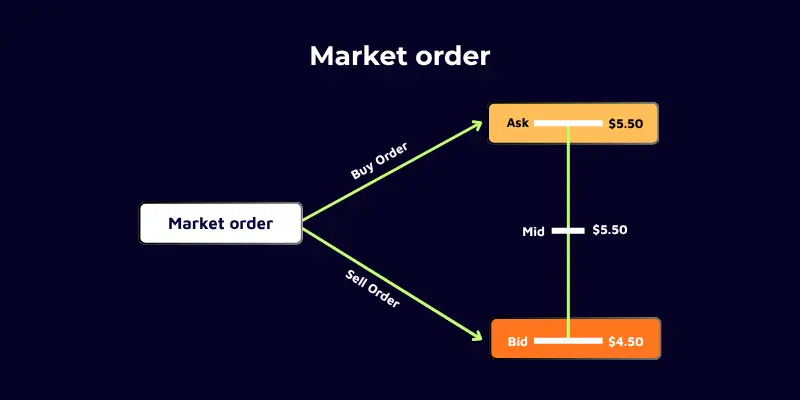
The most simple order type that is the most used is the market order. What makes these orders different is that they are executed right away at the best price.
When Should Traders Use a Market Order?
- When you need to enter or exit a trade instantly.
- When the precise price is of less importance than going through with the deal.
- In markets with high liquidity and minimal price slippage.
For example,
If purchasing EUR/USD comes with the current market price standing at 1.1050, a market order would execute your buy order at the next trading price, which could be exactly 1.1050 or slightly higher or lower due to the market's volatility.
Pros of Market Order
- Fast execution
- It is simple and easy to use
Cons of Market Order
- There’s a potential for price slippage in volatile markets
- No price control
Limit Order
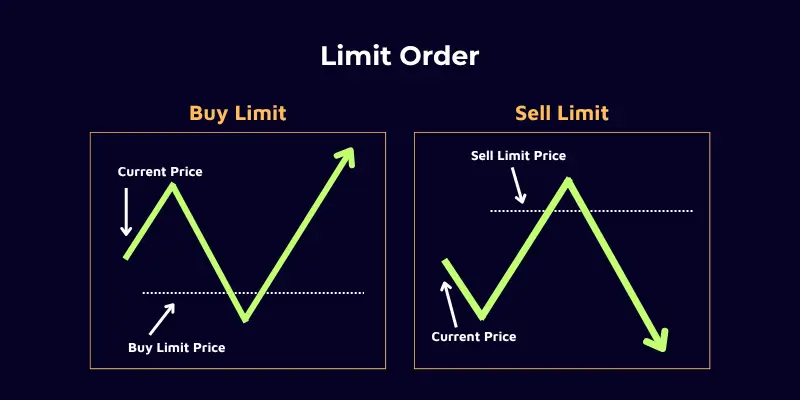
A limit order allows a trader to purchase a currency pair or sell a currency pair at a specific price or better. This control over the price at which they wish to buy or sell, depending on the direction of the trade.
Types of Limit Orders
- Buy Limit: This is used when a trader wants to buy at a lower price than the current market price.
- Sell Limit: This function is used when a trader sells at a price higher than the market price.
When to Use a Limit Order?
- When you want to enter into a trade at a more favorable price.
- When price reversals are expected at important support and resistance areas.
- When you want to avoid the risk of price slippage.
Here’s an example,
If EUR/USD trades at 1.1050, Dan thinks it will fall to 1.1020, and then it rises. Dan can place a buy limit at 1.1020. His order will only be executed if the price is at or below 1.1020.
Pros of Limit Order
- It ensures a better entry price
- It helps avoid slippage.
Cons of Limit Order
- There is no guarantee that the order will be executed if the price does not reach the limit level.
Stop Order (Stop-Loss and Stop-Entry Orders)
A stop order becomes active when the price of a security reaches a specific level, which causes a market order to be placed.
A stop-loss order is designed to automatically close a trade when losses reach a pre-set level. This helps traders manage risk and protect their capital.
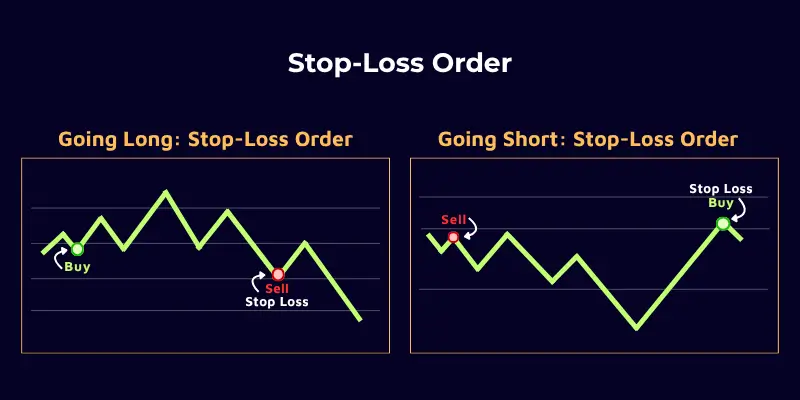
- Stop loss orders unload a trade on its own if losses mount up to a certain level.
- Buy Stop order is a pending order to buy above the current price.
- Sell Stop order is a pending order to sell at a price below the current one.
Stop-entry orders are pending orders that activate only when the price reaches a specific level, either above or below the current market price.
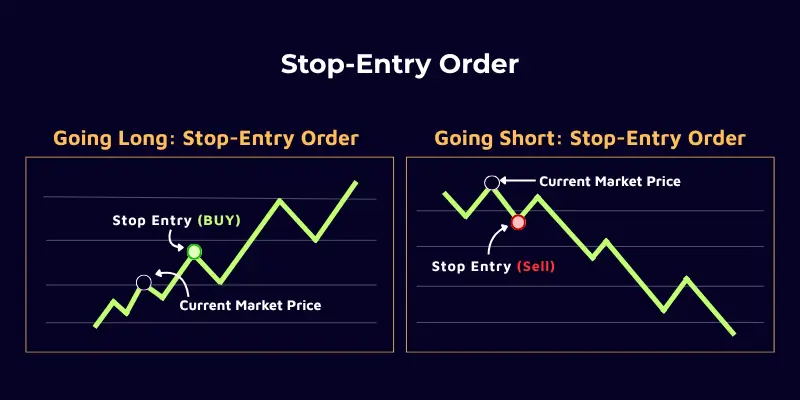
- Buy Stop Order: An order to buy at a price above the current market price.
- Sell Stop Order: An order to sell at a price below the current market price.
Traders Can Use a Stop Order
- To protect against excessive losses (stop-loss).
- To enter trades on breaks of key levels (stop-entry).
For instance,
If EUR/USD is at 1.1050, and you want to buy only if it breaks above 1.1100, you place a buy stop at 1.1100. Once the price hits that level, it executes as a market order.
Advantages
- Stop orders help manage risk (stop-loss).
- They can be used for breakout trading.
Disadvantages
- Slippage may occur in volatile markets.
- Prices can cause the stop-loss to be hit prematurely as well.
Stop-Limit Order
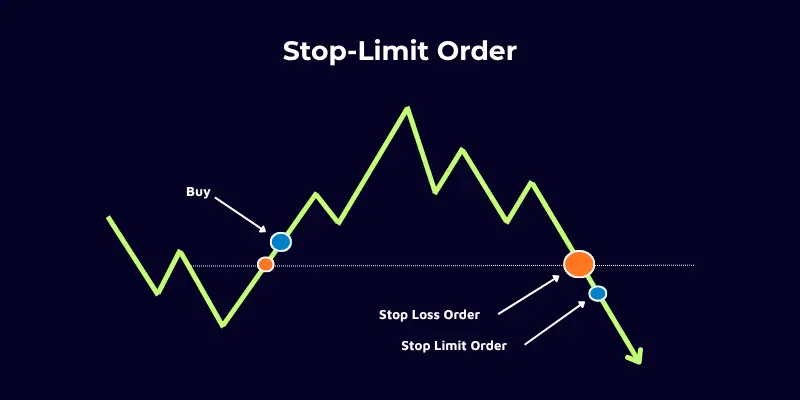
A stop limit order merges the components of both stop order and limit order. After the stop price is reached, the limit order is placed, rather than a market order.
When You Should Only Use a Stop-Limit Order?
- You want better price control on a stop order.
- You want to get into trades on breakouts but stay away from slippage.
Here’s a quick example for context:
A trader wants to purchase the EUR/USD pair when the price reaches 1.1100, but they don't want to pay any more than 1.1110.
They’d have to set a stop price at 1.1100 and a limit price at 1.1110. Should the price elevate to 1.1120, their order will not trigger to avoid possible slippage.
Upsides
- A stop-limit combines advantages of stop and limit orders.
- There’s better price control with a stop-limit.
Downsides
There is no guarantee for execution if the price skips over the limit.
Trailing Stop Order
A trailing stop is a dynamic stop-loss order that moves with the market price. It aims to lock in profits while still providing room for the price to work.
A trailing stop order is best when you want to maximize gains while protecting profits and in trending markets to let profits run.
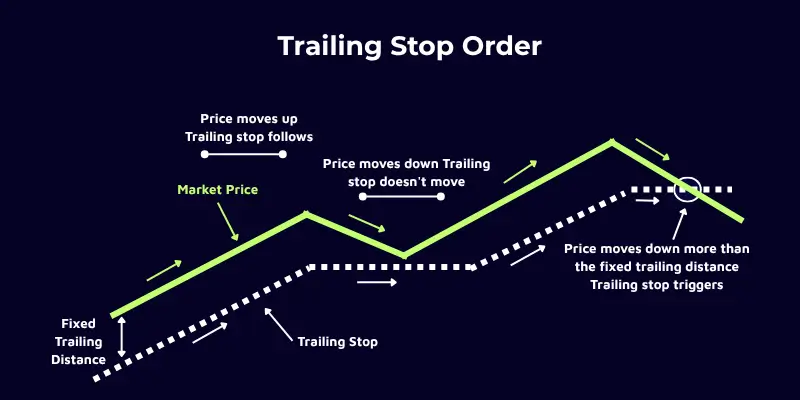
If Molly is buying a EUR/USD market order at 1.1000, she will have to set a 50 pip trailing stop. If the price of the currency pair increases to 1.1050, the stop will move to a level of 1.1000. If the price increases to 1.1100, the stop will move to 1.1050.
If the price decreases thereafter, the trade will close at 1.1050 with profit.
A trailing stop order helps to:
- Protect profits
- Automate risk management
However, it can be triggered too early in volatile markets.
Good-Till-Canceled (GTC) and Good-For-Day (GFD) Orders
These are simply extra setups applied to cap and stop orders.
A GTC Order stays active until the trader cancels it, while a GFD order expires at the end of trading day if not filled.
Rounding Up
The best type of order is dependent on the particular trading strategy a trader is using, their tolerance for risk, and the prevailing market conditions.
Here’s a quick recap:
| Order Type | Main Use Case | Pros | Cons |
|---|---|---|---|
| Market Order | For immediate execution | Fast execution | There’s no price control |
| Limit Order | To enter trades at a better price | Helps avoid slippage | There’s a possibility of it not executing |
| Stop Order | To manage risk or trade breakouts | Protects against loss | There’s a risk of slippage |
| Stop Limit | To control entry price on breakouts | Also prevents slippage | This also may not execute |
| Trailing Stop Order | To lock in profits while entering trends | Maximizes profits | It can trigger too soon |
F. Nathan
Felix Nathan is a professional trader, market analyst, and business development executive with over a decade of experience in the forex and financial markets. Felix specializes in providing actionable market insights, trading strategies, and risk man...