 IUX
IUX
 Exness
 Vantage
 XM
XM
 ICMarkets
 LiteFinance
 Moneta
 Tickmill
 South Africa (9)
 India (9)
 Bangladesh (12)
 Germany (9)
 Thailand (10)
 Philippines (9)
 Nigeria (10)
 Vietnam (10)
 Malaysia (9)





Is It Illegal for US Residents to Trade with Offshore Forex Brokers: Legal or Risky?



Share:
Share:
Markets
5 min read
A trader sits behind the screen, reviewing the numbers. The US broker feels limited by low leverage, strict rules, and fewer instruments. Offshore brokers promise more: higher leverage, lower costs, faster execution.
The opportunity looks golden, but the question remains: Is It Illegal for US Residents to Trade with Offshore Forex Brokers?
Trading with offshore Forex brokers is not explicitly illegal for US residents under federal criminal law. No statute forbids a US citizen from opening an account with a broker outside the country. There is no direct legal prohibition on the act of trading itself.
However, this doesn't mean it’s without risk. Let’s explore!
Is It Illegal for Us Residents to Trade with Offshore Forex Brokers?
No, it is not explicitly illegal for US residents to trade with offshore forex brokers. There is no direct criminal prohibition against opening or funding a foreign trading account. However, legality and compliance are not the same.
- Forex trading within the United States is tightly regulated by 2 main agencies: Commodity Futures Trading Commission (CFTC).
- National Futures Association (NFA).
These are enforced strict rules to protect traders and ensure market integrity.
All brokers serving US residents must be registered with the NFA and comply with CFTC regulations. This registration involves capital requirements, reporting duties, and compliance with trading limits, including leverage caps.
Unregistered brokers, especially those operating offshore, are prohibited from soliciting or accepting US clients. This legal framework ensures traders engage with vetted entities under US law.
What the Law Actually Says?
The Commodity Futures Trading Commission (CFTC), under 17 CFR § 5.5, mandates that any broker offering Forex services to US residents must be registered with the CFTC and be a member of the National Futures Association (NFA). Most offshore brokers are not.
If an unregistered broker accepts US clients, that action violates federal regulatory law, on the broker’s part, not the traders.
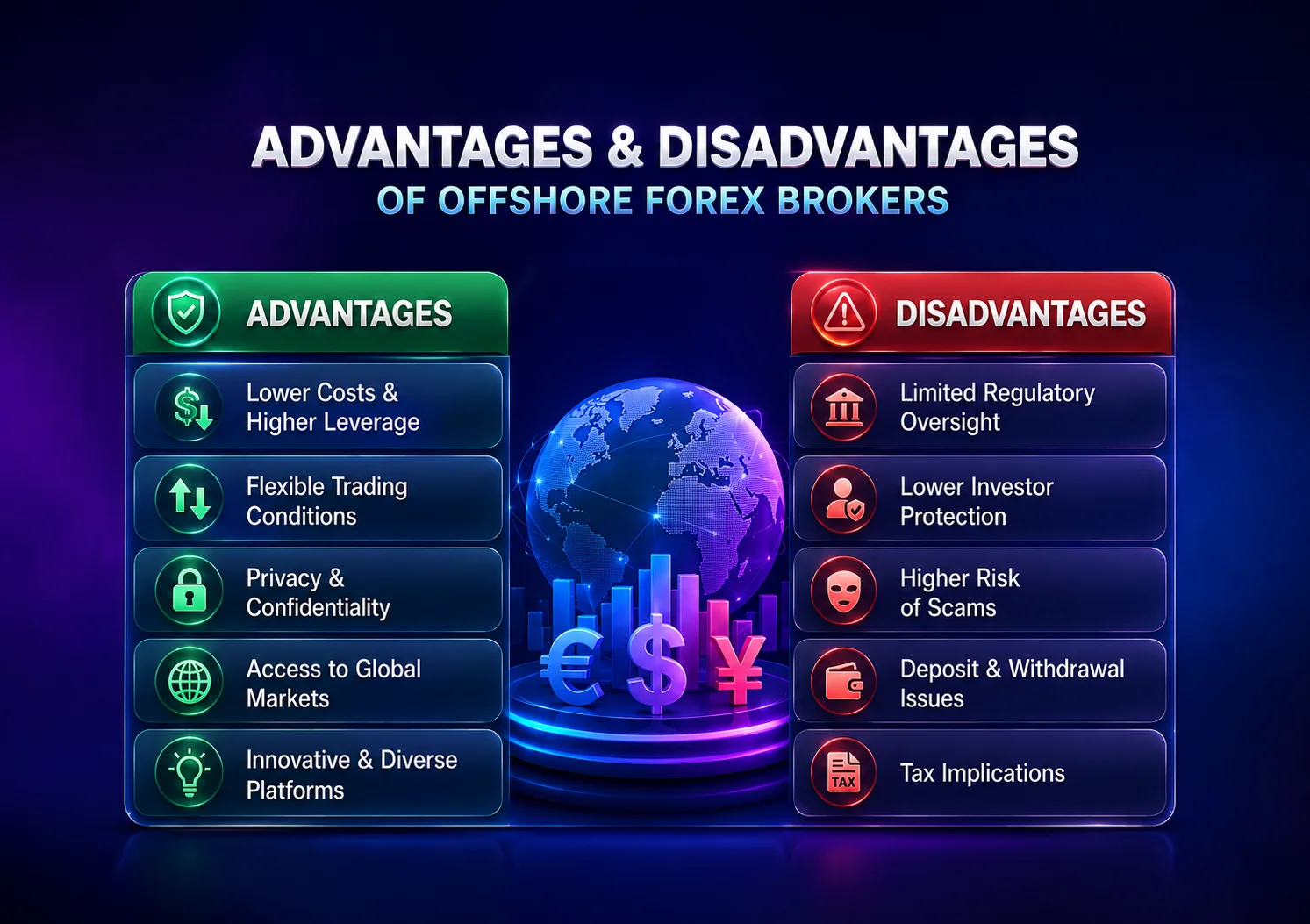
Legal Risks & Penalties for Using Offshore Brokers
If the offshore broker runs into trouble or disappears, getting your money back can be very difficult, often impossible. Since these brokers aren’t registered with US regulators, agencies can’t step in to help recover lost funds.
On top of that, trading with an unregistered offshore broker makes tax reporting more complicated. Under the Bank Secrecy Act, US residents must report any foreign financial accounts holding more than $10,000 during the year through the Foreign Bank and Financial Accounts Report (FBAR).
Failing to do so can lead to hefty civil penalties, sometimes over $10,000 per missed report. The IRS, along with the Foreign Account Tax Compliance Act (FATCA), also requires that income earned offshore be reported and taxed properly.
Ignoring these tax rules can trigger audits, interest charges, and significant fines. While criminal charges are rare for offshore trading, the financial risks fall squarely on the trader.
These points highlight why it’s so important to understand offshore forex broker penalties, FBAR rules for trading, and the tax implications involved.
Legitimate Forex Trading Alternatives for American Traders
For those seeking safer ground, several CFTC/NFA-registered brokers operate legally within the United States.
NFA-Registered Forex Brokers
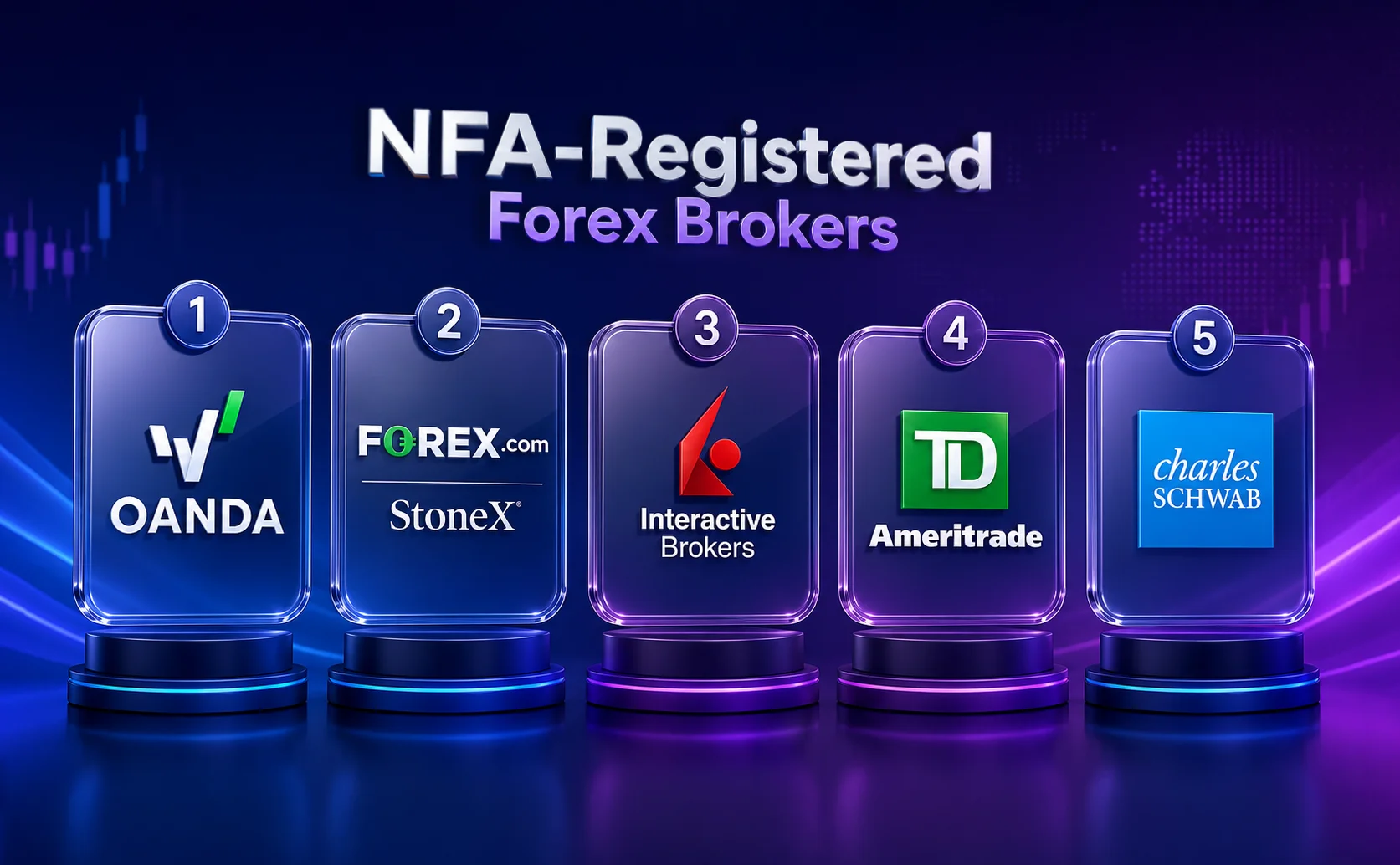
- Oanda stands out with a robust platform offering both forex and CFD trading. It complies fully with US regulations, giving traders peace of mind.
- Forex.com (StoneX) is a seasoned player known for its US-focused services and strong regulatory track record.
- Interactive Brokers caters to global traders, including Americans, balancing broad market access with strict US compliance.
- TD Ameritrade blends forex trading with an extensive securities portfolio, ideal for traders seeking diversity.
- Charles Schwab offers a full-service brokerage experience, including forex, backed by strong regulatory safeguards.
These brokers provide full regulatory compliance, protecting traders under US law. Opting for US regulated forex brokers vs offshore ensures a legally secure trading environment with financial safeguards.
How Other Countries Handle Offshore Trading?
Across the globe, regulators approach offshore Forex trading with increasing vigilance. Each region sets its own framework to protect investors and maintain market integrity. Understanding these international perspectives helps reveal the broader landscape beyond US borders.
In the European Union, the Markets in Financial Instruments Directive II (MiFID II) governs Forex brokers. It requires firms to meet stringent transparency, reporting, and client protection standards.
MiFID II also establishes equivalence rules, allowing non-EU brokers to operate if their home regulations align closely with EU standards. This balance enables oversight while fostering international business.
The United Kingdom’s Financial Conduct Authority (FCA) takes a firm stance. The FCA supervises domestic brokers and tightly regulates third-country firms seeking to serve UK clients.
Unregistered offshore brokers face enforcement actions, ensuring traders only engage with authorized entities. The FCA’s approach emphasizes investor safety and market fairness.
Australia’s ASIC enforces comprehensive rules for Forex brokers. It requires international brokers to obtain licenses and comply with local laws before accepting Australian clients.
ASIC’s robust oversight ensures that foreign brokers meet capital requirements and adhere to responsible marketing practices.
In Canada, regulation is fragmented across provinces. Each jurisdiction has its own securities commission overseeing Forex trading. While some provinces maintain strict controls, others offer more lenient access to offshore brokers.
This patchwork creates complexity for Canadian traders and highlights the need for careful legal review.
Final Thoughts
Trading with offshore brokers is not inherently illegal for US residents. Yet, it may violate regulatory norms, tax obligations, and risk management principles. Traders must weigh freedom against compliance.
Those who prioritize safety, legality, and financial stability choose to trade under proper regulation, where the law protects both their capital and their future.
F. Nathan
Felix Nathan is a professional trader, market analyst, and business development executive with over a decade of experience in the forex and financial markets. Felix specializes in providing actionable market insights, trading strategies, and risk man...