 IUX
IUX
 Exness
 Vantage
 XM
XM
 ICMarkets
 LiteFinance
 Moneta
 Tickmill
 South Africa (9)
 India (9)
 Bangladesh (12)
 Germany (9)
 Thailand (10)
 Philippines (9)
 Nigeria (10)
 Vietnam (10)
 Malaysia (9)




Do You Need $25,000 to Day Trade Forex?
Share:
Share:
Broker
6 min read
If you’ve ever looked into stock day trading in the U.S., you’ve probably come across the $25,000 rule, and it might’ve scared you off. But here’s the good news!
No, you don’t need $25,000 to day trade forex.
That rule is for stock traders under U.S. regulations, not forex traders. In fact, you can start day trading forex with as little as $50 to $500, depending on your broker and risk tolerance.
So, Where Did This $25,000 Rule Come From?
Let’s clear up the confusion. The Pattern Day Trader (PDT) rule is a regulation enforced by FINRA for traders using margin accounts to trade U.S. stocks.
If you make four or more intraday trades within five business days, and those trades exceed 6% of your total activity, you’re considered a “pattern day trader”.
To continue day trading, you need to maintain a minimum equity of $25,000 in your account.
But here’s the thing:
Forex trading isn’t governed by this rule because it falls under a different category of assets and regulations.
The Pattern Day Trader (PDT) rule is enforced by U.S. regulators. It’s a major barrier for anyone starting out with limited capital.
| Read More: How to Identify Chart Patterns? |
Well, Forex Trading Doesn’t Play By Those Rules, Because:
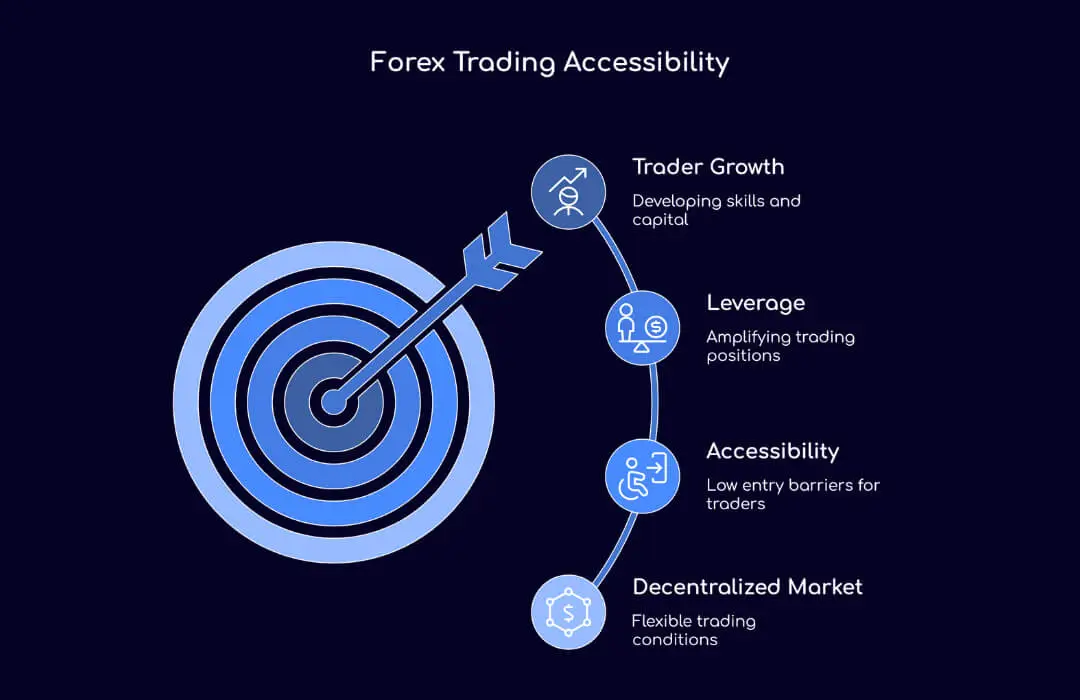
Forex is a Decentralized, Over-The-Counter (OTC) Market
That means you’re not trading through a centralized exchange like the NYSE or NASDAQ.
Instead, trades are conducted directly between participants, like banks, brokers, institutions, and yes, retail traders like you.
Because of this structure, retail forex brokers aren’t bound by the same capital requirements or restrictions.&
They set their own terms, allowing for smaller account minimums, flexible lot sizes (even as low as 0.001), and access to leverage.
Leverage Makes It Possible to Control Larger Positions With Minimal Capital
Some brokers offer leverage as high as 1:500 or even 1:1000.
Now, leverage can be a double-edged sword, but when used responsibly, it’s what makes day trading on a small account possible.
For example, with $100 and 1:100 leverage, you can control positions worth up to $10,000.
That means you can participate in meaningful trades even if you’re starting small.
Just be aware that leverage increases both potential gains and potential losses, so risk management is very important.
No Rule in Forex Says “You Need X Amount to Day Trade.”
Whether you’ve got $20 or $2,000, you can open an account and start trading, especially if you stick to nano or micro lot sizes.
This makes forex incredibly accessible for people who are still building their capital or want to learn the ropes in a real market with minimal exposure.
| Learn More: $100 Forex Trading |
Traders Can Grow As They Earn
The low barrier to entry allows you to focus on developing your skills first, rather than feeling pressured to go all-in just to meet a minimum requirement. You can:
- Practice price action day trading
- Test your strategy across different pairs
- Manage your risk effectively
- Scale your position size as your confidence and capital grow
This flexibility gives traders room to build discipline and refine their strategies.
How Much Do You Need to Start Day Trading?
The short answer? It depends, and that’s not a cop-out.
The amount you need to start day trading forex can vary widely based on a few factors. Here’s a breakdown so you can figure out what’s realistic for you:
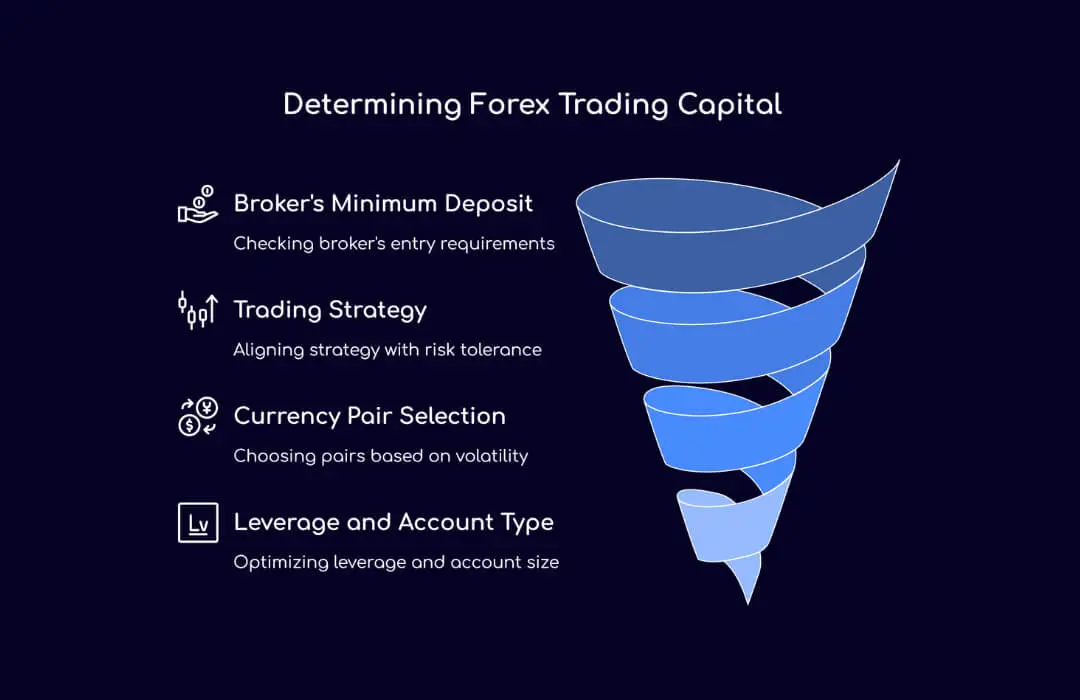
Broker’s Minimum Deposit
Some forex brokers are super beginner-friendly. You’ll find minimum deposits as low as $5 or $10.
Others may require $100, $250, or more, especially if you're opening an ECN or professional account.
The lower the barrier, the easier it is to start. But don’t confuse minimum deposit with recommended capital.
Just because you can start with $5 doesn’t mean you should expect to make magic happen right away.
Trading Strategy And Risk Appetite
A scalper taking multiple trades per day may need less capital per trade than a swing trader who holds trades for days with wider stop-losses.
Similarly, if you're conservative and risk only 1% per trade, you’ll need more capital to make significant gains.
If you're aggressive and risk 5% or more per trade, you can start smaller, but you'll also burn out your account faster if you’re wrong a few times in a row.
For most beginners, a micro or nano lot strategy with tight risk controls is the sweet spot.
The Currency Pairs
Not all pairs are created equal.
Major pairs like EUR/USD and GBP/USD are more liquid and often have tighter spreads.
Exotic or volatile pairs like GBP/JPY or USD/ZAR can move faster, and cost more in spreads or swap fees.
The pair you choose affects how much margin is required, how far the price typically moves, and how quickly your stop-loss might get hit.
If you’re trading volatile pairs, you may want a bigger buffer in your account.
Leverage And Account Type
Leverage lets you control larger positions with a small amount of capital. With 1:100 leverage, $100 lets you open $10,000 worth of trades.
Some brokers offer up to 1:500 (but that’s risky if you don’t have solid risk management).
Also, your account type matters:
- Standard accounts trade standard lots (100,000 units)
- Mini accounts trade mini lots (10,000 units)
- Micro accounts trade micro lots (1,000 units)
- Nano accounts trade nano lots (100 units)
If you're starting with a small account, say $20 or $50, you'll likely need a cent, nano, or micro account to keep position sizes appropriate.
Costs In Day Trading
Even without the $25k barrier there are hidden costs in day trading forex that you should watch out for:
- Spreads: This is the difference between bid and ask prices; basically how brokers make money.
- Commissions: Some brokers charge commissions per trade, especially if they offer tight spreads.
- Swap/Overnight Fees: If you hold a position past market close, you may pay (or earn) a fee.
- Withdrawal Fees: Some platforms charge you to move profits out of your account.
- Inactivity Fees: If you don’t trade for a while, some brokers charge dormant account fees.
Always read the fee structures and when choosing a broker.
If You’re Starting Small, Here’s How to Make Your Capital Work Smarter
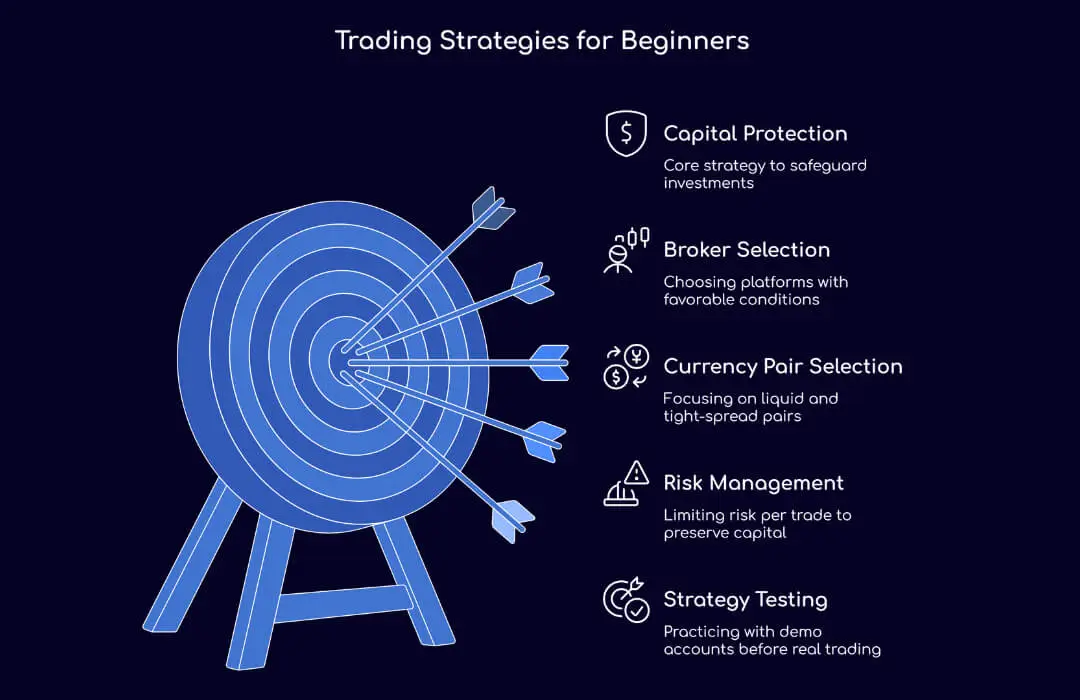
Here are smart beginner moves that can save your account—and your sanity:
- Choose a broker with low spreads, good leverage, and no unnecessary fees. Platforms like OANDA or IG are well-regulated and beginner-friendly.
- Stick to major currency pairs like EUR/USD or GBP/USD. These pairs have tight spreads and high liquidity, making them perfect for day trading.
- Use a 1% risk rule per trade. Even with a small account, you can protect your capital by trading small positions.
- Track your wins, losses, and decisions. It's the fastest way to learn from your mistakes and grow as a trader.
- No shame in paper trading first with a demo account. It’s the best way to test your strategy without risking real money.
F. Nathan
Felix Nathan is a professional trader, market analyst, and business development executive with over a decade of experience in the forex and financial markets. Felix specializes in providing actionable market insights, trading strategies, and risk man...