
 IUX
IUX
 Exness
 Vantage
 XM
XM
 ICMarkets
 LiteFinance
 Moneta
 Tickmill
 South Africa (9)
 India (9)
 Bangladesh (12)
 Germany (9)
 Thailand (10)
 Philippines (9)
 Nigeria (10)
 Vietnam (10)
 Malaysia (9)





Liquid Brokers Charts



Share:
Share:
Broker
9 min read
Most traders do not change brokers with regard to spreads, which are the differences between the buying and selling prices of assets. The spreads have changed because the charts no longer accurately reflect them.
You know what I am talking about when you have spent enough time behind the computer and been watching the price action. A slow platform that freezes or confines you to strict designs silently costs you even more than a widespread one will.
That is why Liquid Brokers Charts has been a consistent subject matter of a conversation among active day traders, not as hype but as an actual platform worth comparing to what is already available.
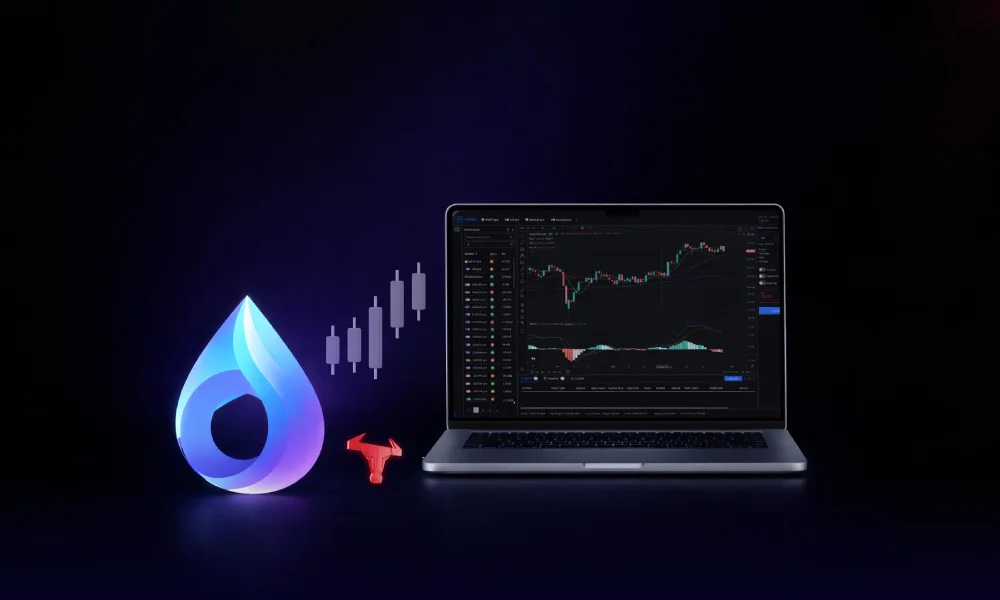
So what is it? The Liquid Brokers charting environment is called Liquid Brokers Charts, which is a proprietary charting environment designed to be a part of the Liquid Brokers trading ecosystem.
It is designed to meet the needs of traders who focus on technical analysis, require multiple timeframe analysis tools, seek clean execution, and prefer chart layouts that align with their strategies. Before exploring the charting tools, it helps to first verify whether Liquid Brokers is legit as a regulated broker.
What Are Liquid Brokers Charts?
Any trader who is guided by charts understands it. You launch a new broker platform, open your favorite pair, and in another thirty seconds, you are sure whether the environment will be conducive to working with you.
Liquid Brokers Charts is an in-house charting software that is integrated directly into the Liquid Brokers ecosystem and can be accessed through the web browser, desktop client, and mobile application.
It was tailored to the traders who think visually, have faith in technical analysis, and require indicator settings that will remain dependable at any point regardless of the session.
A 2024 survey of broker technology by the Finance Magnates rated the quality of charting as the second most significant factor that traders consider when changing brokerages. Platform charting is no longer a secondary feature but one of the fundamental decisions.
The result is a realistic vision of what Liquid Charts is delivering, showcasing advanced features and user-friendly interfaces that meet the evolving needs of traders.
Platform Quick Facts
|
Technical Indicators and Drawing Tools
The indicator library has more than 90 built-in tools that are categorized in four groups of trend-following (moving averages, Ichimoku cloud, and Parabolic SAR); momentum (RSI, MACD, and Stochastic); volatility (Bollinger Bands, ATR, and Keltner Channel); and volume-based analysis.
Volume Profile is also introduced on the Pro tier as a meaningful addition to traders who incorporate the use of point-of-control levels in their entry logic.
The drawing tools include Fibonacci retracements, trend channels, pitchforks, horizontal support and resistance, and Andrews' pitchforks. Everything that is being drawn is saved to the account of a trader and continues across sessions.
This persistence in itself is tangible daily progress for anyone who rebuilds analyses every morning on a different platform.
Knowing which indicators actually matter is a skill in itself. Our guide on best technical analysis tools covers how to filter indicator libraries and build a focused, strategy-aligned setup.
| Pro Tip: Before evaluating any indicator library, list your five non-negotiable tools. If the platform clears that filter, everything else is a bonus. |
Multi-Asset Coverage and Platform Comparison
Liquid Charts trades nine assets: Forex majors, minors, and exotics; metals (gold and silver); energies; indices; crypto; equities; and bonds. The timeframes are M1 to MN and no gaps are present.
This breadth is appropriate to traders who have correlated analysis under observation of DXY and EUR/USD to confirm a directional perspective, such as by not having to open a second tool.
For traders who rely on multi-timeframe analysis when swing trading, our breakdown of best timeframes for forex swing trading explains how to structure your chart layout across sessions.
Feature Comparison: Liquid Charts vs Key Competitors
| Feature | Liquid Charts | Liquid Charts Pro | TradingView / MT5 |
|---|---|---|---|
| Indicators | 90+ built-in | 90+ + custom | 100+ / 38 built-in |
| Timeframes | M1 to MN | M1 to MN | M1 to MN (both) |
| Chart Panels | Up to 4 | Up to 9 | 1 free / Up to 100 |
| Volume Profile | Not included | Included | Paid / Not included |
| EA / Algo Support | Not included | Included | Not included / MQL5 |
| Custom Indicators | Not included | Included | Pine Script / Yes |
| Cloud Sync | Yes | Yes | Limited / Local only |
Standard vs Pro
There is a functional difference between the two levels, rather than a cosmetic one. Standard provides the combination of indicators along with as many as four concurrent chart panels as many swing traders would require in a clean setup. Pro provides a volume profile, expands to a 9-panel, and opens the EA scripting environment.
The Pro tier is unique in that it has different access. Qualification is associated with account level as opposed to individual monthly subscriptions. To high-volume traders, it effectively makes Pro a zero-additional-cost upgrade, an architecture that meaningfully compares to the TradingView method of billing.
If you are weighing platform options, our comparison of MT4 vs MT5 on XM provides a useful reference point for evaluating charting capabilities across platforms.
| Suggestion: Have the standard tier operating two to four weeks with your real systems. When you always require additional panels or reach the indicator ceiling, make sure that you look at your account under the Pro category before looking at it as a completely different platform. |
Algorithmic Trading and EA Setup
Expert Advisor support is pro-exclusive and bases its scripting language on proprietary scripting as opposed to MQL4 or MQL5. Users who already have a MetaTrader EA will have to change the scripts. The site offers twelve templates of strategies, which include moving average crossovers, RSI threshold alerts, and breakout logic, as well as a backtesting engine with date and slippage settings.
How to Set Up Your First EA on Liquid Charts Pro?
- Open the EA Editor: Access it through the Pro panel sidebar. A tabbed code editor with syntax highlighting and real-time error checking opens immediately.
- Choose a Starter Template: Select from twelve pre-built templates. They are moving averages, crossovers, RSI alerts and breakout detection.
- Backtest Before Deploying: Select your date range and slip assumptions. Take a look at the equity curve and maximum drawdown and then proceed.
- Run on Demo First: Test in a demo account at least one week on live-feed. Trial position sizing prior to commitment to an account that is financed.
Traders evaluating automated strategies more broadly will find our guide on best forex expert advisors useful for understanding how EAs perform across different broker environments.
| Important: Liquid Charts scripting is proprietary. In case your plan relies on complicated MQL5 logic, make sure that it is compatible on demo before moving any funded plan. |
Platform Limitations
The four-panel restriction of the standard tier is the most quoted friction point in pro community concepts, distributed analysis feeds, and published arrangements; it lacks altogether. The Liquid Charts does not have the equivalent of the TradingView idea ecosystem, which is genuinely research worthy.
The alert system now only covers email and in-platform notifications. Webhook and SMS notifications, popular with pipeline automation, are on the roadmap but not active currently. Custom indicator upload is Pro-exclusive and must be written in proprietary syntax, not in either MQL- or Pine-compatible form.
For traders managing multiple strategies and risk thresholds, understanding your forex risk management steps becomes especially important when platform alert tools are limited.
| Known Gap: The availability of Webhook and SMS alerts is still unknown. Automated notification pipelines should be designed to take this into consideration by traders who are currently working on it until the feature is released. |
Conclusion
Liquid Brokers Charts provides a well-organized and reactive charting platform for traders seeking clarity, flexibility and practical charting. With personalized indicators and fluent processing and minimalistic design, the service is made to accommodate the various types of trading without undue simplicity.
Regardless of whether you trade scalping, intraday or longer-term, the actual versatility of Liquid Broker Charts is its capacity to respond to your own workflow. Now it is your time to have it firsthand. Create a demo account, configure your favorite indicators and pairs and practice Liquid Brokers Charts on the actual market.
To get started with connecting the platform, see our Liquid Brokers MT5 connection guide for step-by-step setup instructions. Discuss its functionalities, contrast it with your existing platform and test how it is working with your strategy.
FAQs
Does Liquid Charts require a separate login?
No. Liquid Brokers trading account credentials are Liquid Charts login credentials. Layers are automatically saved to your profile as well as the indicator settings and drawn objects across all devices.
Am I allowed to use my already-used MT4 or MT5 Expert Advisors?
Not directly. Liquid Charts Pro has a proprietary layer of scripting. Your MQL reasoning will have to change. Start the conversion with the twelve practical inbuilt templates.
Will Liquid Charts Pro be worthwhile to me given that I use TradingView?
It depends on workflow. With direct execution and no extra cost of subscription, Liquid Charts Pro prevails. TradingView dominates in community features and the depth of Pine Scripts. Several traders use both: TradingView to analyze and LiquidCharts to trade.
Is the mobile application applicable in active intraday trading?
It is highly appropriate to track and position management. Most intraday traders will use a desktop because of its accuracy in quick markets. Planning mobile use should be based on control and not live implementation. For traders using leverage actively on this platform, our Liquid Brokers leverage guide explains how margin and position sizing work within the ecosystem.
F. Nathan
Felix Nathan is a professional trader, market analyst, and business development executive with over a decade of experience in the forex and financial markets. Felix specializes in providing actionable market insights, trading strategies, and risk man...