 IUX
IUX
 Exness
 Vantage
 XM
XM
 ICMarkets
 LiteFinance
 Moneta
 Tickmill
 South Africa (9)
 India (9)
 Bangladesh (12)
 Germany (9)
 Thailand (10)
 Philippines (9)
 Nigeria (10)
 Vietnam (10)
 Malaysia (9)





What Is the 1-2-3 Strategy in Trading?



Share:
Share:
Education
6 min read
So you’re staring at the charts, trying to figure out if the trend is about to change or if you’re just late to the party. The candles are moving, the RSI is screaming “maybe”, and you’re stuck in an analysis pattern.
That’s exactly why many traders rely on the 1-2-3 strategy, a simple but highly effective reversal pattern that helps you catch major market turning points without needing dozens of indicators.
How 1-2-3 Pattern Works in Trading?
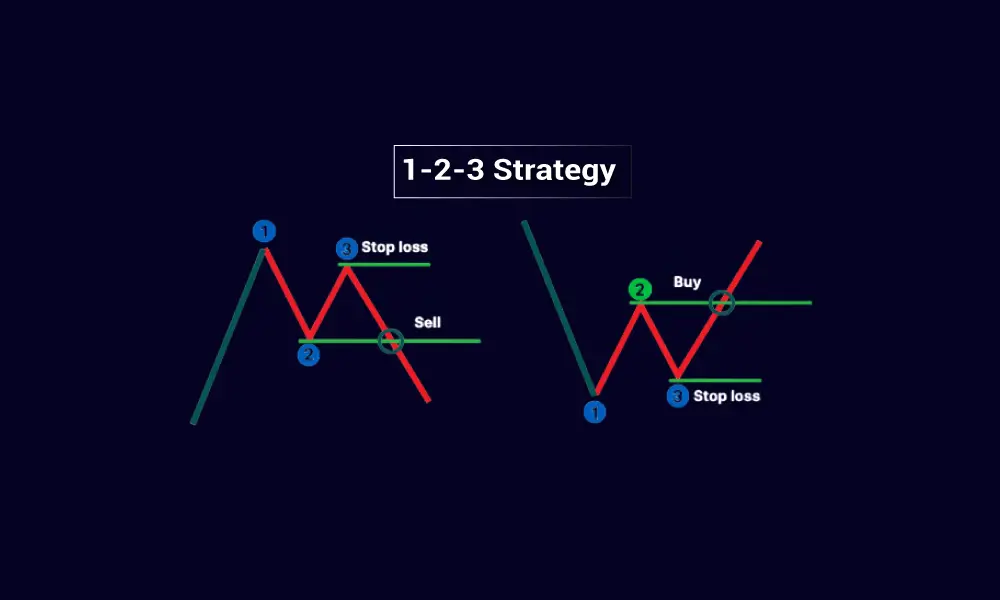
The 1-2-3 strategy is a price action-based reversal pattern used to identify a potential change in market direction.
It involves three specific price points that signal a trend reversal from bullish to bearish (or vice versa).
Here’s how the setup works:
In an Uptrend:
- Point 1 is the highest high (the top of the current trend).
- Point 2 is a pullback (first low after the high).
- Point 3 is a lower high (fails to break above Point 1).
When price breaks below Point 2, a downtrend may begin. That’s your potential short entry.
In a Downtrend:
- Point 1 is the lowest low (bottom of the current trend).
- Point 2 is a bounce upward.
- At point 3, a lower low fails to form; instead, we get a higher low.
When the price breaks above Point 2, a new uptrend may be starting. That’s your buy signal.
This is the core of the 1-2-3 reversal pattern. It's clean, visual, and doesn’t rely on cluttered indicators. Traders often pair it with a Ross Hook or a trendline break to confirm entry.
The 1-2-3 Strategy Works (When Used Right)
Forex can feel chaotic. So many candles, wicks, and fakeouts that it’s easy to lose the plot.
That’s where the 1-2-3 strategy shines. It’s like a map in the middle of market noise. Simple, structured, and surprisingly effective when done right.
Here’s why traders love it, and why you might too:
It Simplifies the Market Structure
You’re not just reacting to every flashy move.
Instead of chasing every green candle or red drop, the 1-2-3 pattern helps you focus on trend shifts, which are the real deal.
It forces you to zoom out and read the story, not just individual words.
Think of it like this:
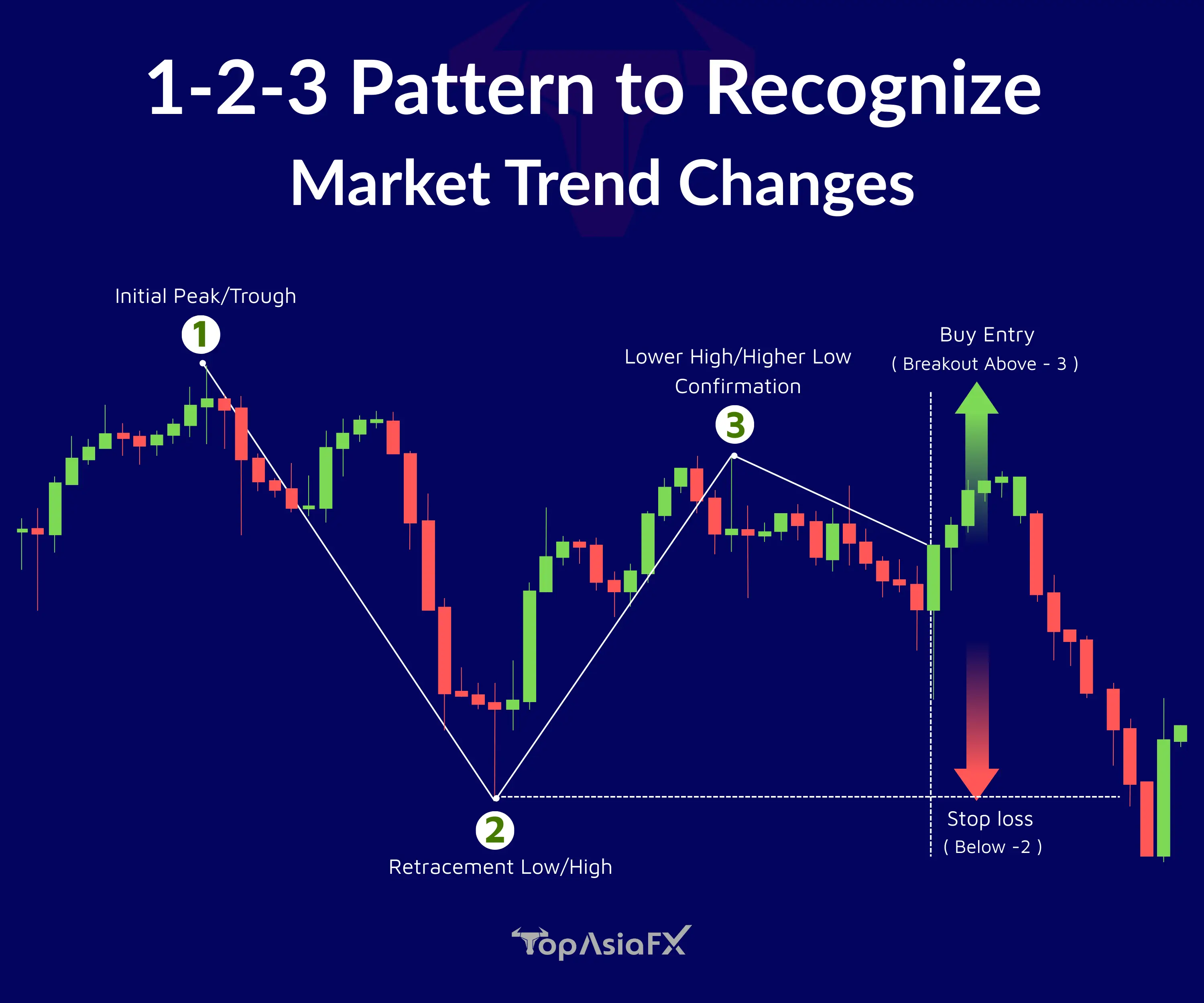
- Point 1: The high or low of a trend.
- Point 2: A corrective move or pullback.
- Point 3: A retest or failed attempt to continue the previous trend.
Once price breaks past Point 2 after forming Point 3, you’ve got a potential trend reversal or breakout on your hands.
It Provides Clear Entry and Exit Rules
This strategy isn’t guesswork. Once the setup is confirmed (usually with a break above or below Point 2), you’ve got an entry trigger.
Then, you can place a stop-loss just below Point 3 (for buys) or above it (for sells) and set realistic take-profit targets based on support/resistance or risk-reward ratios
Having this structure helps eliminate the emotional “should I enter now?” moments.
It Improves Decision-Making
Markets move fast. If traders are indecisive or emotional, things get messy. The 1-2-3 pattern forces discipline.
Ideally, you wait for the setup to form. You wait for confirmation at Point 2. You wait for the break.
No jumping in because “it looks bullish.” No panic-selling on a pullback.
It teaches you to act on structure, not impulse.
It Works Across Timeframes
Scalper? It works on the 1-minute and 5-minute charts.
Swing trader? The daily chart has 1- 2- 3s playing out over weeks.
It’s one of the few strategies that truly scales with your trading style, whether you’re zoomed in or playing the long game.
It Thrives in Volatile Markets
Forex is fast, unpredictable, and full of fakeouts.
The beauty of the 1-2-3 pattern is that it:
- Waits for the structure to form
- Demands confirmation before entry
- Offers tight stops and solid risk-reward setups
In volatile conditions, this can mean the difference between a sniper entry and a whipsaw nightmare.
The 1-2-3 Pattern Isn’t Just a Theory, It’s a Practical One: Here’s How to Use It
Like any good strategy, the 1-2-3 pattern is only as strong as your execution. So let’s walk through exactly how to use it in your trading.
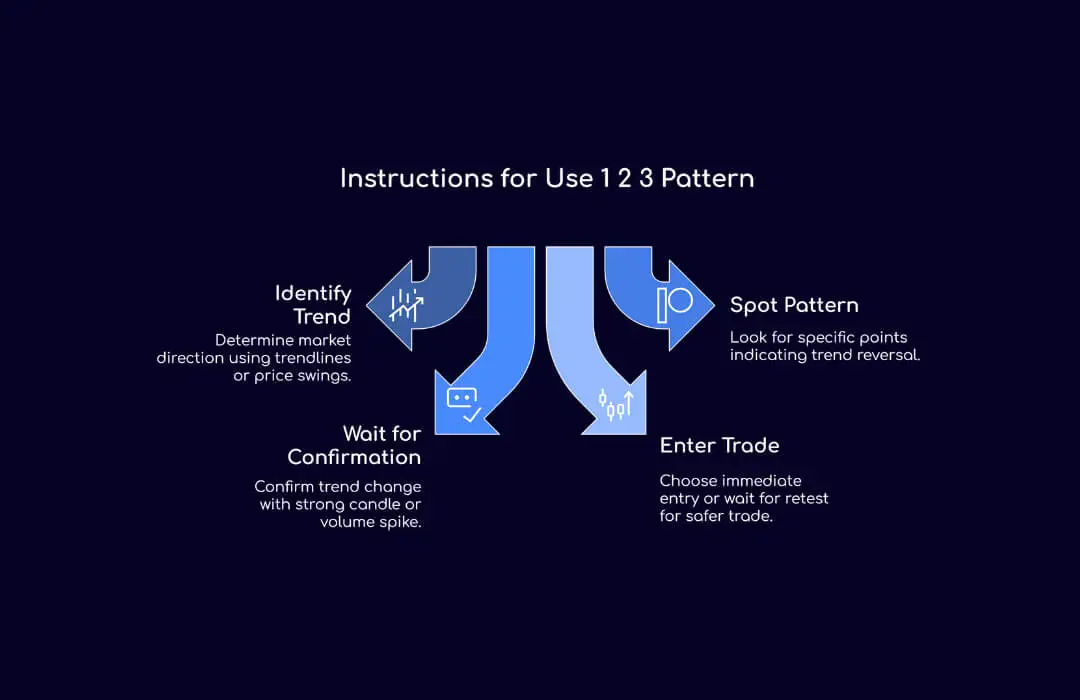
Identify the Trend
Before you even think about the 1-2-3 setup, you need to know the market direction.
Is it trending up, trending down, or going sideways?
Use simple tools like trendlines, support/resistance levels, or even price swings (higher highs and lows for uptrends; lower highs and lows for downtrends).
Don’t overanalyze, trust your eyes. If the market looks like it's been climbing steadily, that’s an uptrend. If it’s been dropping like a rock, that’s a downtrend.
Spot the Pattern
This is where the magic begins. Here’s what to look for:
- Point 1: The last high (in a downtrend) or the last low (in an uptrend) marks the end of the old trend.
- Point 2: This is a pullback or counter-move against the trend, which is basically the first sign of weakness.
- Point 3: This is a retest or a new swing in the direction of the new trend, but it fails to go beyond Point 1. This confirms market hesitation and sets up your reversal opportunity.
Wait for Confirmation
This is where discipline pays off.
You don’t just jump in at Point 3 and hope for the best.
You wait for price to break past Point 2 (the recent swing high or low), which confirms that the new trend may be taking over.
This is your trigger. No confirmation means no trade, and confirmation can come in many forms:
- A strong candle closing above/below Point 2
- A spike in volume (if you use volume tools)
- A breakout with momentum
Now That the Setup is Confirmed, It’s Time to Enter the Trade
You’ve got two choices:
- Enter immediately on the breakout of Point 2. This gives you the best price but comes with more risk.
- Wait for a retest of the breakout level (Point 2 area). If price pulls back and respects that level as new support/resistance, that’s safer.
Risk Management is What Separates the Traders From the Gamblers
Here’s how to protect your account:
- Stop Loss: Place it slightly beyond Point 1 (the origin of the trend shift or just past the breakout candle (for tighter stops if you're using a conservative entry).
- Take Profit/Target: Measure the distance from Point 1 to Point 2, then project that upward/downward from your entry or you can also target the next major support/resistance zone or use a 1:2 or 1:3 risk-to-reward ratio.
Conclusion: Sometimes, the Simplest Strategies Pay Off the Most
If you’re into technical analysis, want to keep your chart clean, and hate relying on indicators, then yes, this strategy might just be your go-to. Whether you're day trading or swing trading, the 1-2-3 pattern gives you a simple, powerful structure for reading potential reversals.
F. Nathan
Felix Nathan is a professional trader, market analyst, and business development executive with over a decade of experience in the forex and financial markets. Felix specializes in providing actionable market insights, trading strategies, and risk man...