 IUX
IUX
 Exness
 Vantage
 XM
XM
 ICMarkets
 LiteFinance
 Moneta
 Tickmill
 South Africa (9)
 India (9)
 Bangladesh (12)
 Germany (9)
 Thailand (10)
 Philippines (9)
 Nigeria (10)
 Vietnam (10)
 Malaysia (9)





How to Calculate Pips in Forex?



Share:
Share:
Education
8 min read
You just placed your first forex trade. The price moved in your favor, but now you’re wondering: How much did I actually make? Or what’s a pip anyway?
You’re not alone. Understanding how to calculate pips is one of the most basic skills for any forex trader.
It is what turns numbers on a chart into real profits or losses in your account.
Let’s break it down, step by step, so you get the full picture.
But First, What is a Pip?
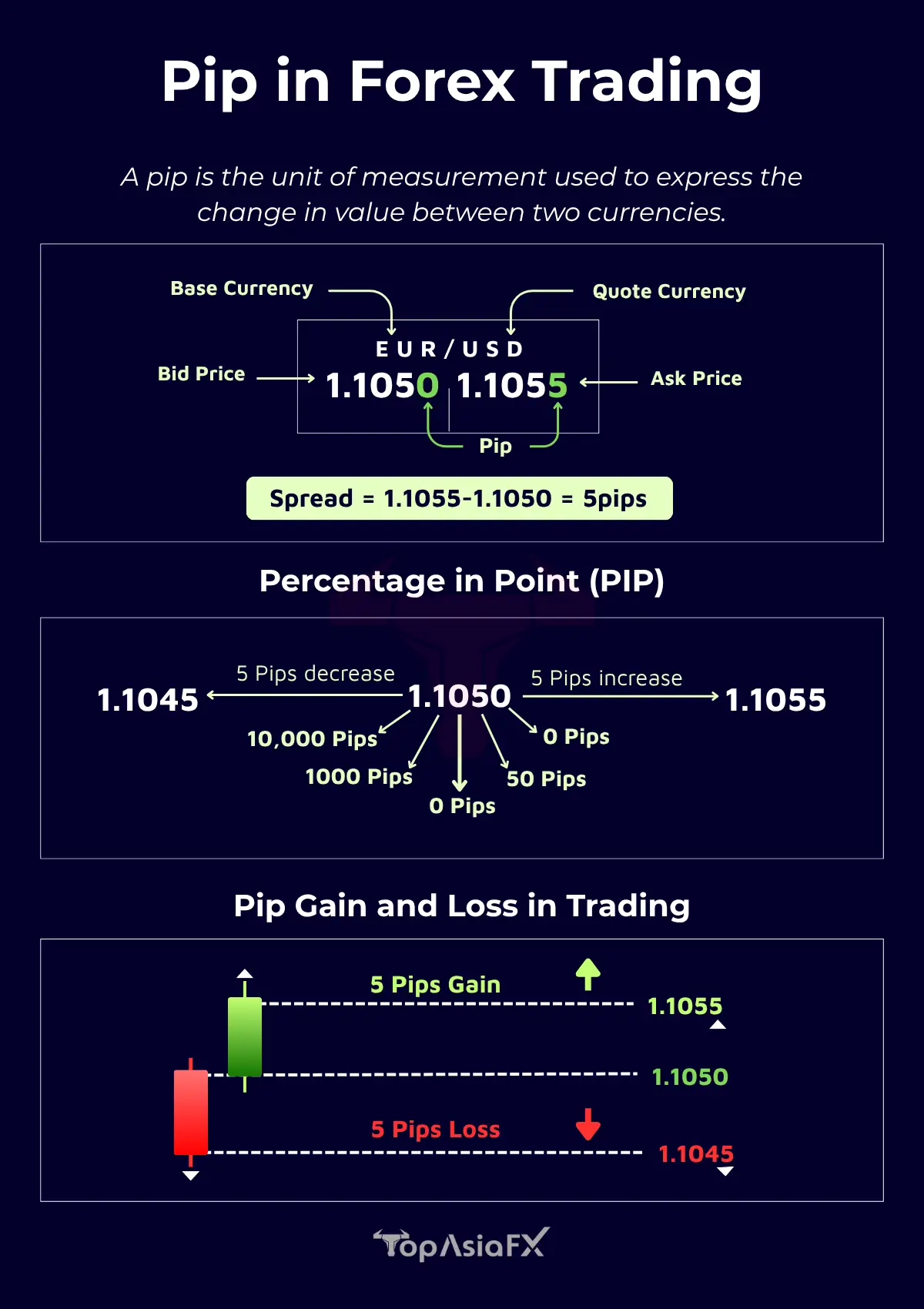
A pip stands for a percentage in points.
It’s the smallest standardized unit of price movement in most forex currency pairs. For most pairs, 1 pip = 0.0001. However, for pairs involving the Japanese yen (like USD/JPY), 1 pip = 0.01.
Think of pips as the measuring tape of the forex market.
For most currency pairs, 1 pip = 0.0001 (that’s four decimal places).
But for pairs that involve the Japanese yen, like USD/JPY or EUR/JPY, 1 pip = 0.01 (just two decimal places). That’s because yen-based pairs are typically priced to fewer decimal places.
They help you calculate how much a currency has moved and, more importantly, how much profit or loss you've made.
Say EUR/USD moves from 1.1050 to 1.1055, that’s a 5 pip increase. If you had a position that earned $1 per pip, you'd have made $5 on that move.
Whether you're analyzing charts or setting your stop-loss, pips help you:
- Define risk and reward.
- Track market movement.
- Size your positions correctly.
- Set accurate take-profit and stop-loss levels.
The value of a pip depends on the currency pair, your lot size (standard, mini, or micro), and the exchange rate.
Here’s a simple breakdown. A standard lot (100,000 units) 1 pip is $10, while a mini lot (10,000 units) 1 pip is $1, and a micro lot (1,000 units) 1 pip is $0.10.
So, if you're trading 0.01 lots (a micro lot), a 20-pip gain would net you just $2, great for practicing without risking much.
You might also hear about pipettes, which are one-tenth of a pip.
They show up as the 5th decimal place (or 3rd for yen pairs), like in a price of 1.10543, where the last “3” is a pipette.
Not all brokers display pipettes, but when they do, it gives you even more granular control over pricing and spreads.
In summary, pips are the basic unit of measurement in forex.
They help traders track movement, calculate gains/losses, and manage risk.
Even tiny pip movements can have big implications, especially when trading with leverage.
So next time you hear, “I caught 50 pips on that EUR/USD trade,” you’ll know they’re not talking about potato chips.
How Do You Calculate Pips in Forex Trading?
To calculate pips, subtract the entry price from the exit price, then multiply by 10,000 for most pairs (or 100 for JPY pairs). Multiply the result by your lot size to get the pip value in dollars.
I know I promised a detailed step-by-step guide; it’s coming up pretty soon.
Can You Find Pip in a Forex Quote?
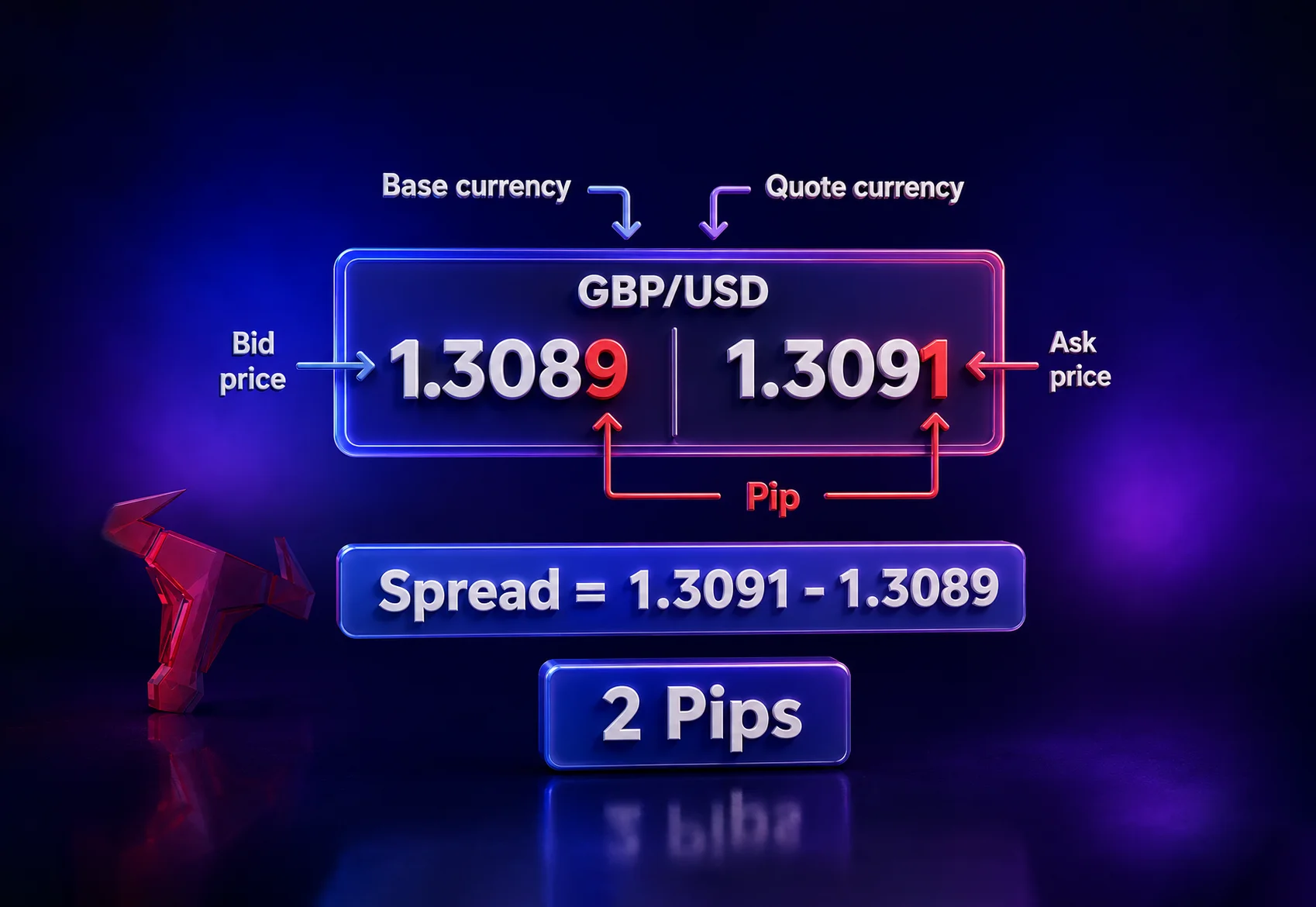
A pip (short for percentage in point) is the smallest standardized price move in the forex market and knowing where to spot it helps you measure profit, loss, and market movement.
For most currency pairs (like EUR/USD, GBP/USD):
Look at the fourth decimal place of the price.
For example, if EUR/USD moves from 1.1000 to 1.1010, you simply subtract:
1.1010 – 1.1000 = 0.0010
Now multiply by 10,000 to convert to pips.
0.0010 × 10,000 = 10 pips
So, a change in the fourth decimal digit is equal to a pip.
For Yen-Based Pairs (Like USD/JPY, EUR/JPY):
These pairs are an exception. They’re typically quoted with two decimal places instead of four, so here, you look at the second decimal place.
For instance, USD/JPY moves from 140.50 to 140.80.
140.80 – 140.50 = 0.30
Since 1 pip = 0.01 for JPY pairs.
0.30 ÷ 0.01 = 30 pips
So, a change in the second decimal digit = a pip for yen pairs.
What about the fifth or third decimal?
Some brokers use fractional pips or “pipettes” to offer more precise pricing. Fifth decimal place (e.g., EUR/USD = 1.10123): Pipette = 1/10th of a pip. Third decimal place for JPY pairs (e.g., USD/JPY = 140.805). This is also a pipette.
While it is useful for scalpers, pipettes aren’t considered full pips.
If You're Curious About the Full Pip Formula
Pip Value = (1 pip ÷ Exchange Rate) × Lot Size
For EUR/USD: (0.0001 ÷ 1.1000) × 100,000 = $9.09 per pip (approximately)
This varies slightly depending on your broker and spreads, but it’s accurate enough for planning your trade.
The Step-by-Step Guide, As Promised
Step 1: Start by Identifying the Price You Entered the Trade and the Price You Exited
Let’s say you bought EUR/USD at 1.100 and you sold at 1.1050.
Now, subtract:
Step 2: Convert It to Pips
Most forex pairs use 4 decimal places, and 1 pip = 0.0001.
To convert your price movement into pips, multiply the difference by 10,000.
0.0050 × 10,000 = 50 pips
So, your trade moved 50 pips in your favor.
For JPY pairs (e.g., USD/JPY), multiply by 100 instead of 10,000.
Step 3: Calculate Pip Value (Per Lot Size)
This step tells you how much money those 50 pips are actually worth, depending on your lot size.
Here’s a quick breakdown of lot sizes:
| Lot Size | Units | Pip Value (in USD) |
|---|---|---|
| 1.00 | 100,000 units (Standard lot) | $10 per pip |
| 0.10 | 10,000 units (Mini lot) | $1 per pip |
| 0.01 | 1,000 units (Micro lot) | $0.10 per pip |
Here’s a quick example.
If you made 50 pips on a 0.10 lot (Mini Lot):
50 pips × $1 = $50 profits
If you were using a 1.00 lot (Standard Lot):
50 pips × $10 = $500 profits
If the trade went against you by 50 pips, those numbers would be losses instead.
You can also use this formula (for non-USD-based accounts or exotic pairs):
Pip Value = (Pip size × Lot size) / Exchange rate
For example, if you're trading EUR/GBP, you'd calculate the pip value in GBP first, then convert to your base currency.
You Can Calculate Pips in Gold, too. Here’s How
Trading gold (XAU/USD) is a little different from trading regular currency pairs, so it’s important to understand how pips work in this case.
Gold is typically quoted with two decimal places.
For instance, if the entry price is 1960.5, and the exit price is 1961.70.
That’s a price movement of 1.20.
In XAU/USD, each 0.01 price move = 1 pip.
So, when gold moves from 1960.50 to 1961.70, that’s:
1.20 / 0.01 = 120 pips
The total movement is 120 pips.
When trading 1 standard lot of gold (100 ounces). 1 pip equals $1 (this may vary slightly by broker).
So, in our example,
120 pips × $1 = $120 profits
If you were trading a 0.10 lot, the pip value would be about $0.10 per pip, so,
120 pips × $0.10 = $12 profits
Keep these in mind when trading gold:
Always check your broker’s pip value for gold; they can differ slightly depending on the platform.
Gold is highly volatile, so pip swings can happen fast. This makes gold attractive for quick profits but also risky without proper risk management.
Use stop-losses and position sizing wisely when trading gold, just like you would with forex pairs.
Or Use a Pip Calculator
Let’s be honest, not everyone wants to do this math every time.
You can skip the manual calculations and use a pip calculator to get the job done.
That’s why pip calculators exist. Tools like BabyPips’ Pip Calculator let you enter your trade size, currency pair, and account currency to instantly see pip value.
Knowing How to Calculate Pips Gives You
Better Risk Management
Before entering any trade, you should know how much you stand to lose if things go wrong.
Pip calculation lets you set precise stop-loss levels based on your risk tolerance, not guesswork.
Clearer Profit/Loss Estimates
Knowing how many pips you’ve gained or lost helps you track performance like a professional.
You’re not just saying, “I made some money.” You’re saying, “I made 35 pips, which equals $35 on my 0.10 lot trade.”
This clarity helps you review past trades accurately, learn what’s working, and avoid emotional trading.
Informed Position Sizing
Your lot size should depend on how many pips you expect to risk. Without pip knowledge, you’re just picking random lot sizes, which can lead to oversized losses.
More Confidence in Every Trade
There’s nothing more stressful than not knowing what a price move means for your account.
When you understand pips, you stop fearing volatility, you stay calm when trades move, and you make decisions based on logic, not panic or hope.
Don’t Just Trade, Know What You’re Trading
Pips might seem small, but they’re the heartbeat of your trades.
Whether you're scalping quick moves or swinging for big gains, knowing how to calculate pips gives you clarity and control.
Use pip calculators, demo accounts, or just pen and paper, but whatever you do, don’t skip this part. It’s what turns a good trade idea into a profitable reality.
F. Nathan
Felix Nathan is a professional trader, market analyst, and business development executive with over a decade of experience in the forex and financial markets. Felix specializes in providing actionable market insights, trading strategies, and risk man...