 IUX
IUX
 Exness
 Vantage
 XM
XM
 ICMarkets
 LiteFinance
 Moneta
 Tickmill
 South Africa (9)
 India (9)
 Bangladesh (12)
 Germany (9)
 Thailand (10)
 Philippines (9)
 Nigeria (10)
 Vietnam (10)
 Malaysia (9)





The No. 1 Rule of Forex Trading


Share:
Share:
Education
6 min read
Ask any experienced trader the same question, “What’s the No. 1 rule of trading?”, and chances are, you’ll hear a unanimous answer:
“Never risk more than you can afford to lose”.
Sounds simple, but behind this one rule lies the entire foundation of smart trading: Risk management.
This isn't just trader talk, it’s the lifeline between lasting profitability and blowing your account in a week.
The Number One Rule of Trading is Never to Risk More Than You Can Afford to Lose
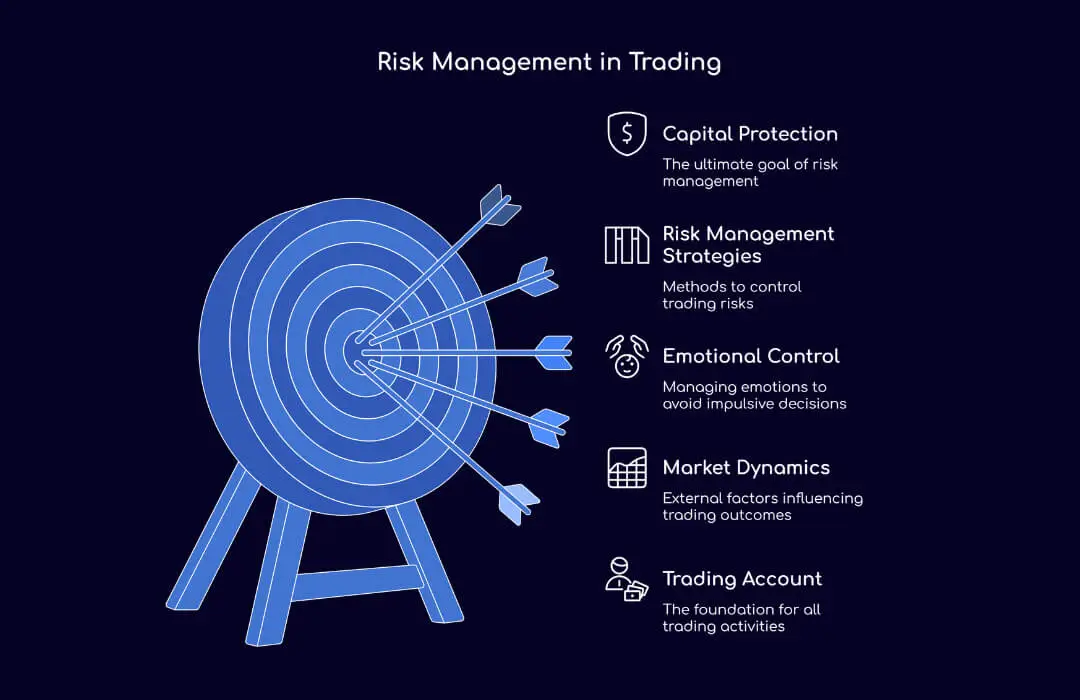
This principle forms the core of trading risk management and helps traders protect their capital, manage emotions, and stay in the game long enough to see profits.
No matter how flashy your indicators are or how accurate your technical analysis might be, without risk management strategies, you're just gambling.
Risk is the one thing you can control in a market filled with uncertainty. The most successful traders don’t win every trade; they simply know how to lose smart.
Risk is The Only Thing You Can Truly Control
You can’t control the market. You can’t control the news. You can’t even control if a breakout holds or fakes out.
But you can control how much of your capital you’re putting at risk, where you place your stop loss, what lot size you’re using, and how much leverage you’re applying.
That’s power. And that power keeps you in the game.
Risk Management Protects Your Capital
If you blow through your capital, you’re out of business.
Risk management keeps losses small, so you have the fuel to keep trading tomorrow.
A great trade setup can come after 3 losing trades. If you’ve already burned through 50% of your account capital, you might not be able to take it.
The goal is not to avoid losing, it is to avoid losing so much that you can’t come back.
The Best Traders Think in Years, Not Trades
If you manage risk properly, you can have a bad week, a rough month, even a losing streak, and still be in the game.
Longevity is what gives you a real chance at mastering the market.
Trading Without Risk Management is Emotionally Exhausting
You’ll constantly be anxious, second-guessing every trade, overtrading to recover losses, or worse, revenge trading.
Proper risk management reduces that emotional load. When you know your worst-case scenario is a small, manageable loss, you’re calmer and more focused.
It Prevents Impulsive Trading
When you have rules in place, like only risking 1% per trade or walking away after three trades, you’re less likely to chase trades, skip stop losses, or overtrade in choppy markets.
Even The Best Trading Strategy Will Fail If You Overexpose Your Account
Risk management ensures your strategy has the space and time to work.
Think about it; if your edge plays out over 100 trades, but you blow your account on trade number 7… you'll never get to see that edge play out.
Why this Rule is so important?
Let me paint a picture.
You’ve got $1,000 in your trading account. You just watched a YouTube tutorial video, your setup looks clean, and you’re feeling confident.
So, you throw $200 on one trade, 20% of your account.
But the market doesn’t care about your gut feeling.
It moves against you.
Suddenly, you're down $200.
Not just money lost, but confidence shatters too.
And this is where the spiral starts.
What happens next?
A 20% loss means you now need to make 25% just to get back to break-even.
The math starts working against you, and fast.
Your ego kicks in, and you want to win your money back as soon as possible.
So you place another trade, but this time with even more risk. You skip your setup. You tighten your stop-loss or remove it altogether.
And then, another loss.
It doesn’t take many oversized trades to drain an account.
If you’re risking 20% per trade, just 3 or 4 back-to-back losses can wipe out most of your balance.
And the worst part? These blowups often come right before your strategy was about to turn profitable.
After a big loss, fear creeps in. Now you hesitate. You second-guess your trades.
You miss opportunities because you’re too scared to click “buy” or “sell.”
Confidence turns into confusion.
The emotional rollercoaster of reckless trading is exhausting.
One day you’re high on profits, the next you’re spiraling into regret. It is not sustainable, and eventually, you either rage-quit or stop trading completely.
Ignoring risk management is like ignoring your seatbelt because you "feel like a good driver."
You might be fine for a while… until you're not.
The top traders, regardless of their style, have one thing in common: They protect their capital like their lives depend on it.
Because in trading, it kind of does.
How to Follow The Rule (Even If You’re a Newbie)
Trading without a plan is gambling. Don’t gamble.
Follow these tips:
- Most pros risk 1% or less of their account per trade. That means if your balance is $1,000, you shouldn’t lose more than $10 on a single position. Use stop-loss orders to enforce this
- Your emotional reaction to losses matters. If losing $50 makes you sweat, scale down your position size until it doesn’t. Trading should be strategic, not stressful.
- Decide your entry point, exit point, stop-loss, and target profit before the trade. This prevents you from “winging it” when the pressure’s on.
- Accept that losses are part of the game. Even seasoned traders lose trades. The key is consistency, not perfection. Think long-term returns, not daily wins.
- Leverage can boost your profits, but it can destroy your account just as fast. Start small, especially if you're new.
Break The Cycle
Risking 1–2% per trade might feel “slow”… but it gives you:
- Room to make mistakes and still recover
- Emotional stability
- The ability to learn and grow without panic
So… what is the No. 1 rule of trading? Protect your capital at all costs.
You don’t need to win every trade to be profitable. You just need to avoid the big losses that wipe out your account.
Because once you’re out of the game, it doesn’t matter how great your strategy was. Survive first. Grow later.
F. Nathan
Felix Nathan is a professional trader, market analyst, and business development executive with over a decade of experience in the forex and financial markets. Felix specializes in providing actionable market insights, trading strategies, and risk man...