 IUX
IUX
 Exness
 Vantage
 XM
XM
 ICMarkets
 LiteFinance
 Moneta
 Tickmill
 South Africa (9)
 India (9)
 Bangladesh (12)
 Germany (9)
 Thailand (10)
 Philippines (9)
 Nigeria (10)
 Vietnam (10)
 Malaysia (9)





Is Trading Good for Students? What Beginners Must Know Before Starting?



Share:
Share:
Strategy
5 min read

I was reading through the TopAsiaFX broker comparison. Everything about forex sounds interesting & easy money. But, ‘ Is trading good for students?’
Yes, trading can be beneficial for a student if they use the right strategy. Cause it’s not a shortcut to quick money. It definitely comes with risks. It’s not easy like it sounds in videos about “making money from your phone”.
Forest trading is more like a learning tool rather than an instant income source.
It’s not something you can learn overnight & become rich. It’s something you explore slowly, carefully, and with proper guidance.
Basically, if you do it the right way, it can be profitable. But once you start rushing, everything will crush on you.
Is Trading Good For Students?
Yes, trading can be good. But it’s not something to jump into without preparation. Cause trading means risk.
And let’s be real, students have limited money. They just want to be financially independent. But that’s not enough to take the risk of losing money. They also get influenced by social media, where people only show profits, never losses.
So, they may feel pressured to “Make money fast”.
It can lead to emotional decisions or unsafe trading behaviour. So, if you really want to get into trading and do something on your own then start slow. You could start by setting aside just 30 minutes a day and stick to that routine for a year.
In the meantime, you can study the basics, watch the markets, and slowly build your understanding. Taking it slow, staying consistent, and learning step by step can really help. And there’s no harm in easing into it this way.
Cause trading is complex & risky. But that doesn’t mean students can’t learn it.
There are many young forex traders in the world. They would become the wealthiest young people cause they started soon. They didn’t stop just because it is ‘risky.’ They took the risk & made the best out of it.
That’s why following that question, Tejas Khoday, India's youngest stockbroker & Co-Founder of FYERS said-
‘Starting early can be a huge advantage when it comes to understanding the stock market. When you're young, you generally have more time, curiosity, and mental energy to really dive into how things work. That kind of freedom becomes harder once you’re juggling a full-time job or other adult responsibilities’.

Source: Quora
So, trading can be good for students. But only when students treat it as a learning experience, not a shortcut to money.
Once you learn it, then it will become a never ending income source.
Which Type of Trading is Best for Students?
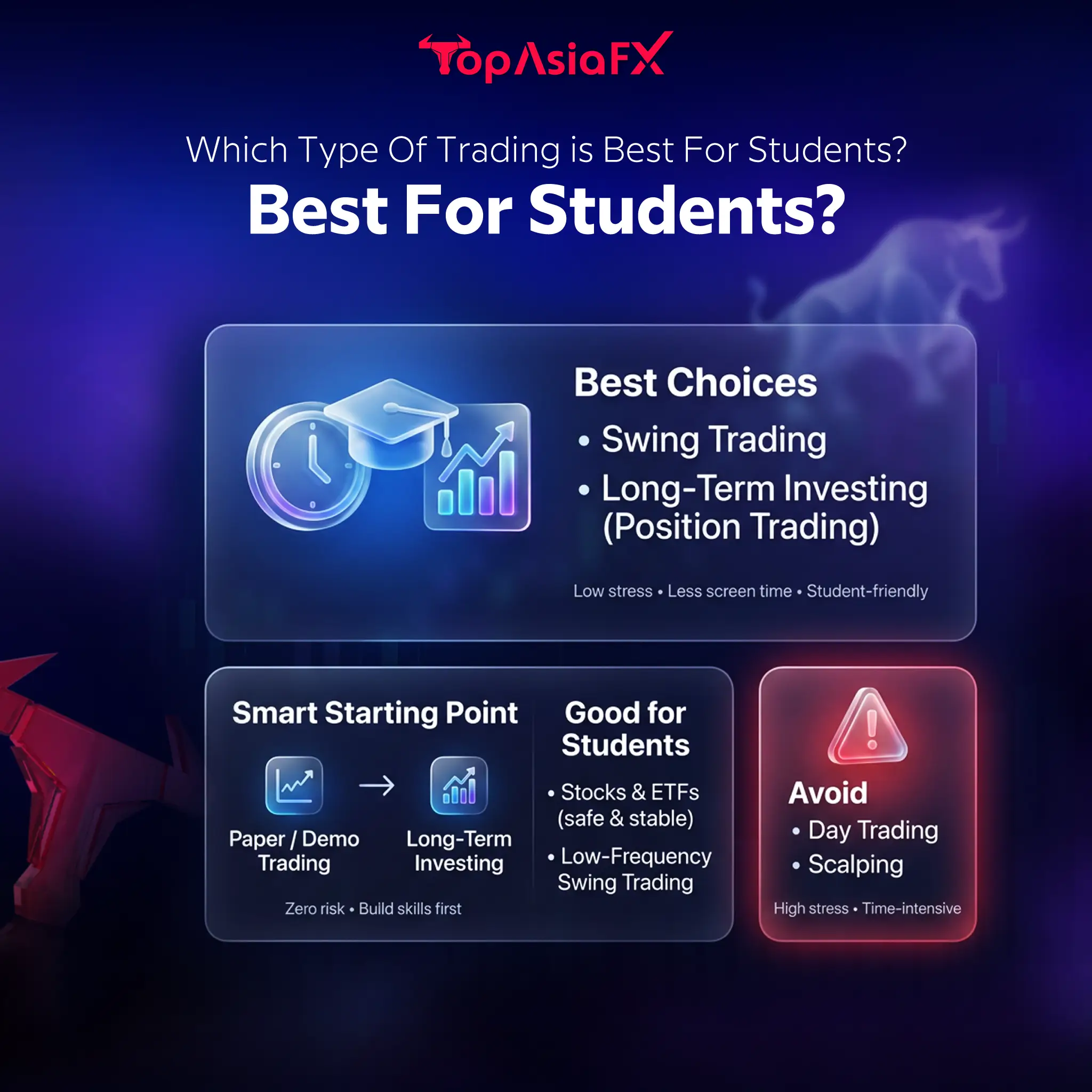
Swing trading and long-term investing (position trading) are the best trading types for students.
These approaches fit well with a busy academic life because they don’t require constant chart-watching or fast decisions. They’re calmer, less stressful, and much easier to manage than intense methods like day trading or scalping.
That’s why students should avoid trading like:
Stocks or ETFs
Stocks & ETSs are usually the safest and most practical choice. It doesn’t require staring at charts all day, and the risk is much lower compared to short-term trading. Students can learn how companies work, how the economy affects prices, and how money grows over time. It’s slow, stable, and great for learning.
Paper Trading / Demo Trading
This is the smartest place to begin. You use virtual (fake) money to practice, so there’s zero financial risk. Students can test strategies, learn the basics of the market, and build confidence without risking real money. They use this trick on any trading platforms. It’s basically “learning mode.”
Low-Frequency Swing Trading
If someone wants to try a bit of real trading later, swing trading is easier than day trading. You hold trades for days or weeks, not minutes. It involves less pressure, less screen time, and more thoughtful decision-making.
So what’s the best option overall?
Well, I think students should start with paper trading, then move toward long-term investing if they want something steady and educational.
It keeps the pressure low, the risks minimal, and the learning high. It is perfect for someone who’s still studying and hasn’t yet reached a full income.
How Much to Invest in Trading as Students?
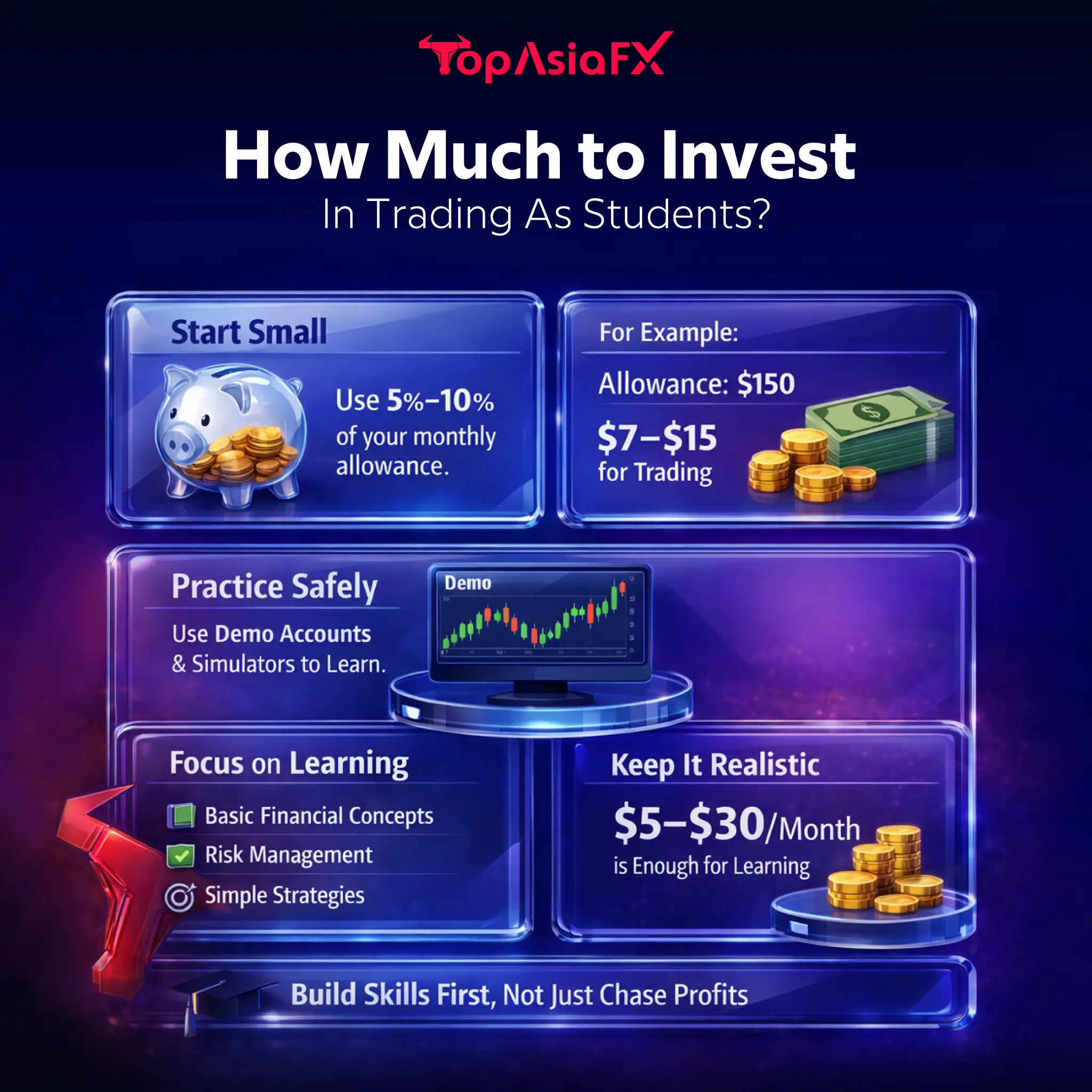
For students, trading shouldn’t be about making huge profits right away. The main goal is to learn and practice safely without risking much.
But, is it possible? Yes, it is possible. If you invest money calculatively. Here is how to figure out forex trading-
Start Small
A safe rule is to use 5% to 10% of your monthly allowance or income for trading. For example:
- If your monthly allowance is $150, you could use $7–$15 for learning and practice.
- This money can go toward real trading in small amounts or accessing educational tools and platforms.
Before risking real money, use demo accounts or simulators. They let you experience trading, test strategies, and understand market behavior without losing money.
Most Importantly, Focus on Learning
Don’t just keep your focus on earning money. Along with demo trading, study:
- Basic financial concepts.
- Risk management techniques.
- Simple strategies suitable for your budget.
Basically, keep it realistic. Cause the learning fund of $5–$30 per month is enough for a student. If you wanna learn more than that, then stay consistent and patient.
Cause trading should be about building skills first, not chasing profits.
Warp Up
Basically, trading can definitely be a valuable experience for students. But it’s not a shortcut to quick money. So, do not jump in without preparation. It can lead you to unnecessary losses and stress.
Treat it as a learning journey.
Don’t expect too much from it. Just start small, use demo accounts, and focus on low-pressure strategies like swing trading or long-term investing. As time goes by, you will see results coming.
F. Nathan
Felix Nathan is a professional trader, market analyst, and business development executive with over a decade of experience in the forex and financial markets. Felix specializes in providing actionable market insights, trading strategies, and risk man...