 IUX
IUX
 Exness
 Vantage
 XM
XM
 ICMarkets
 LiteFinance
 Moneta
 Tickmill
 South Africa (9)
 India (9)
 Bangladesh (12)
 Germany (9)
 Thailand (10)
 Philippines (9)
 Nigeria (10)
 Vietnam (10)
 Malaysia (9)





How to Avoid Tax When Trading Forex in South Africa? Legal Strategies To Reduce Tax



Share:
Share:
Strategy
6 min read
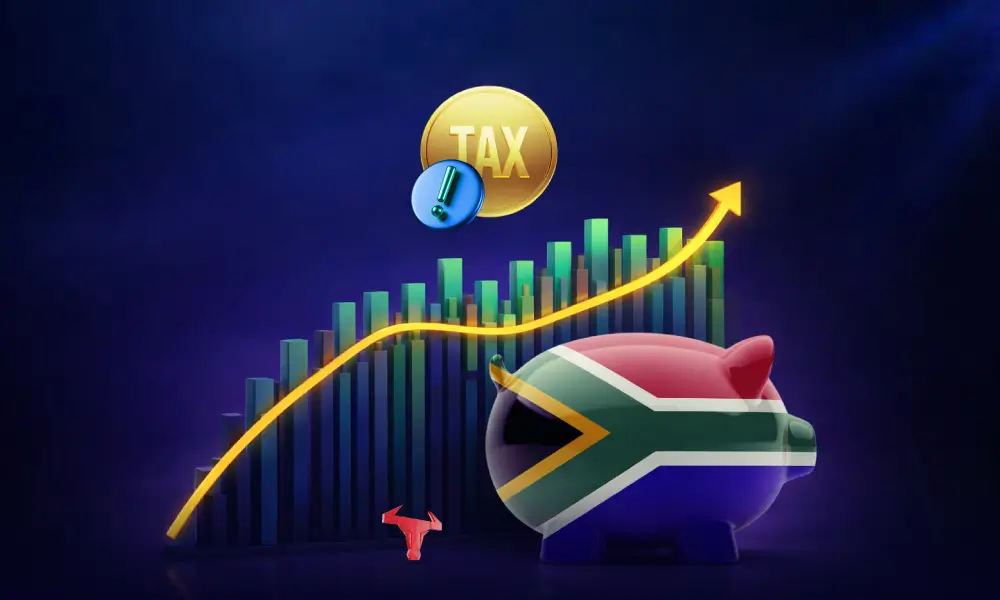
If you’re a forex trader earning less than R79,000 a year, you won’t need to pay any tax on your trading profits. But once your earnings go above that threshold, your profits fall under South Africa’s personal income tax system, which ranges from 18% to 45% depending on your total income.
That’s huge, right? So you must be wondering how to Avoid Tax Trading Forex in South Africa, right?
The sad news is, you can’t avoid tax on forex trading in South Africa. However, you can structure your trading to pay less and keep more in your pocket. Cause. The South African Revenue Service (SARS) treats your profits as taxable income or capital gains. No matter how you trade.
But while you can’t completely avoid tax. There are smart ways to reduce it, manage it better, and make sure you’re not paying more than you should.
Key Takeaways:
- You cannot legally avoid tax on forex trading in South Africa.
- Treating trades as capital gains or claiming deductible expenses can reduce taxable profits.
- Hiding profits or ignoring SARS reporting can lead to penalties, fines, or jail.
Do You Pay Tax on Forex Trading in South Africa?
Yes, you do pay tax on forex trading in South Africa. The South African Revenue Service (SARS) requires traders to declare their profits. The amount of tax you pay depends on your total annual income and the way you trade. For example,
- Income Tax (18%–45%)- if you trade actively, and it’s seen as regular income.
- Capital Gains Tax (effective rate up to 18%): If your trading is occasional and more akin to investing.
So, yes, basically, you can’t ignore tax legally. If you try to do it, then be ready to spend a night in jail.
How to Avoid Tax Trading Forex in South Africa?
You can’t 100% avoid forex trading tax, but you can play some tricks and strategies to reduce the tax by 10-30%.
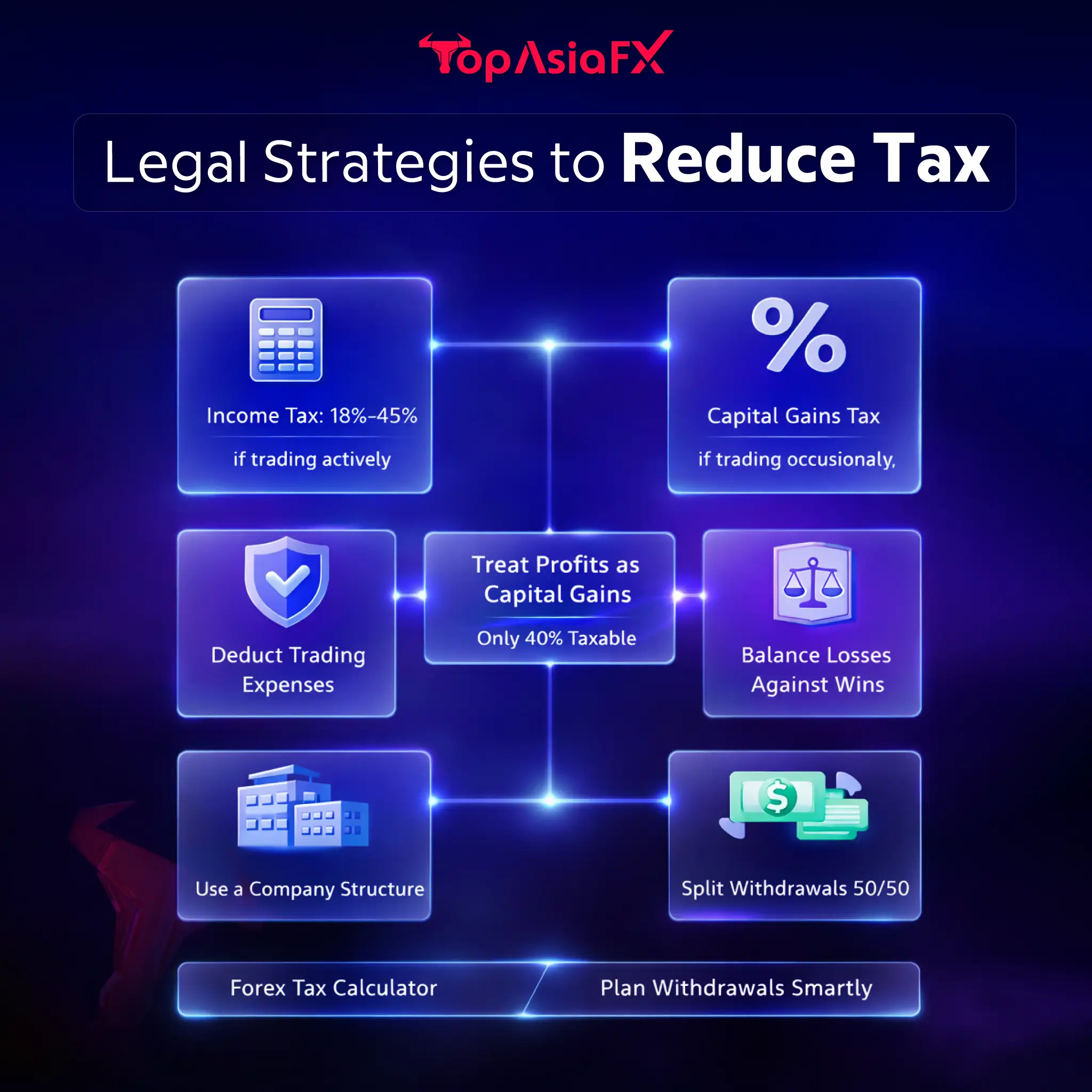
Here are a few proven strategies to reduce forex trading tax in South Africa.
Treat Forex Profits as Capital Gains
If you’re not glued to your screen scalping or day trading, you might qualify as an investor instead of an active trader. This is a big deal because SARS treats those profits as capital gains, not regular income.
The benefits?
- Only 40% of your profit is taxed.
- You get a R40,000 tax-free exclusion every year.
For example, say you make R100,000 profit on a long-term forex trade. Instead of paying tax on the full R100k, only R60k gets added to your income. If your tax rate is around 30%, that’s just R18,000 tax instead of R30,000+.
So, basically, you need to show that you’re genuinely investing, not actively trading daily. So keep records that back your case. It’s a legal cheat code.
If your calculation seams overwhelming, then use a Forex tax calculator South Africa.
Deduct Trading Expenses
Now, if you are a more active trader, you’ll get taxed under normal income tax. That sounds heavy, but the trick here is that SARS lets you deduct trading expenses.
Think about what you actually spend to trade:
- Internet and data.
- Trading software or subscriptions (MetaTrader add-ons, TradingView, etc.).
- Courses, books, mentorships.
- Home office costs (electricity, rent portion, desk, chair).
- Laptop or trading PC (claimed through depreciation).
Let’s say you made R200k trading this year but spent R50k on tools, education, and setup. Instead of paying tax on the full R200k, SARS only taxes you on R150k. That’s a serious saving.
Balance Losses Against Wins
Losses sting, but there’s a silver lining. SARS lets you use them to lower your taxable profits.
Example: you bank R100k profit but lost R40k on other trades. Instead of being taxed on R100k, you’re only taxed on R60k. That alone can save you thousands.
So yeah, don’t hide your losing trades. They’re actually useful for tax time.
Use a Company Structure
Seasoned traders play the long game with this strategy. If you’re consistently banking big numbers (say half a million or more yearly), it often makes sense to trade through a registered company (Pty Ltd).
Why? Because companies in SA pay a flat 27% corporate tax. If you’re in the higher personal tax brackets (36–45%), this saves a ton. Companies can deduct way more like salaries, equipment, and even paying yourself.
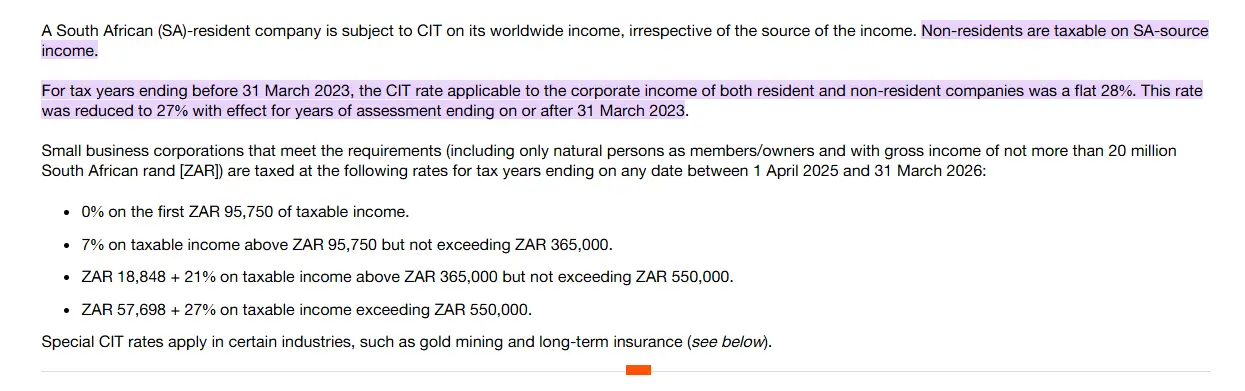
Example: You make R1 million from forex. Personally, you’d pay up to R450k tax at 45%. Through a company, you pay R270k. That’s R180k saved. It is enough to fund your next trading account or even a nice holiday in Cape Town.
Withdraw Money 50/50
This one’s less obvious but really effective. Tax in SA is based on your yearly income. If you dump all your forex profits in one tax year, you could easily push yourself into a higher bracket.
Say you already earn R500k salary and make R300k from forex.
If you withdraw the full R300k this year, you’ll land in a higher bracket and get hammered. But if you take R150k this year and leave R150k for next tax year, you might stay in a lower bracket both times.
It’s about smoothing out your income, so you don’t pay more than you need to.
| Warning: Don’t try to hide money offshore. SARS works with banks and has cross-border monitoring. Don’t ignore declaring profits. If your broker is regulated, the records are easy to trace. Otherwise, you have to deal with the SARS freeze Forex trader account. |
Final Thoughts
Trying to dodge taxes on forex trading in South Africa might seem tempting, but it’s a serious risk. SARS has strict monitoring systems, and brokers report transactions. So, hidden profits rarely stay hidden. If you get caught, you could face:
- Heavy penalties and interest on unpaid taxes.
- Back taxes for multiple years.
- Legal action, which in extreme cases can include fines or even jail time.
So, it's better to stay in safe zone and use legal tax optimization strategies.
FAQs
When Do Forex Traders Pay Tax?
Forex traders pay tax when they declare their profits on their annual tax return. SARS looks at your income from March 1 to February 28/29. If you trade actively, profits are treated as income.
Is Forex Trading Tax-Free in South Africa?
No. Forex trading is not tax-free. All profits are taxable, either as income or capital gain,s depending on how you trade. The only “breaks” are deductions for trading-related expenses.
How Much Do Forex Traders Make a Day in South Africa?
This one depends a lot on experience, capital, and strategy. Some beginners make just a few hundred rands per day, while experienced traders with bigger accounts can make thousands.
F. Nathan
Felix Nathan is a professional trader, market analyst, and business development executive with over a decade of experience in the forex and financial markets. Felix specializes in providing actionable market insights, trading strategies, and risk man...