 IUX
IUX
 Exness
 Vantage
 XM
XM
 ICMarkets
 LiteFinance
 Moneta
 Tickmill
 South Africa (9)
 India (9)
 Bangladesh (12)
 Germany (9)
 Thailand (10)
 Philippines (9)
 Nigeria (10)
 Vietnam (10)
 Malaysia (9)





Uncovering the History of Retail Forex Trading!



Share:
Share:
Education
5 min read
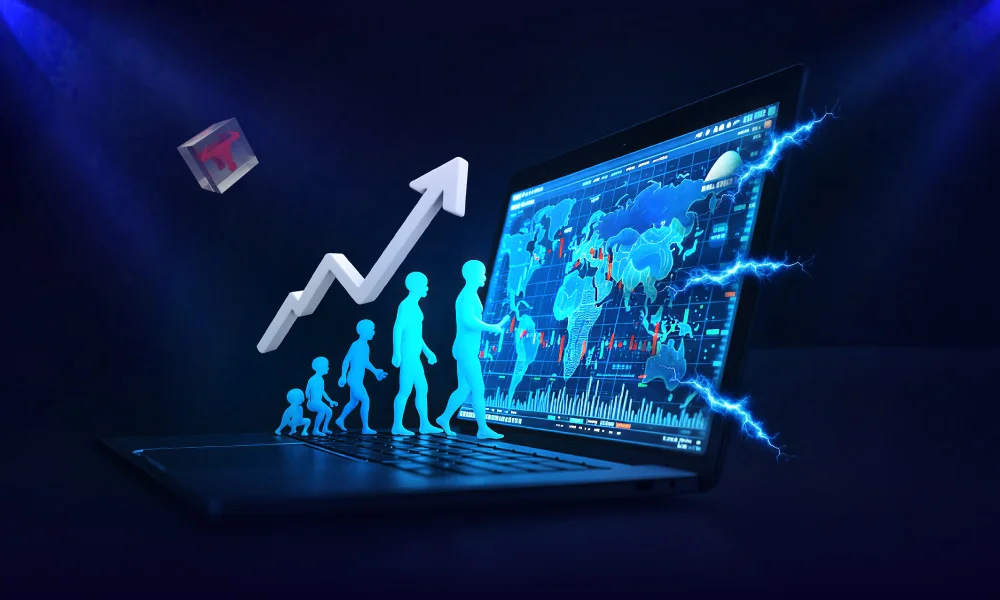
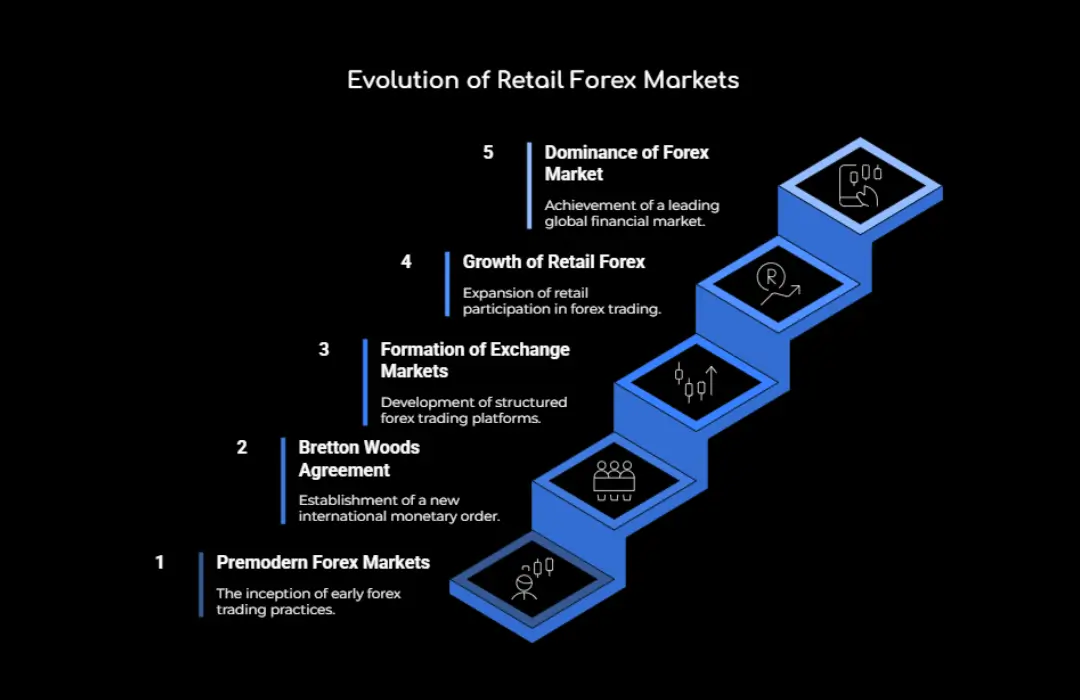
The history of retail forex trading dates back almost a century, with the advent of premodern forex markets.
These markets were called exchange markets at the time and had roots in the Bretton Woods Agreement of 1944.
81 years down the line, this agreement would lead to the largest retail exchange market in the world, with an average turnover of over $ 1 trillion daily.
But how did one piece of agreement from almost a decade ago lead to this financial market whose daily turnover is 30x bigger than the volume of all U.S. equity markets put together?
Come find out.
How Did It All Start?
It started in 1944 when nations began to let go of the gold standard and allowed their currencies to float freely.
In 1944, Bretton Woods established an agreement that formalized how the foreign exchange market worked.
The impact of the Bretton Woods agreement was profound. This agreement created a system of fixed exchange rates which was connected to the U.S dollar.
Unfortunately, the year 1971 saw this system’s collapse. However, this collapse birthed what we have come to know as the modern forex market.
How Did The Modern Forex Market Work?
Central banks, large companies, and financial organizations controlled the modern forex market until the later part of the 20th century.
Retail forex trading did not exist during this time because individual traders could barely access currency trading.
But why was this a thing? No one truly knows.
All we know is that individual investors had very limited access to the trade because of the little details about the market made available and the huge capital requirements they could barely afford.
Things Began to Change in The 1990s. Let’s Explore Them
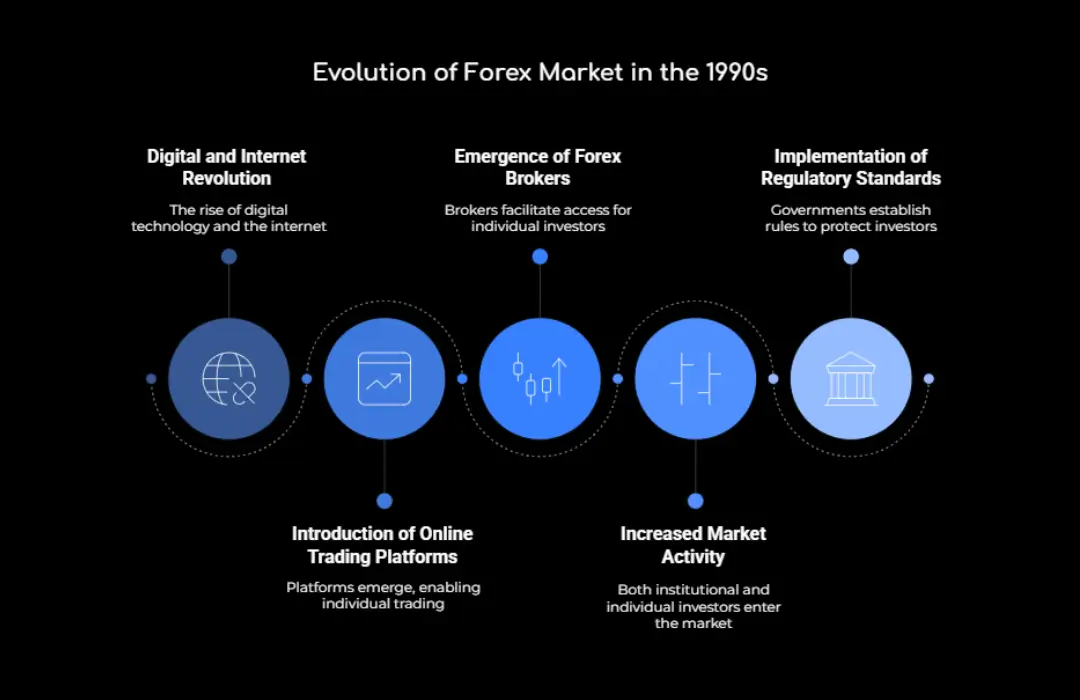
The 1990s was a significant marker in the history of the forex market.
For the first time since the earlier part of the 20th century, individual investors could trade in the forex market.
But they owed this privilege to the digital and internet revolution happening during this period. The advancements in technology gave rise to online trading trading platforms, which changed the game for good.
That was not all…
Soon enough, Forex brokers came into the scene, and they started to make trading more accessible for individual investors.
Brokers gave individual investors a way to open and trade large positions even with small capital (which they could afford, of course).
Seeing as the market was becoming increasingly busy, with both institutional and individual investors saturating the market, governments had to regulate things.
As such, governments and regulatory institutions alike began setting regulatory standards to protect the interests of retail investors.
The Retail Forex Market Became More Popular in The 21st Century
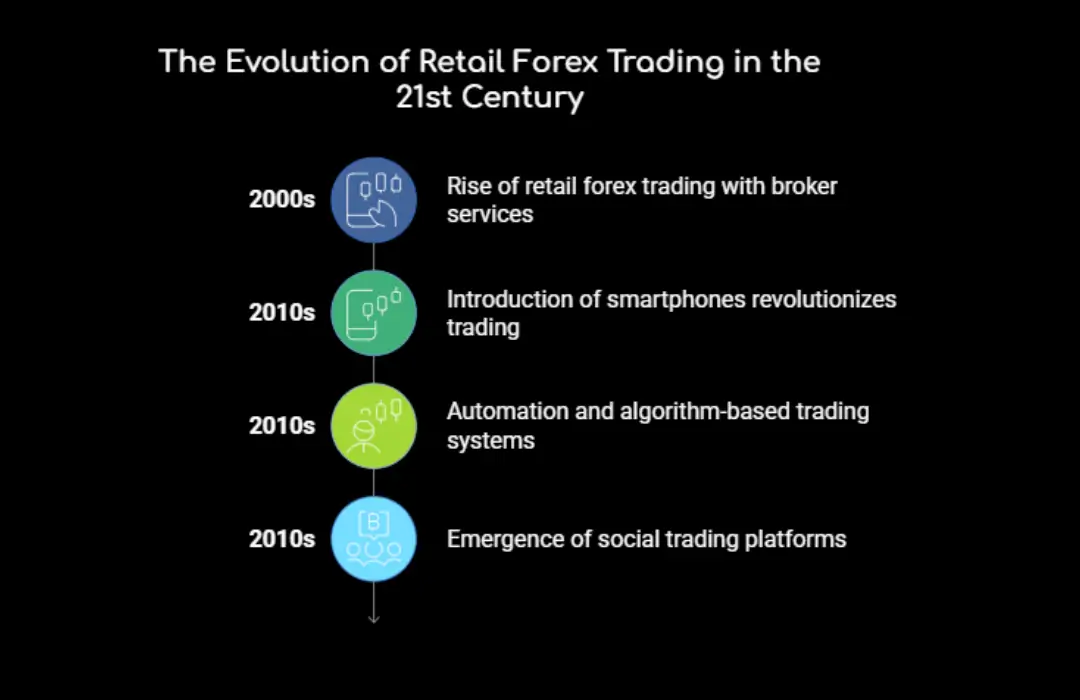
Retail forex trading started its 21st century gaining more clout, especially since brokers had become a thing.
Brokers quickly began providing their services to traders across borders.
In addition, more easy-to-use trading platforms came into play, which ultimately meant more traders joined the forex train.
Forex trading resources became more accessible to individual traders, and they could learn using informational tools and demo accounts.
Like the 1900s, further technological advancements made retail forex much more accessible in the 2010s.
This was because the 2010s saw the release of the world’s first smartphones, which meant traders could trade on the go.
Also, forex platforms started to implement automation and algorithm-based trading systems on their platforms.
These platforms found that by doing this, they would make it easier for traders to invest, monitor, and take action on their trades.
Another game-changing part of 21st-century retail forex trading was the social nature of trading platforms.
Much more experienced traders could share their strategies with beginners and fellow traders shared useful trading tips. This way, traders who paid attention benefitted from the social trading experience.
Where is Retail Forex Trading Now?
Now, the most advanced technology has ever been, retail forex trading is enjoying real-time data, AI-driven platforms, and more refined algorithms.
These features make it relatively easy to trade.
Retail forex trading is currently the largest and most liquid financial market on the globe with an average of $1 trillion daily returns.
About 5% of these returns are from governments and companies, and the other 95% are from individual profit traders.
Also, retail traders can trade more than just currency pairs. They can now trade commodities, indices, and cryptocurrencies.
What Does The Future Hold for Retail Forex Trading?
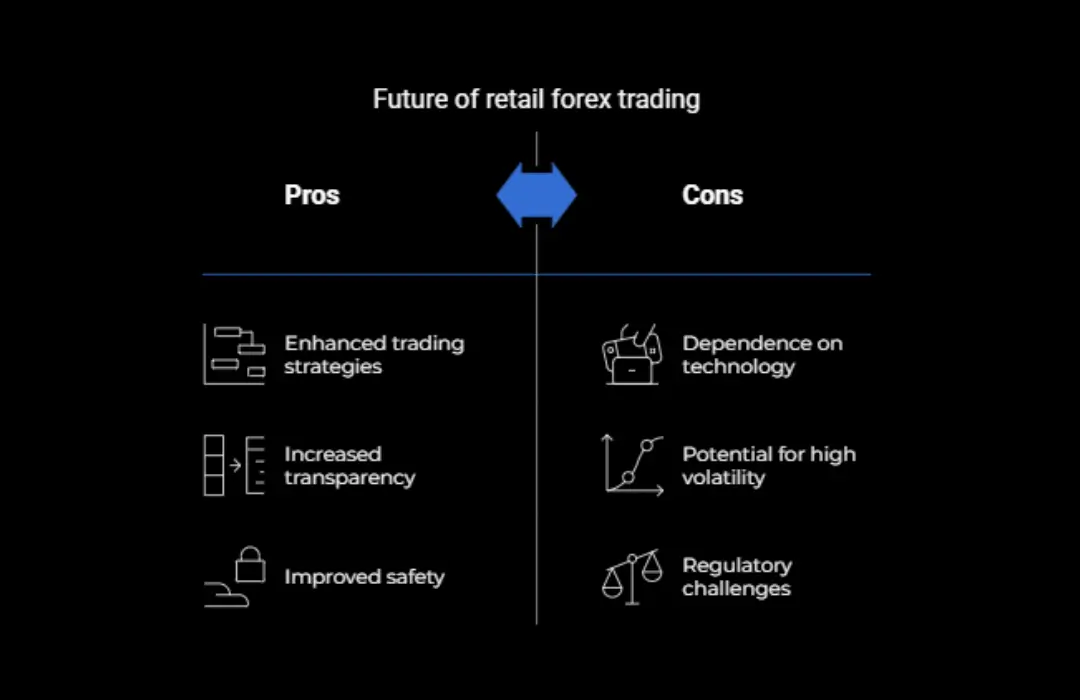
The future of retail forex trading looks much more integrated with AI and blockchain technology. With the rate at which both are taking over different facets of our society, it is not far-fetched.
I believe AI will help traders with much more algorithm-based or custom-based trading strategies.
Meanwhile, blockchain technology integration will provide more transparency and safety with transactions, such as deposits, fee payments, etc.
Concluding Insights
The forex exchange market’s history is one of evolution.
It began almost a century ago with an agreement by Bretton Woods.
However, retail forex trading in itself did not become a thing until the early 2000s, as only institutions had the capital and informational trading ability to navigate the market easily.
F. Nathan
Felix Nathan is a professional trader, market analyst, and business development executive with over a decade of experience in the forex and financial markets. Felix specializes in providing actionable market insights, trading strategies, and risk man...